0
Current

We need some basic information for accurate calculations


The Ideal Weight Calculator helps you figure out what weight range would be healthy and sustainable for you. It takes into account your height, age, and body frame so you can set realistic goals for weight loss or muscle building. Use it to plan a healthy lifestyle and better body composition.
Medical Disclaimer: The calculator results and information provided in this article are for educational and informational purposes only and do not constitute medical, health, or professional advice. Always consult with a qualified healthcare provider before making any decisions related to your health, diet, or fitness goals. Individual results may vary, and this tool should not be used to diagnose or treat any medical condition.
Ideal body weight is an estimated healthy weight range based on your height, gender, age, and body frame. It's not a single magic number but rather a range where your body functions optimally with lower health risks. Several formulas exist for calculating it, including the Robinson formula, Devine formula, and Hamwi formula, each using slightly different approaches but generally producing similar results. The Robinson formula, for example, calculates 52 kg for men plus 1.9 kg for every inch over 5 feet, and 49 kg for women plus 1.7 kg for every inch over 5 feet. These formulas are then adjusted based on your body frame size. Someone with a small frame might have an ideal weight 10 percent below the baseline, while someone with a large frame might be 10 percent above. It's important to remember that these are estimates, not absolutes. Two people of the same height can have different ideal weights based on their bone structure, muscle mass, and body composition.
Your body frame size refers to your bone structure, specifically how wide or narrow your skeleton is. The most common method to determine this is the wrist measurement test. Wrap your thumb and middle finger around your wrist at the narrowest point. If your fingers overlap significantly, you likely have a small frame. If they just touch, you have a medium frame. If they don't touch at all, you have a large frame. Another method uses your height and wrist circumference with specific measurements. For women under 5'2", a wrist under 5.5 inches indicates a small frame, 5.5-5.75 inches is medium, and over 5.75 inches is large. For women between 5'2" and 5'5", under 6 inches is small, 6-6.25 inches is medium, and over 6.25 inches is large. Men have different measurements but follow the same principle. Why does this matter? Because your frame size significantly affects your ideal weight range. Someone with a large frame naturally weighs more than someone with a small frame at the same height, even with identical body fat percentages. Their bones are literally heavier and wider. Ignoring frame size can lead to unrealistic weight goals that are either too low or too high for your body structure.
Not quite. Ideal weight is a calculated estimate based on formulas that consider height, gender, and frame size. Healthy weight is a broader concept that also factors in body composition, muscle mass, body fat percentage, and overall health markers. You could be at your "ideal weight" according to a formula but still be unhealthy if most of that weight is fat rather than muscle. Conversely, a muscular athlete might weigh more than their calculated ideal weight but be in excellent health because that extra weight is muscle, not fat. The most comprehensive approach to healthy weight considers multiple factors including BMI (though it has limitations), body fat percentage, waist circumference, waist-to-hip ratio, and metabolic health markers like blood pressure, cholesterol, and blood sugar levels. Where you carry your weight matters too. Excess abdominal fat is more dangerous than fat stored in hips and thighs. Your energy levels, fitness performance, and how you feel day-to-day are also important indicators. The best "healthy weight" for you is one where you feel energetic, can move comfortably, have good health markers, and can maintain without constant restriction or stress.
Yes, your ideal weight can shift as you age, though not necessarily in the way many people think. The common belief that it's normal and healthy to gain weight as you age isn't entirely accurate. While some changes are natural, significant weight gain isn't inevitable and can increase health risks. Here's what actually happens with age. First, you naturally lose muscle mass starting around age 30, a process called sarcopenia. This muscle loss slows your metabolism because muscle burns more calories than fat at rest. If you eat the same amount but have less muscle, you'll gain fat. Second, hormonal changes, especially during menopause for women, can shift where fat is stored and make it easier to gain weight. Third, lifestyle factors often change with age - people tend to become less active, have more sedentary jobs, and face more stress. However, these changes aren't set in stone. Regular strength training can prevent and even reverse muscle loss. Staying active maintains metabolism. Adjusting calorie intake as you age can prevent unwanted weight gain. Some experts suggest that maintaining a stable weight throughout adulthood, rather than gradually gaining, is associated with better health outcomes and longevity. The key is maintaining muscle mass and a healthy body composition, not just a number on the scale.
Ideal weight is a calculated estimate based on medical formulas using your height, gender, and frame size. It represents a range where health risks are typically lower. Goal weight, on the other hand, is a personal target you set for yourself based on various factors including how you want to look, feel, and perform. These two numbers don't always align, and that's okay. Your goal weight might be within, above, or below your calculated ideal weight range depending on your priorities. An athlete might have a goal weight above their ideal weight because they want to build more muscle. Someone focused on aesthetics might target the lower end of their ideal range. The key is making sure your goal weight is realistic and healthy for your body. Setting a goal weight far below your ideal range could lead to health problems, loss of muscle mass, hormonal issues, and difficulty maintaining that weight long-term. Similarly, if your goal weight is significantly above your ideal range, you might be at higher risk for weight-related health issues. The best approach is to use ideal weight as a general guideline while setting a goal weight that considers your body composition goals, lifestyle, and how sustainable that weight will be for you. You want a weight you can maintain without extreme restriction or constant stress.
The timeline to reach your ideal weight depends on how far you currently are from that range and how aggressively you can safely pursue your goal. Safe, sustainable weight loss is typically 0.5-1 kg per week, though this can vary based on your starting weight and activity level. Someone who's 10 kg above their ideal weight might reach it in 10-20 weeks with consistent effort. Someone 30 kg away might need 6-12 months. Going faster than 1 kg per week usually requires extreme calorie restriction that's hard to maintain and can lead to muscle loss, metabolic slowdown, and regaining the weight quickly. Slower, steady progress is more likely to stick. Several factors affect your timeline including your current weight, how active you are, your age and metabolism, how strictly you can follow a plan, sleep quality, stress levels, and any medical conditions. Someone with a very active lifestyle might lose weight faster than someone with a desk job. Younger people often see faster results than older adults due to metabolism differences. Quality sleep and managed stress support weight loss, while poor sleep and chronic stress can slow it down. Don't get discouraged if your progress isn't linear - weight loss happens in steps and plateaus, not a straight line. Some weeks you'll lose more, some weeks less or none at all. Focus on the overall trend over weeks and months, not day-to-day fluctuations.
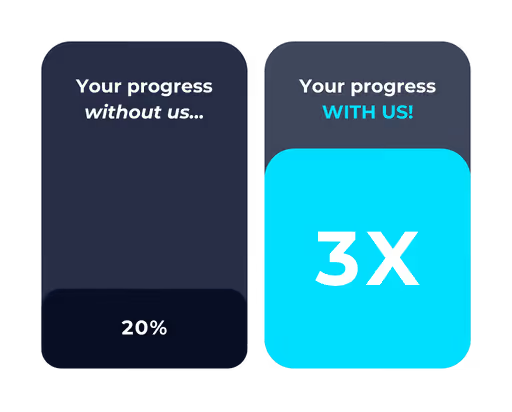

Thousands of people around the world have already joined GetFIT App to track their nutrition, follow workout programs, and work toward their fitness goals. Join our growing global community and get the tools you need to manage your fitness journey in one place.


Set calorie and macro goals, track your meals and activity, follow structured workout and meal plans, and monitor your progress over time. GetFIT App brings nutrition tracking, fitness planning, and everyday tools together in one simple membership.
.webp)
Discover the premium features of the GetFIT App during a free trial: personalized calorie calculation and tracking, meal plans, recipes, workout programs, e-books, and much more. Start your transformation today!
.webp)
Start your free trial today! With your premium membership, you’ll get immediate access to all the tools and content that help you lose weight, build muscle, and develop a healthy lifestyle.



















































.png)