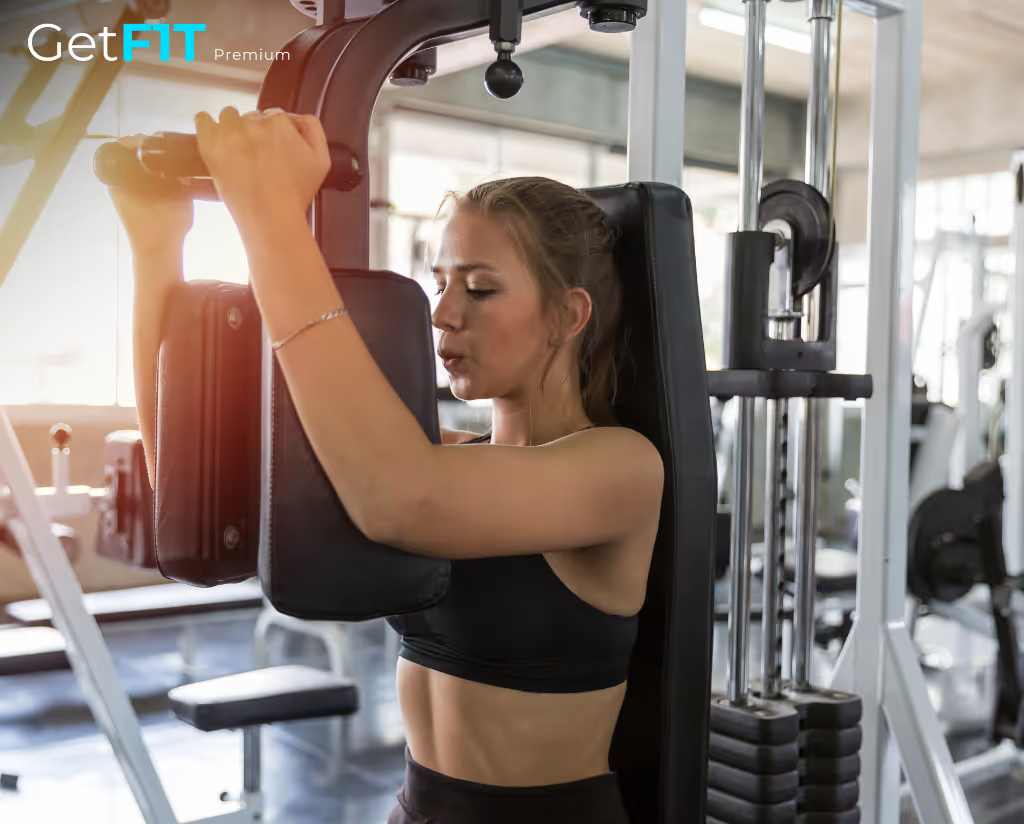
Chest fly machine isolates the chest muscles, improving muscle connection and shape. Focus on a slow stretch and controlled contraction for maximum effect.

Train & diet effectively with the help of the GetFIT App. Our app tracks your calorie intake and workouts, and offers effective plans, recipes, and programs.

(Free trial for new users - cancel anytime)
Our Meal Plans


Blog Articles









Blog Articles

Cable Chest Fly – One of the Best Isolation Exercises for the Chest
The cable chest fly (cable chest fly) is a highly effective isolation exercise that primarily targets the pectoralis major. The constant resistance from the cables keeps the chest muscles under tension throughout the entire range of motion, which makes it extremely effective for muscle growth and shape development.
This exercise is ideal if your goal is to shape, isolate, and refine the chest muscles for a more detailed and aesthetic upper body.
Benefits Compared to Other Chest Exercises
Continuous tension
The cable system keeps constant load on the muscles, even at the top and bottom of the movement.
Better muscle connection
Easier to focus and “feel” the chest working compared to many pressing movements.
Joint-friendly execution
Generally places less stress on the shoulder joints compared to heavy presses.
High isolation effect
Minimal triceps involvement, allowing the chest to do most of the work.
Muscles Worked
Primary muscle
- Pectoralis major (especially the mid and inner chest)
Secondary muscles
- Anterior deltoid (front shoulder)
- Biceps (stabilization role)
- Core muscles (stability and posture control)
How to Perform the Cable Chest Fly Correctly
Starting position
Set the cable pulleys to chest height. Grab the handles and step forward into a stable staggered stance with a slight forward lean.
Movement execution
- Keep a slight bend in your elbows throughout the movement
- Open your arms wide until you feel a stretch in your chest
- Bring your arms together in an arcing motion in front of your body
- Squeeze your chest at the peak contraction
- Return slowly and under control to the starting position
Key point: This is not a pressing movement — it is a controlled arc motion.
Breathing Pattern
- Exhale: as you bring your hands together
- Inhale: as you open your arms
Range of Motion and Muscle Activation
- Full stretch in the extended position
- Strong contraction in the front position
- Constant tension on the chest throughout the movement
- Avoid letting the weight stack drop uncontrollably
Variations and Difficulty Levels
Variations
- Low-to-high cable fly (upper chest emphasis)
- High-to-low cable fly (lower chest emphasis)
- Single-arm cable fly
Beginner
- Lighter weight
- Shorter range of motion
- Focus on stability and control
Advanced
- Heavier resistance
- Slow eccentric phase
- Pause at peak contraction
When to Use It in Training
- At the end of chest workouts as an isolation exercise
- Before pressing movements for chest activation
- For muscle shaping and “pump” work
Alternative Exercises
- Dumbbell chest fly (flat bench)
- Pec deck machine fly
- Resistance band fly
Recommended Sets, Reps, and Rest
Beginners:
- 3–4 sets
- 10–12 reps
- 60–90 sec rest
Advanced:
- 4–5 sets
- 8–12 reps
- 60–90 sec rest
Sample Chest Workout (with Cable Fly)
- Bench Press – 4 × 8
- Incline Dumbbell Press – 3 × 10
- Cable Chest Fly – 4 × 12
Common Mistakes and How to Avoid Them
Using too much weight
→ Reduces control and mind-muscle connection
Straightening the arms completely
→ Puts unnecessary stress on the joints
Using momentum
→ Always move slowly and under control
Incomplete range of motion
→ Fully open and fully close the arms for maximum activation
Summary
The cable chest fly is one of the most effective isolation exercises for chest development. It helps build a fuller, more defined, and aesthetic chest by maximizing muscle tension and improving mind-muscle connection throughout the movement.

More Exercises
All Exercises
.avif)


.avif)


.avif)

.avif)


.avif)
.avif)


.avif)




Everything You Need for a Fitter Body is here in GetFIT App!
Set calorie and macro goals, track your meals and activity, follow structured workout and meal plans, and monitor your progress over time. GetFIT App brings nutrition tracking, fitness planning, and everyday tools together in one simple membership.
High-Protein Recipes & Meal Plans
Discover hundreds of high-protein recipes, ready-made 4 week meal plans, and healthy meal ideas for weight loss and muscle building. Every recipe includes clear calorie and macro information, so eating for your goals is simple.


Join Thousands of GetFIT App Users Worldwide
Thousands of people around the world have already joined GetFIT App to track their nutrition, follow workout programs, and work toward their fitness goals. Join our growing global community and get the tools you need to manage your fitness journey in one place.
.webp)
Try GetFIT App for 5 days free!
Discover the premium features of the GetFIT App during a free trial: personalized calorie calculation and tracking, meal plans, recipes, workout programs, e-books, and much more. Start your transformation today!
.webp)
Dear User! Unlock your Dream Body Today!
Start your free trial today! With your premium membership, you’ll get immediate access to all the tools and content that help you lose weight, build muscle, and develop a healthy lifestyle.














































.png)