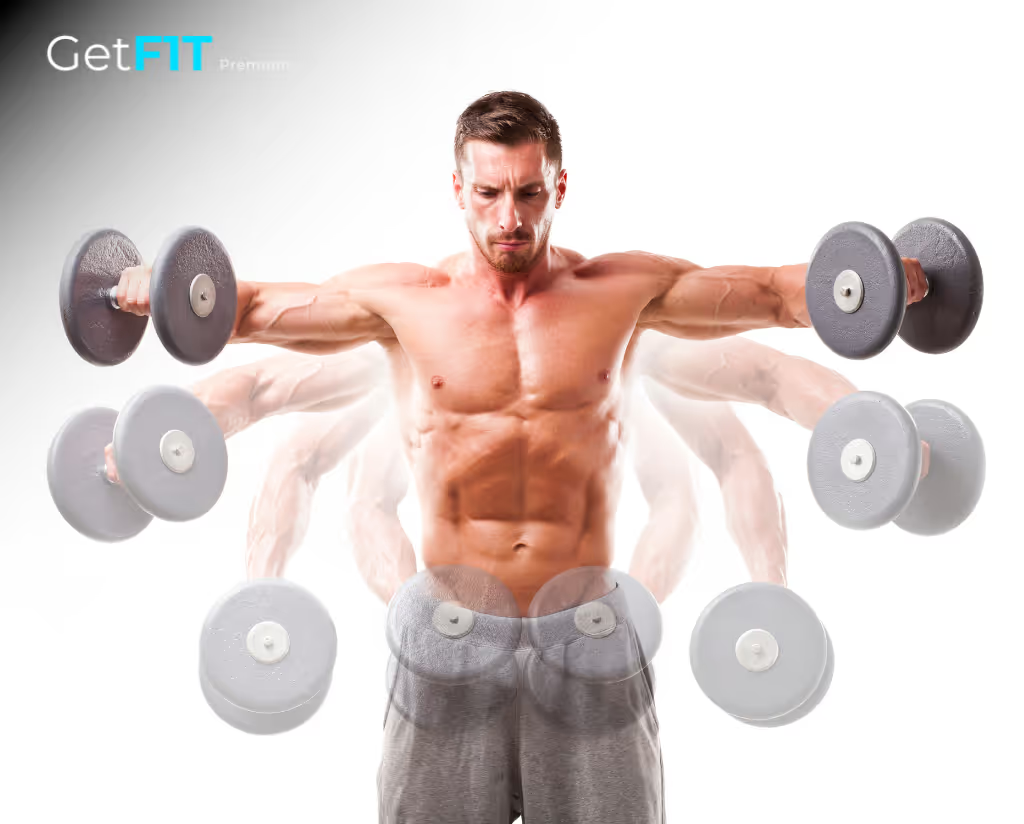
Lateral raise is again effective for targeting the middle deltoids. Perform the movement slowly and avoid using momentum.

Train & diet effectively with the help of the GetFIT App. Our app tracks your calorie intake and workouts, and offers effective plans, recipes, and programs.

(Free trial for new users - cancel anytime)
Our Meal Plans


Blog Articles










Blog Articles

Dumbbell Lateral Raise – Build Wider Shoulders and Develop the Middle Delts
The dumbbell lateral raise is one of the most important isolation exercises for creating broader shoulders and a more aesthetic upper body. It primarily targets the middle deltoid, the muscle responsible for shoulder width and that sought-after V-taper look.
While it may seem simple, this is a highly technique-sensitive exercise where execution quality matters far more than the amount of weight used.
Benefits Compared to Other Exercises
Isolated Shoulder Development
Minimizes chest and triceps involvement, placing most of the load directly on the shoulders.
Shoulder Width and Aesthetics
A key movement for building wider shoulders and improving upper body proportions.
More Joint-Friendly Than Pressing
Places less stress on the shoulder joints compared to heavy pressing exercises.
Easily Adjustable Intensity
Load, tempo, and reps can all be modified to match your level and goals.
Muscles Worked
Primary Muscle
- Middle deltoid (lateral shoulder)
Secondary Muscles
- Upper trapezius (stabilization)
- Anterior deltoid (minor involvement)
- Core muscles (stabilization)
How to Perform the Dumbbell Lateral Raise Correctly
Starting Position
- Stand upright with a slight bend in your knees
- Hold dumbbells at your sides with palms facing inward
Execution
- Keep a slight bend in your elbows (fixed angle throughout)
- Raise your arms out to the sides until shoulder height
- Lead the movement with your elbows, not your wrists
- Keep your wrists neutral (avoid excessive rotation)
- Slowly lower the weights back down under control
Proper Breathing
- Exhale as you raise the weights
- Inhale as you lower them
Range of Motion and Key Technique Points
- Do not raise above shoulder height (to avoid trap dominance)
- Avoid swinging the weights
- Maintain constant tension in the shoulders
- Use a slow eccentric (lowering phase of 2–3 seconds)
Variations and Progression Levels
Variations
- Seated lateral raise
- Single-arm lateral raise
- Cable lateral raise
- Leaning lateral raise
Beginners
- Use light weights
- Focus on slow, controlled reps
- Practice in front of a mirror
Advanced Lifters
- Drop sets
- Partial reps
- Increased time under tension
When to Use It in Your Workout
- Mid or end of your shoulder workout
- As an isolation exercise
- After compound pressing movements
Alternative Exercises
- Machine lateral raise
- Cable lateral raise
- Arnold press (more compound alternative)
Recommended Sets, Reps, and Rest
- Sets: 3–4
- Reps: 10–15
- Rest: 45–75 seconds
Sample Shoulder Workout
- Shoulder press – 4 × 8
- Dumbbell lateral raise – 3 × 12
- Rear delt raise – 3 × 12
Common Mistakes and How to Avoid Them
Using Momentum
Reduces muscle activation. Use lighter weights and controlled movement.
Excessive Trap Involvement
“Shrugging” shifts the load away from the delts. Keep shoulders down.
Using Too Much Weight
Leads to poor form. Focus on muscle tension, not load.
Wrist Rotation
Can strain joints. Keep wrists in a neutral position.
The dumbbell lateral raise is one of the most essential exercises for building wide, aesthetic shoulders. When performed with control and intention, it delivers excellent results in both muscle development and overall physique balance.

More Exercises
All Exercises
.avif)


.avif)


.avif)


.avif)


.avif)
.avif)


.avif)





Everything You Need for a Fitter Body is here in GetFIT App!
Set calorie and macro goals, track your meals and activity, follow structured workout and meal plans, and monitor your progress over time. GetFIT App brings nutrition tracking, fitness planning, and everyday tools together in one simple membership.
High-Protein Recipes & Meal Plans
Discover hundreds of high-protein recipes, ready-made 4 week meal plans, and healthy meal ideas for weight loss and muscle building. Every recipe includes clear calorie and macro information, so eating for your goals is simple.


Join Thousands of GetFIT App Users Worldwide
Thousands of people around the world have already joined GetFIT App to track their nutrition, follow workout programs, and work toward their fitness goals. Join our growing global community and get the tools you need to manage your fitness journey in one place.
.webp)
Try GetFIT App for 5 days free!
Discover the premium features of the GetFIT App during a free trial: personalized calorie calculation and tracking, meal plans, recipes, workout programs, e-books, and much more. Start your transformation today!
.webp)
Dear User! Unlock your Dream Body Today!
Start your free trial today! With your premium membership, you’ll get immediate access to all the tools and content that help you lose weight, build muscle, and develop a healthy lifestyle.














































.png)