
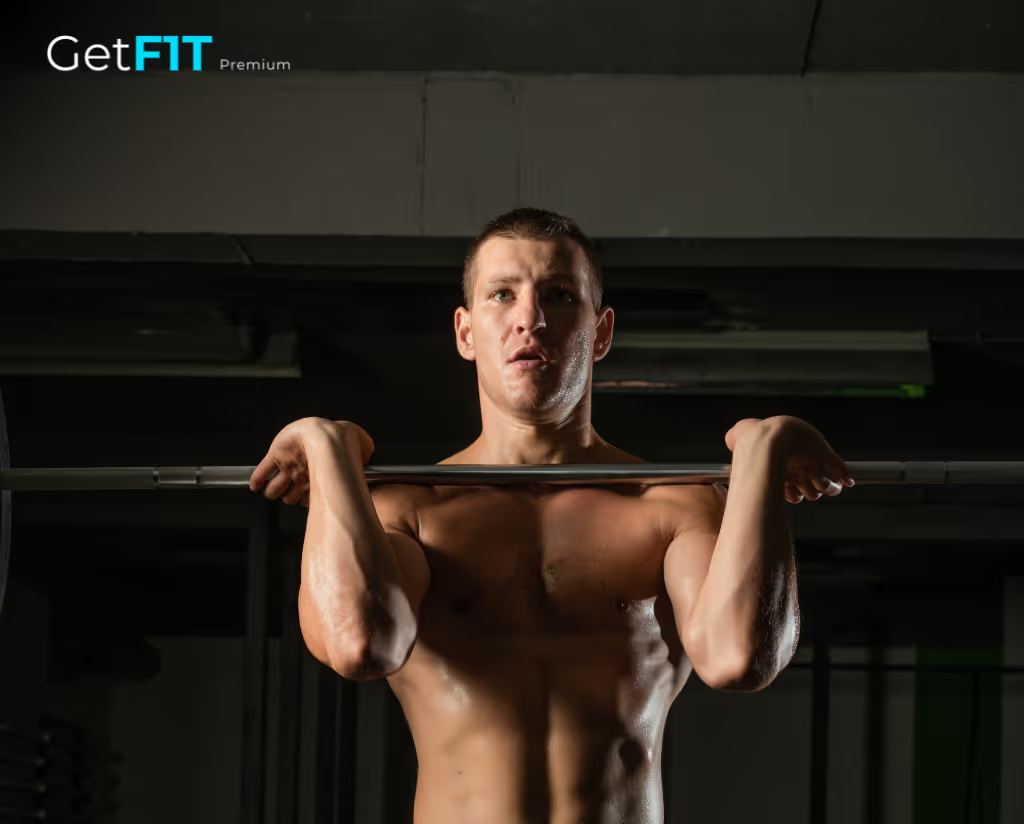
Front squat is an excellent lower-body exercise requiring strong core stability, so keep elbows up and back straight.

Train & diet effectively with the help of the GetFIT App. Our app tracks your calorie intake and workouts, and offers effective plans, recipes, and programs.

(Free trial for new users - cancel anytime)
Our Meal Plans


Blog Articles






Blog Articles

Front Squat – Quadriceps Focus and Core Stability
The front squat is one of the most effective lower body exercises, strongly emphasizing the quadriceps while heavily engaging core stabilization and improving overall posture.
Benefits Compared to Similar Exercises
Higher quadriceps activation
The more upright torso position shifts greater load onto the quads compared to back squats.
Core strength development
Maintaining the front rack position requires significant core engagement throughout the movement.
Improved posture
Places less stress on the lower back compared to back squats when performed correctly.
Mobility development
Improves ankle, hip, and wrist mobility over time.
Muscles Worked
Primary muscles
- Quadriceps (front thigh muscles)
- Gluteus maximus (glutes)
Secondary muscles
- Core muscles (abs and obliques)
- Spinal erectors (lower back stabilizers)
- Adductors (inner thigh muscles)
Proper Execution – How to Perform the Front Squat
- Place the barbell on the front of your shoulders (front rack position)
- Keep elbows high throughout the movement
- Maintain an upright chest and neutral spine
- Descend in a controlled manner into a squat
- Knees track in line with toes
- Reach at least parallel depth
- Drive upward through the full foot with control
Key principle: elbows up + chest up → stable upright torso.
Breathing
- Inhale before descending (brace the core)
- Exhale while standing up
Range of Motion
- Bottom position: thighs at least parallel or deeper if mobility allows
- Top position: full hip and knee extension
A full range of motion maximizes muscle activation and strength development.
Variations
Beginner variations
- Goblet squat (dumbbell held in front position)
- Light weight, higher reps
Advanced variations
- Barbell front squat
- Pause front squat
- Olympic-style front squat
- Split squat variations
When to Use the Front Squat
- At the beginning of leg day as a main compound lift
- For strength and muscle building
- For athletic performance development
- In full-body training programs
Alternatives
- Back squat
- Hack squat
- Leg press
- Goblet squat
Sets, Reps, and Rest
Beginners
- 3–4 sets
- 8–12 reps
Advanced
- 4–5 sets
- 4–8 reps (strength-focused)
Rest time: 60–120 seconds
Hypertrophy and Progressive Overload
The front squat is highly effective for building strong quads and glutes when applied with progressive overload.
How to progress:
- Gradually increase weight over time
- Train across multiple rep ranges (4–12)
- Use pause reps at the bottom position
- Increase total training volume (sets)
- Maintain strict technical execution
Key principle: stable core + controlled depth = maximum muscle stimulation.
Sample Workout
- Front squat – 4 × 6–8
- Lunges – 3 × 10 per leg
- Leg curl – 3 × 12
Common Mistakes
- Dropping elbows → causes forward collapse
- Insufficient depth
- Using excessive weight
- Poor rack position causing wrist strain
Pro Tip
Focus on keeping your elbows high from the very start of the movement—this single cue dramatically improves stability and squat quality.
The front squat is a key exercise for building strong, well-developed legs and a stable core while improving overall movement quality and athletic performance.

More Exercises
All Exercises
.avif)


.avif)


.avif)

.avif)


.avif)
.avif)


.avif)





Everything You Need for a Fitter Body is here in GetFIT App!
Set calorie and macro goals, track your meals and activity, follow structured workout and meal plans, and monitor your progress over time. GetFIT App brings nutrition tracking, fitness planning, and everyday tools together in one simple membership.
High-Protein Recipes & Meal Plans
Discover hundreds of high-protein recipes, ready-made 4 week meal plans, and healthy meal ideas for weight loss and muscle building. Every recipe includes clear calorie and macro information, so eating for your goals is simple.


Join Thousands of GetFIT App Users Worldwide
Thousands of people around the world have already joined GetFIT App to track their nutrition, follow workout programs, and work toward their fitness goals. Join our growing global community and get the tools you need to manage your fitness journey in one place.
.webp)
Try GetFIT App for 5 days free!
Discover the premium features of the GetFIT App during a free trial: personalized calorie calculation and tracking, meal plans, recipes, workout programs, e-books, and much more. Start your transformation today!
.webp)
Dear User! Unlock your Dream Body Today!
Start your free trial today! With your premium membership, you’ll get immediate access to all the tools and content that help you lose weight, build muscle, and develop a healthy lifestyle.














































.png)