Pause squat helps strengthen the bottom position of the squat and increase strength. Hold a brief pause at the bottom while maintaining core stability.

Train & diet effectively with the help of the GetFIT App. Our app tracks your calorie intake and workouts, and offers effective plans, recipes, and programs.

(Free trial for new users - cancel anytime)
Our Meal Plans


Blog Articles







Blog Articles

Pause Squat – Build Strength and Stability from the Bottom Position
The pause squat is an advanced variation of the traditional squat where you hold the bottom position for 1–3 seconds before standing back up.
This brief pause eliminates momentum, forcing your muscles to generate force from a dead stop—making it highly effective for improving strength, control, and technique.
Benefits of the Pause Squat
Increased Strength Out of the Bottom
Removes the stretch reflex (“bounce”), building true concentric strength.
Greater Time Under Tension
Leads to improved muscle activation and growth.
Better Technique
Encourages more controlled and intentional movement patterns.
Enhanced Core Stability
Requires strong bracing to maintain position during the pause.
Muscles Worked
Primary Muscles
- Quadriceps
- Gluteus maximus
Secondary Muscles
- Hamstrings
- Core stabilizers
- Lower back (erector spinae)
How to Perform the Pause Squat Correctly
Starting Position
- Stand with feet shoulder-width apart
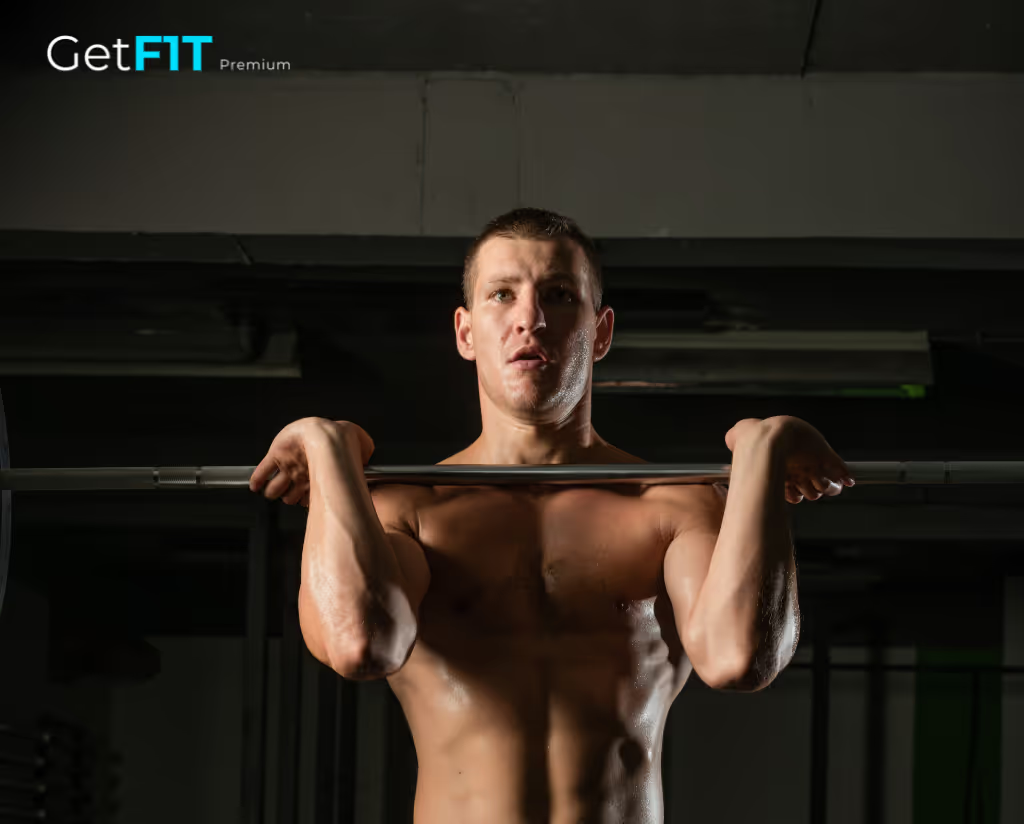
- Place the barbell on your upper back (back squat position)
- Brace your core and lift your chest
Execution
- Initiate the movement by pushing your hips back and bending your knees
- Lower yourself under control to the desired depth
- Pause for 1–3 seconds at the bottom (stay tight—don’t relax)
- Maintain full-body tension
- Drive upward powerfully to return to standing
Proper Breathing & Bracing
- Inhale before descending
- Hold tension (brace) during the pause
- Exhale as you stand up
Range of Motion & Technique Focus
- Squat to at least parallel, or deeper if mobility allows
- Do not relax at the bottom—stay fully engaged
- Keep knees tracking outward
- Maintain a neutral spine throughout
Variations & Progressions
Variations
- Front squat pause
- Goblet squat pause
- Box pause squat
- Tempo + pause combinations
For Beginners
- Bodyweight or light weights
- Shorter pauses (around 1 second)
For Advanced Lifters
- Longer pauses (2–4 seconds)
- Heavier loads
- Combined tempo techniques
When to Use It in Your Workout
Ideal placement:
- In strength-focused training programs
- If you struggle at the bottom of the squat
- For technique refinement
- As a main or accessory movement on leg day
Alternative Exercises
- Traditional squat
- Front squat
- Leg press
- Split squat
Recommended Sets, Reps & Rest
- Sets: 3–5
- Reps:
- 3–8 (strength focus)
- 8–10 (hypertrophy)
- Pause duration: 1–3 seconds
- Rest: 90–150 seconds
Sample Leg Workout
- Pause squat – 4 × 6
- Leg press – 3 × 10
- Romanian deadlift – 3 × 8
Common Mistakes & Fixes
Relaxing at the Bottom
→ Stay tight and engaged throughout the pause
Knees Collapsing Inward
→ Actively push your knees outward
Pausing Too Long
→ 1–3 seconds is enough—don’t lose intensity
Weak Core Bracing
→ Brace properly before every rep
Key Takeaway
The pause squat is one of the most effective exercises for building true strength, stability, and control, especially in the most challenging part of the squat. It’s a powerful tool for breaking plateaus and refining technique.

More Exercises
All Exercises
.avif)


.avif)


.avif)

.avif)


.avif)
.avif)


.avif)




Everything You Need for a Fitter Body is here in GetFIT App!
Set calorie and macro goals, track your meals and activity, follow structured workout and meal plans, and monitor your progress over time. GetFIT App brings nutrition tracking, fitness planning, and everyday tools together in one simple membership.
High-Protein Recipes & Meal Plans
Discover hundreds of high-protein recipes, ready-made 4 week meal plans, and healthy meal ideas for weight loss and muscle building. Every recipe includes clear calorie and macro information, so eating for your goals is simple.


Join Thousands of GetFIT App Users Worldwide
Thousands of people around the world have already joined GetFIT App to track their nutrition, follow workout programs, and work toward their fitness goals. Join our growing global community and get the tools you need to manage your fitness journey in one place.
.webp)
Try GetFIT App for 5 days free!
Discover the premium features of the GetFIT App during a free trial: personalized calorie calculation and tracking, meal plans, recipes, workout programs, e-books, and much more. Start your transformation today!
.webp)
Dear User! Unlock your Dream Body Today!
Start your free trial today! With your premium membership, you’ll get immediate access to all the tools and content that help you lose weight, build muscle, and develop a healthy lifestyle.














































.png)