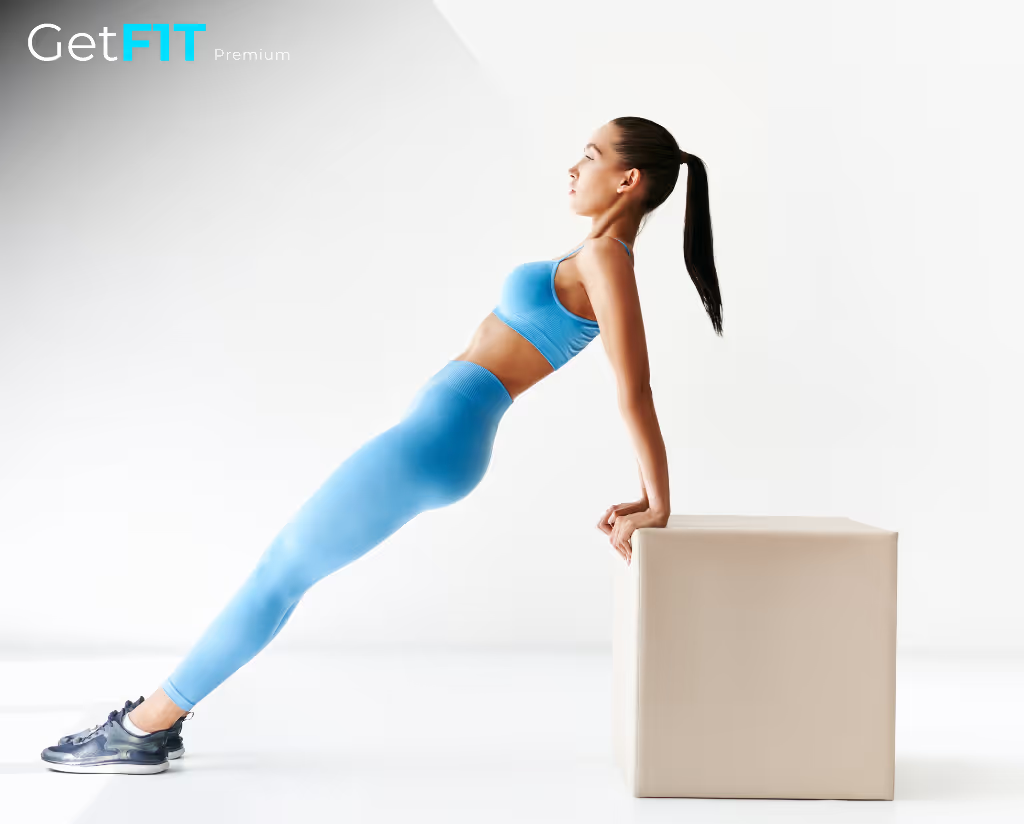
Reverse plank strengthens the posterior chain and core, while keeping hips elevated is important.

Train & diet effectively with the help of the GetFIT App. Our app tracks your calorie intake and workouts, and offers effective plans, recipes, and programs.

(Free trial for new users - cancel anytime)
Our Meal Plans


Blog Articles







Blog Articles

Reverse Plank – Full Core and Posterior Chain Stability
The reverse plank is an effective bodyweight exercise that strengthens not only the abdominal muscles but also the entire posterior chain, including the glutes, lower back, and shoulder girdle. It is an excellent choice for improving posture and developing overall core stability.
Benefits Compared to Similar Exercises
Full Core Activation
Engages both the anterior and posterior core, including the back and glutes.
Posture Improvement
Helps counteract the effects of prolonged sitting and forward posture.
Whole-Body Stability
Strengthens the entire trunk and shoulder support system.
Joint-Friendly Exercise
Effective even under low mechanical stress.
Muscles Worked
Primary Muscles
- Rectus abdominis
- Erector spinae (lower back)
Secondary Muscles
- Gluteus maximus (glutes)
- Posterior deltoids (rear shoulders)
- Trapezius
- Core stabilizers
How to Perform the Reverse Plank Correctly
- Sit on the floor with your hands placed behind you
- Position your hands under your shoulders, fingers pointing forward
- Extend your legs straight out
- Lift your hips until your body forms a straight line
- Open your chest and keep your shoulders pulled back
- Hold the position with full body tension
Key Focus
Maintain a strong core and active glutes—avoid letting the hips drop.
Proper Breathing
- Breathe steadily and continuously
- Do not hold your breath during the hold
Range of Motion and Technique
- This is a static exercise with no repetitions
- Focus on maintaining a straight line from head to heels
- The emphasis is on sustained tension rather than movement
Variations and Progression Levels
Beginner
- Bent-knee reverse plank
- Shorter holds (15–20 seconds)
Advanced
- Single-leg reverse plank
- Weighted reverse plank (e.g., weight plate on hips)
- Dynamic hip lifts
When to Use It in Your Workout
- As part of a warm-up for core activation
- At the end of workouts for stabilization work
- In rehabilitation or posture correction programs
Alternative Exercises
- Traditional plank
- Glute bridge
- Bird dog
- Dead bug
Recommended Duration, Sets, and Rest
- Sets: 3–4
- Duration: 20–60 seconds
- Rest: 30–60 seconds
Progression and Overload
Although the reverse plank is an isometric exercise, it can still be progressively overloaded:
- Increase hold duration
- Use more challenging variations (single-leg, weighted)
- Maximize muscular tension throughout the hold
- Combine with dynamic core movements
Sample Core Workout
- Reverse plank – 3 × 30–45 sec
- Plank – 3 × 30 sec
- Leg raises – 3 × 12–15
Common Mistakes and How to Avoid Them
Hips Dropping
Reduces tension—keep glutes and core fully engaged.
Shoulders Rolling Forward
Actively pull shoulders back and open the chest.
Lack of Core Activation
Maintain full-body tension throughout the hold.
Wrist Overload
Adjust hand position if discomfort occurs.
Pro Tip
To maximize effectiveness, consciously squeeze your glutes and pull your shoulders back throughout the entire hold—this significantly increases full-body engagement.
The reverse plank is a highly effective exercise for building a strong, stable core and improving posture, while requiring minimal equipment.

More Exercises
All Exercises
.avif)


.avif)


.avif)

.avif)


.avif)
.avif)


.avif)



Everything You Need for a Fitter Body is here in GetFIT App!
Set calorie and macro goals, track your meals and activity, follow structured workout and meal plans, and monitor your progress over time. GetFIT App brings nutrition tracking, fitness planning, and everyday tools together in one simple membership.
High-Protein Recipes & Meal Plans
Discover hundreds of high-protein recipes, ready-made 4 week meal plans, and healthy meal ideas for weight loss and muscle building. Every recipe includes clear calorie and macro information, so eating for your goals is simple.


Join Thousands of GetFIT App Users Worldwide
Thousands of people around the world have already joined GetFIT App to track their nutrition, follow workout programs, and work toward their fitness goals. Join our growing global community and get the tools you need to manage your fitness journey in one place.
.webp)
Try GetFIT App for 5 days free!
Discover the premium features of the GetFIT App during a free trial: personalized calorie calculation and tracking, meal plans, recipes, workout programs, e-books, and much more. Start your transformation today!
.webp)
Dear User! Unlock your Dream Body Today!
Start your free trial today! With your premium membership, you’ll get immediate access to all the tools and content that help you lose weight, build muscle, and develop a healthy lifestyle.














































.png)