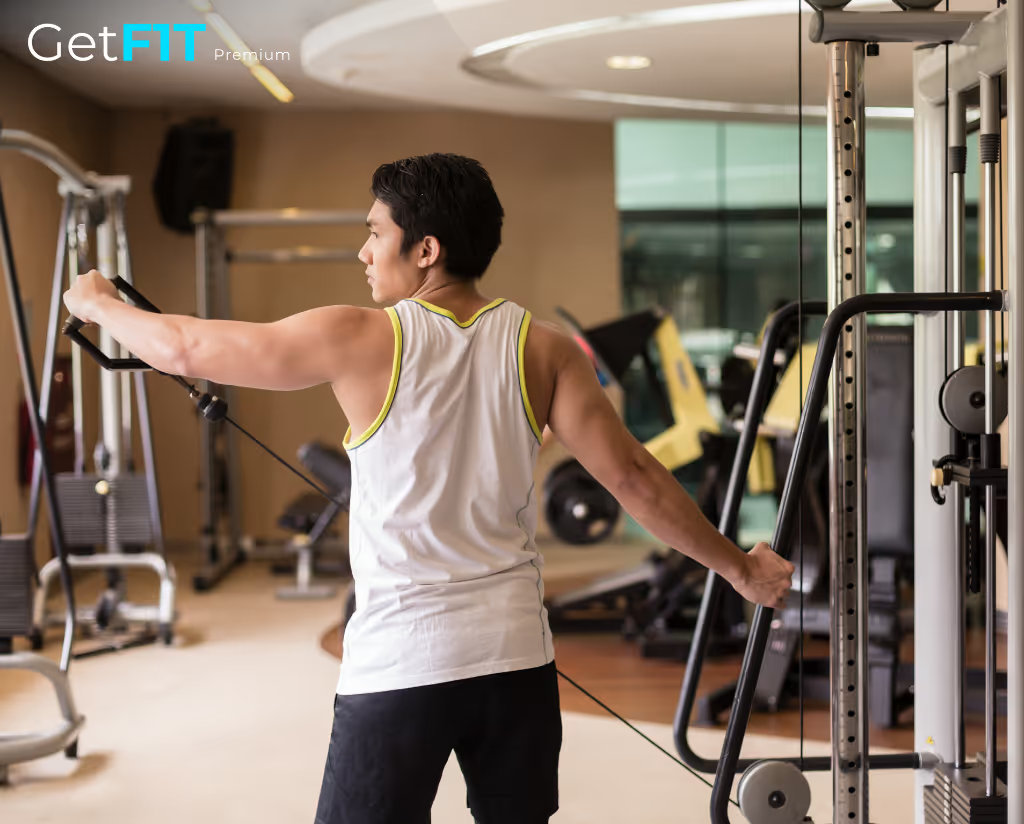
Cable lateral raise effectively develops the middle deltoids, helping build wider shoulders. Perform it slowly and with control for maximum muscle activation.

Train & diet effectively with the help of the GetFIT App. Our app tracks your calorie intake and workouts, and offers effective plans, recipes, and programs.

(Free trial for new users - cancel anytime)
Our Meal Plans


Blog Articles










Blog Articles

Cable Lateral Raise – Targeted Exercise for Building Wider Shoulders
The cable lateral raise is an excellent isolation exercise that primarily targets the lateral deltoid (side shoulder). One of the biggest advantages of using a cable machine is the constant tension it provides throughout the entire range of motion, leading to more effective muscle activation compared to traditional dumbbells.
This exercise is essential if your goal is to build broader shoulders and create a more aesthetic upper body.
Benefits Compared to Other Lateral Raise Variations
Constant Tension
The cable keeps the muscle under load throughout the entire movement.
Better Mind-Muscle Connection
Easier to focus directly on the lateral deltoid.
Reduced Momentum
Encourages stricter, more controlled execution.
Joint-Friendly
With proper technique, it places less stress on the joints.
Muscles Worked
Primary Muscle
- Lateral deltoid (side shoulder)
Secondary Muscles
- Anterior deltoid
- Upper trapezius (stabilization)
- Rotator cuff muscles
How to Perform the Cable Lateral Raise Correctly
Starting Position
- Stand next to a cable machine with the pulley set to the lowest position
- Grab the handle with the opposite hand so the cable crosses in front of your body
Execution
- Keep your arm slightly bent
- Raise your arm out to the side until it reaches shoulder height
- Initiate the movement from the shoulder, not with momentum
- Briefly squeeze at the top
- Slowly lower the weight back to the starting position
Proper Breathing
- Exhale as you raise your arm
- Inhale as you lower it back down
Range of Motion and Muscle Activation
- Lift to shoulder height
- Lower under full control
- Maintain constant tension in the deltoid
- Avoid letting the weight fully drop at the bottom
Variations and Progression Levels
Variations
- Single-arm cable lateral raise
- Cross-body cable lateral raise
- Dual cable lateral raise
Beginners
- Use lighter weights
- Focus on slower tempo
- Start with a shorter range if needed
Advanced Lifters
- Heavier loads with strict form
- Slow eccentric phase
- Pause at the top for peak contraction
When to Use It in Your Workout
- As an isolation exercise during shoulder workouts
- At the end of training as a “finisher”
- As a supplementary movement after chest or back training
Alternative Exercises
- Dumbbell lateral raise
- Machine lateral raise
- Bent-over lateral raise (rear delts)
Recommended Sets, Reps, and Rest
- Sets: 3–4
- Reps: 10–15
- Rest: 45–60 seconds
Sample Shoulder Workout
- Cable lateral raise – 4 × 12
- Shoulder press – 3 × 8–10
- Bent-over lateral raise – 3 × 12
Common Mistakes and How to Avoid Them
Using Momentum
Reduces muscle tension. Lift with control, not speed.
Shrugging the Shoulders
Shifts load to the traps. Keep your shoulders down.
Using Too Much Weight
Leads to poor form. Choose a manageable load.
Lifting Too High
Reduces lateral deltoid activation. Stop at shoulder height.
The cable lateral raise is one of the most effective exercises for developing the side delts, helping you build a wider, more balanced, and aesthetically pleasing upper body.

More Exercises
All Exercises
.avif)


.avif)


.avif)


.avif)


.avif)
.avif)


.avif)






Everything You Need for a Fitter Body is here in GetFIT App!
Set calorie and macro goals, track your meals and activity, follow structured workout and meal plans, and monitor your progress over time. GetFIT App brings nutrition tracking, fitness planning, and everyday tools together in one simple membership.
High-Protein Recipes & Meal Plans
Discover hundreds of high-protein recipes, ready-made 4 week meal plans, and healthy meal ideas for weight loss and muscle building. Every recipe includes clear calorie and macro information, so eating for your goals is simple.


Join Thousands of GetFIT App Users Worldwide
Thousands of people around the world have already joined GetFIT App to track their nutrition, follow workout programs, and work toward their fitness goals. Join our growing global community and get the tools you need to manage your fitness journey in one place.
.webp)
Try GetFIT App for 5 days free!
Discover the premium features of the GetFIT App during a free trial: personalized calorie calculation and tracking, meal plans, recipes, workout programs, e-books, and much more. Start your transformation today!
.webp)
Dear User! Unlock your Dream Body Today!
Start your free trial today! With your premium membership, you’ll get immediate access to all the tools and content that help you lose weight, build muscle, and develop a healthy lifestyle.














































.png)