Dumbbell shoulder press is an effective shoulder exercise that improves strength and muscle mass. Keep your core stable and avoid excessive arching.

Train & diet effectively with the help of the GetFIT App. Our app tracks your calorie intake and workouts, and offers effective plans, recipes, and programs.

(Free trial for new users - cancel anytime)
Our Meal Plans


Blog Articles








Blog Articles

Dumbbell Shoulder Press: A Fundamental Exercise for Building Strong Shoulders
The dumbbell shoulder press is one of the most effective upper-body exercises for developing shoulder strength and size. Because it is a compound movement, it trains multiple muscle groups at the same time and helps improve pressing strength that carries over to many other exercises.
Unlike machine variations, dumbbells require each arm to work independently and force the stabilizing muscles to contribute throughout the movement. This makes the exercise a valuable addition to almost any upper-body training program.
Benefits of the Dumbbell Shoulder Press
One of the biggest advantages of the dumbbell shoulder press is that it allows for a natural range of motion. Many people find it more comfortable on the shoulders than a barbell press, especially when using a neutral or slightly inward hand position.
Since each arm moves independently, the exercise can also help reduce strength imbalances between the left and right sides. In addition, the stabilizing demands placed on the shoulders and core make it an excellent movement for building overall upper-body strength.
Muscles Worked
Primary Muscles
The front deltoids are responsible for most of the pressing motion, while the lateral deltoids contribute to moving the weight overhead.
Secondary Muscles
The triceps assist with elbow extension during the press. The upper chest contributes slightly, particularly at the beginning of the movement. The trapezius and core muscles work to stabilize the body and maintain proper posture.
How to Perform the Dumbbell Shoulder Press
Starting Position
The exercise can be performed seated or standing. Hold a pair of dumbbells at shoulder height with your palms facing forward or slightly inward.
Lift your chest, keep your core tight, and maintain a neutral spine. Avoid excessive arching of the lower back.
Pressing Phase
Press the dumbbells upward in a controlled motion. Allow the elbows to stay slightly in front of the body rather than flaring directly to the sides.
Extend your arms almost completely at the top without locking the elbows aggressively. The dumbbells should finish close together, but they do not need to touch.
Lowering Phase
Slowly lower the weights back to shoulder level while maintaining control. Avoid dropping the dumbbells or relying on momentum to start the next repetition.
Breathing Technique
Inhale as you lower the weights.
Exhale while pressing the dumbbells overhead.
Maintaining a steady breathing pattern helps keep the torso stable and improves control throughout the set.
Range of Motion
Lower the dumbbells until they reach approximately shoulder height. From there, press upward until your arms are nearly straight.
Using a full, controlled range of motion helps maximize muscle recruitment while reducing unnecessary stress on the joints.
Variations
Beginner Options
For beginners, the seated dumbbell shoulder press is often easier to learn because the bench provides additional support and reduces the demand on balance and core stability.
Advanced Variations
More experienced lifters may prefer the standing dumbbell shoulder press, which places greater demands on the core and stabilizing muscles.
Single-arm presses can improve unilateral strength and coordination, while the Arnold press introduces additional shoulder involvement through a larger range of motion.
When to Include the Dumbbell Shoulder Press
The dumbbell shoulder press is typically performed near the beginning of a shoulder workout when energy levels are highest. It also fits well into upper-body and push-day routines as one of the main compound movements.
Because it allows relatively heavy loading, it is commonly used for both strength and muscle-building goals.
Alternative Exercises
If dumbbells are unavailable or uncomfortable, several alternatives can provide similar benefits.
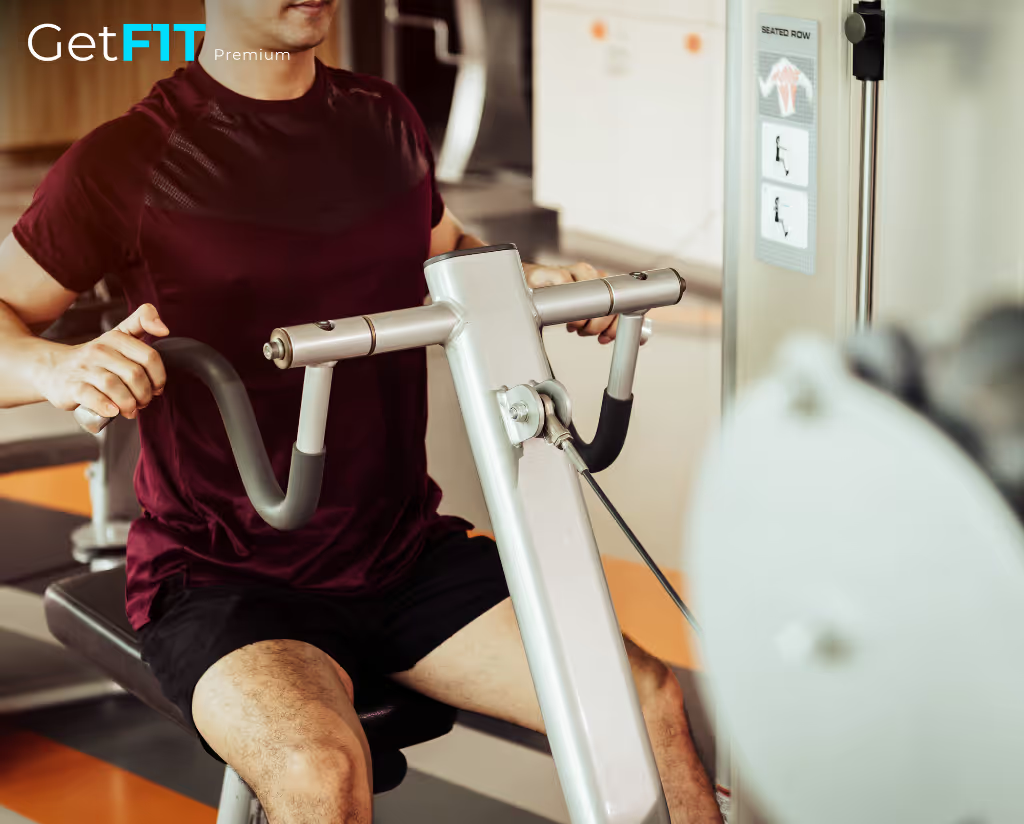
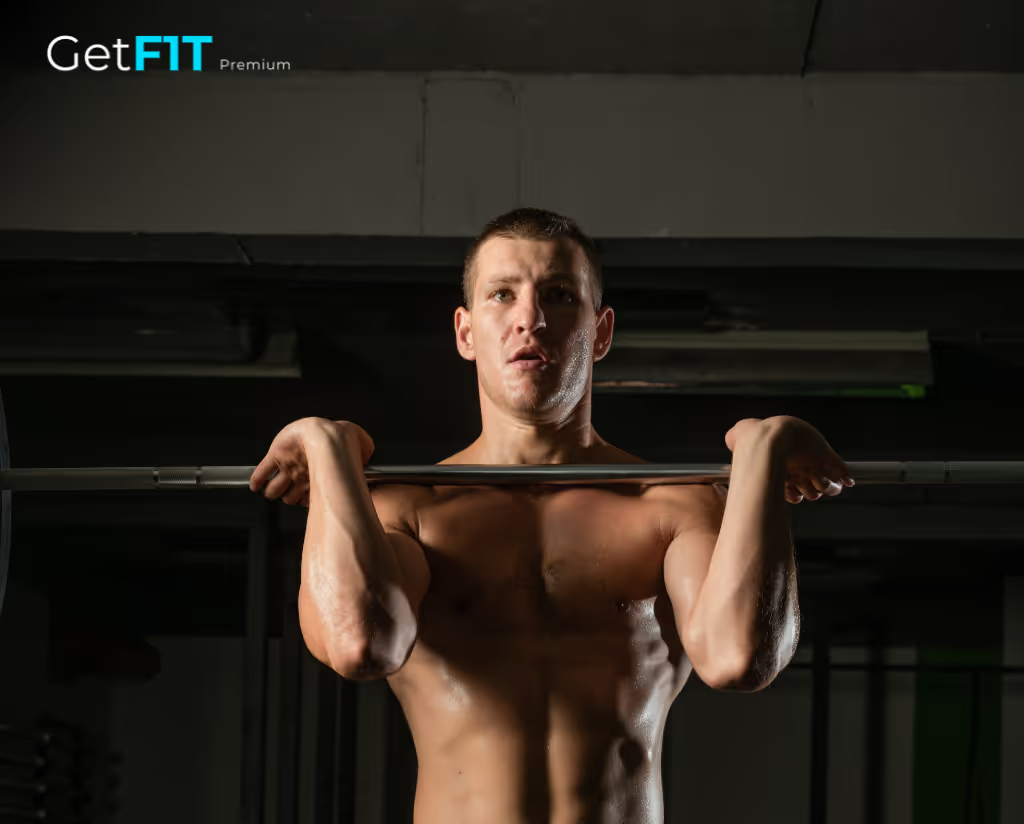
Machine shoulder presses offer greater stability and are beginner friendly. The barbell overhead press allows heavier loading and is often used for strength development. The Arnold press is another popular variation that places additional emphasis on the deltoids.
Sets, Repetitions, and Rest Periods
For muscle growth, performing 3 to 4 sets of 8 to 12 repetitions works well for most people.
For strength development, 4 to 5 sets of 4 to 8 repetitions are commonly used.
Rest periods between 60 and 120 seconds are usually sufficient, depending on the weight used and the overall intensity of the workout.
Sample Shoulder Workout
A simple shoulder session may begin with dumbbell shoulder presses for 4 sets of 8 to 10 repetitions. This can be followed by lateral raises for 3 sets of 12 to 15 repetitions and rear delt exercises for another 3 sets of 12 to 15 repetitions to ensure balanced shoulder development.
Common Mistakes
One of the most common mistakes is excessive arching of the lower back. Keeping the core engaged and the ribs down helps maintain a safer and stronger pressing position.
Using too much weight often leads to poor technique and reduced shoulder involvement. Choosing a load that allows for controlled repetitions is usually more effective.
Some lifters shorten the movement and avoid lowering the dumbbells fully. Using an appropriate range of motion generally produces better results and improves shoulder mobility.
Another common issue is allowing the wrists to bend excessively under the load. Keeping the wrists in a neutral position helps maintain better force transfer and reduces unnecessary stress on the joints.

More Exercises
All Exercises
.avif)


.avif)


.avif)

.avif)


.avif)
.avif)


.avif)





Everything You Need for a Fitter Body is here in GetFIT App!
Set calorie and macro goals, track your meals and activity, follow structured workout and meal plans, and monitor your progress over time. GetFIT App brings nutrition tracking, fitness planning, and everyday tools together in one simple membership.
High-Protein Recipes & Meal Plans
Discover hundreds of high-protein recipes, ready-made 4 week meal plans, and healthy meal ideas for weight loss and muscle building. Every recipe includes clear calorie and macro information, so eating for your goals is simple.



Join Thousands of GetFIT App Users Worldwide
Thousands of people around the world have already joined GetFIT App to track their nutrition, follow workout programs, and work toward their fitness goals. Join our growing global community and get the tools you need to manage your fitness journey in one place.
.webp)
Try GetFIT App for 5 days free!
Discover the premium features of the GetFIT App during a free trial: personalized calorie calculation and tracking, meal plans, recipes, workout programs, e-books, and much more. Start your transformation today!
.webp)
Dear User! Unlock your Dream Body Today!
Start your free trial today! With your premium membership, you’ll get immediate access to all the tools and content that help you lose weight, build muscle, and develop a healthy lifestyle.














































.png)