Renegade row combines core stability and back strength in a complex movement. Keep your hips stable and avoid rotation.

Train & diet effectively with the help of the GetFIT App. Our app tracks your calorie intake and workouts, and offers effective plans, recipes, and programs.

(Free trial for new users - cancel anytime)
Our Meal Plans


Blog Articles









Blog Articles
Renegade Row – Core Stability and Back Strength in One Movement
The renegade row is a hybrid exercise that combines a plank position with a dumbbell rowing movement. You hold a strong push-up position while alternating rows with each arm. The result is not just a back exercise, but a full-body stability challenge where your core has to work constantly to keep everything from rotating.
It looks simple at first, but once you load it properly and slow it down, it quickly becomes one of the more demanding movements for trunk control and coordination.
Why the Renegade Row Is So Effective
The main advantage of this exercise is that it forces your body to resist rotation while moving one arm at a time. That anti-rotation demand is what makes it different from most traditional rowing variations.
You are training strength and stability at the same time. Your back is doing the pulling work, but your core is working just as hard to keep your hips level and your spine stable.
It also builds practical strength that transfers well to sports and everyday movement, especially anything that requires control under instability.
Muscles Worked
The primary driver of the movement is the latissimus dorsi, which handles the rowing action. At the same time, the entire core system is heavily engaged, especially the deep stabilizers that prevent rotation.
The biceps assist during the pull, while the rear delts, traps, and rhomboids help control the upper back position. The glutes stay active throughout to maintain a solid plank position, and the triceps work isometrically as they support your body weight.
How to Perform the Renegade Row Properly
Start in a strong plank position with a dumbbell in each hand. Your feet should be slightly wider than shoulder width at first to help with balance. Your body should form a straight line from head to heels, with your core and glutes fully engaged before you even start moving.
From this position, pull one dumbbell toward your hip while keeping your elbow close to your body. The key detail is what does not move. Your hips should stay as still as possible, with no twisting or shifting to one side.
Lower the weight slowly back to the floor, then repeat on the other side. Each repetition should feel controlled, not rushed. If the weight forces you to rotate, it is too heavy for the movement.
Breathing stays simple. Exhale during the pull and inhale as you return to the starting position.
Form and Control Details
The renegade row is less about load and more about control. The goal is to minimize movement in everything except the working arm. If your hips are rotating or lifting, you are losing the main benefit of the exercise.
A wider stance makes the movement easier and more stable, while a narrower stance increases the difficulty significantly. The same applies to tempo. Slower reps increase core demand and force better control.
Variations and Progressions
Beginners often benefit from performing the movement from the knees or using lighter dumbbells with a wider stance. This reduces the instability while still teaching proper mechanics.
More advanced versions include heavier loads, a narrower stance, or slower eccentric phases. Some athletes also use kettlebells instead of dumbbells, which adds an extra balance challenge due to the offset weight distribution.
When to Use It
The renegade row fits best into full-body training sessions or core-focused work. It can also be used as a supplemental back exercise, especially when the goal is improving stability rather than maximal strength.
It is not typically a primary heavy back movement, but it works well in athletic conditioning, functional strength programs, or finishing work after heavier lifts.
Common Mistakes
The most common issue is letting the hips rotate during the pull. This usually happens when the weight is too heavy or the core is not properly engaged before starting the movement.
Another mistake is rushing the reps. Momentum reduces the stability demand and turns the exercise into a basic dumbbell row with poor plank control.
Using too narrow of a stance too early can also cause instability and break form, especially for beginners.
The renegade row is most effective when it is treated as a control exercise, not a strength ego lift. When performed correctly, it builds back strength, core stability, and coordination in a single integrated movement.

More Exercises
All Exercises
.avif)


.avif)


.avif)

.avif)


.avif)
.avif)


.avif)


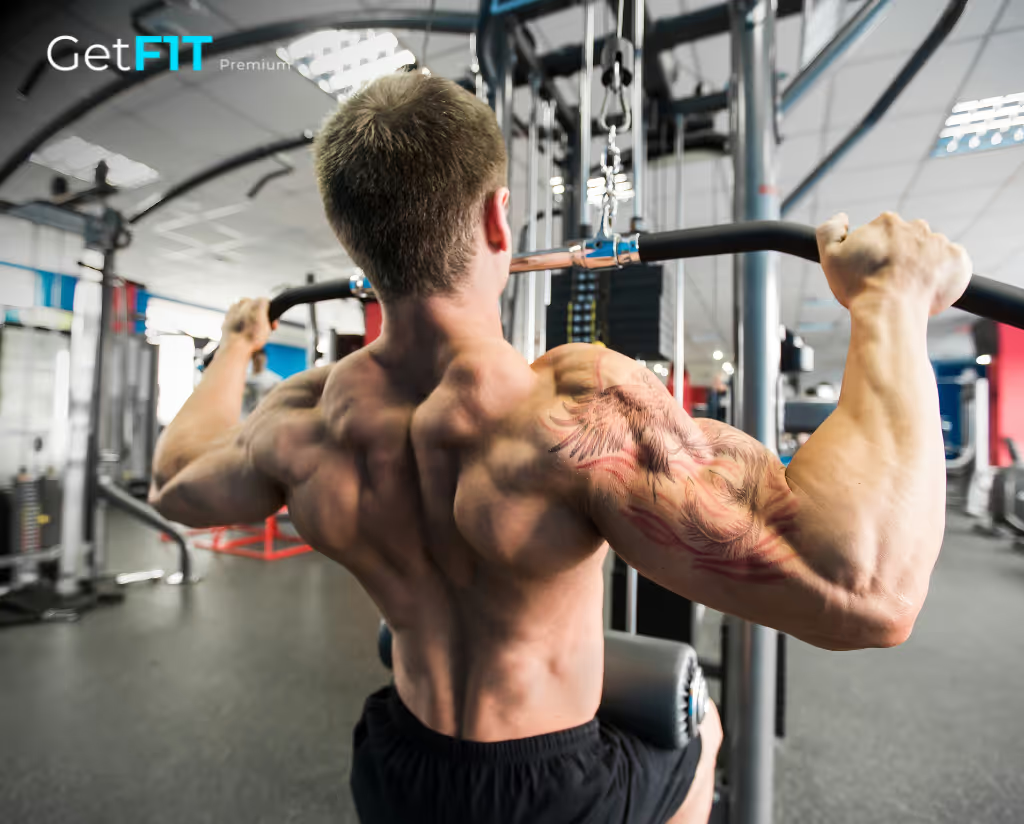




Everything You Need for a Fitter Body is here in GetFIT App!
Set calorie and macro goals, track your meals and activity, follow structured workout and meal plans, and monitor your progress over time. GetFIT App brings nutrition tracking, fitness planning, and everyday tools together in one simple membership.
High-Protein Recipes & Meal Plans
Discover hundreds of high-protein recipes, ready-made 4 week meal plans, and healthy meal ideas for weight loss and muscle building. Every recipe includes clear calorie and macro information, so eating for your goals is simple.


Join Thousands of GetFIT App Users Worldwide
Thousands of people around the world have already joined GetFIT App to track their nutrition, follow workout programs, and work toward their fitness goals. Join our growing global community and get the tools you need to manage your fitness journey in one place.
.webp)
Try GetFIT App for 5 days free!
Discover the premium features of the GetFIT App during a free trial: personalized calorie calculation and tracking, meal plans, recipes, workout programs, e-books, and much more. Start your transformation today!
.webp)
Dear User! Unlock your Dream Body Today!
Start your free trial today! With your premium membership, you’ll get immediate access to all the tools and content that help you lose weight, build muscle, and develop a healthy lifestyle.











































.png)