Seated leg curl effectively develops the hamstrings. Control the movement and use full range of motion.

Train & diet effectively with the help of the GetFIT App. Our app tracks your calorie intake and workouts, and offers effective plans, recipes, and programs.

(Free trial for new users - cancel anytime)
Our Meal Plans


Blog Articles








Blog Articles

Hamstring-Focused Leg Workout With Seated Leg Curls
1. Barbell Romanian Deadlift
- 3 sets × 6–10 reps
- Rest: 2–3 minutes
2. Seated Leg Curl Machine
- 3 sets × 10–15 reps
- Rest: 90–120 seconds
3. Leg Press Machine
- 3 sets × 10–12 reps
- Rest: 2 minutes
4. Bulgarian Split Squat
- 2 sets × 10–12 reps per leg
- Rest: 90–120 seconds
5. Standing Calf Raise
- 3 sets × 10–15 reps
- Rest: 60–90 seconds
1. Barbell Romanian Deadlift: 3 × 6–10
The Romanian deadlift is the primary hip-hinge movement in this session. It trains the hamstrings and glutes through controlled hip flexion and extension while requiring substantial trunk stabilization.
Performing it first allows you to practice the more technically demanding movement before your hamstrings become fatigued from seated leg curls.
How to perform it:
- Stand with your feet approximately hip-width apart and hold the barbell in front of your thighs.
- Maintain a slight bend in your knees.
- Brace your torso and push your hips backward.
- Lower the bar close to your legs while keeping your spine relatively neutral.
- Stop when you reach a substantial hamstring stretch without losing your position.
- Drive your hips forward to return to standing.
Training tips:
- Keep the bar close to your legs.
- Avoid turning the movement into a deep squat.
- Maintain approximately the same knee bend throughout the repetition.
- Do not round your lower back to reach a lower position.
- Use a weight that allows controlled repetitions.
Rest 2–3 minutes between working sets.
2. Seated Leg Curl Machine: 3 × 10–15
The seated leg curl provides direct knee-flexion training after the Romanian deadlift.
This combination challenges the hamstrings through two different joint actions, making it useful for comprehensive posterior-thigh development.
How to perform it:
- Adjust the seat so your knees align with the machine's pivot point.
- Position the lower roller against the backs of your lower legs.
- Secure the thigh restraint comfortably.
- Keep your back and hips supported.
- Bend your knees to pull the resistance downward.
- Return the weight gradually without allowing the stack to crash.
Training tips:
- Keep your hips against the seat.
- Avoid leaning backward to move the weight.
- Use a substantial, comfortable range of motion.
- Maintain approximately 1–2 repetitions in reserve on most sets.
- Increase resistance only when you can complete the prescribed repetitions consistently.
Rest 90–120 seconds between working sets.
3. Leg Press Machine: 3 × 10–12
The leg press adds compound lower-body training for the quadriceps, glutes, and adductors.
Although the session emphasizes hamstrings, including a knee-extension-focused compound movement helps maintain balanced lower-body training.
How to perform it:
- Sit with your back and hips supported against the machine.
- Position your feet approximately shoulder-width apart.
- Release the safety mechanism.
- Bend your knees and hips to lower the platform through a comfortable range.
- Press through your feet to extend your legs.
- Secure the machine before finishing.
Training tips:
- Keep your heels supported.
- Allow your knees to track naturally with your toes.
- Avoid lifting your hips off the seat.
- Do not bounce at the bottom.
- Use a resistance that allows consistent depth and control.
Rest approximately 2 minutes between sets.
4. Bulgarian Split Squat: 2 × 10–12 Per Leg
Bulgarian split squats add unilateral quadriceps and glute training.
They complement the bilateral Romanian deadlift and leg press by requiring each leg to contribute independently.
How to perform it:
- Stand in front of a bench with one foot elevated behind you.
- Position your front foot far enough forward to maintain balance.
- Bend your front knee and lower under control.
- Keep your front foot securely planted.
- Push through your front leg to return to standing.
Training tips:
- Start with bodyweight or light dumbbells when learning the movement.
- Avoid relying excessively on the rear leg.
- Maintain a consistent range of motion on both sides.
- Keep the movement controlled rather than bouncing.
- Reduce resistance if balance becomes the limiting factor.
Rest 90–120 seconds between sets.
5. Standing Calf Raise: 3 × 10–15
Standing calf raises provide direct training for the calf muscles, particularly the gastrocnemius.
They complete the session without adding another demanding hip-hinge or knee-flexion exercise.
How to perform it:
- Position your feet securely on the machine's platform.
- Keep your knees relatively straight.
- Raise your heels by pushing through the balls of your feet.
- Briefly control the top position.
- Lower your heels through a comfortable range.
Training tips:
- Avoid bouncing.
- Keep the movement primarily at your ankles.
- Maintain consistent control.
- Use a resistance that allows the prescribed repetitions without excessive momentum.
Rest 60–90 seconds between sets.
How to Warm Up Before This Hamstring-Focused Workout
Spend approximately 5–8 minutes preparing for the session, followed by progressive warm-up sets for the Romanian deadlift.
A practical warm-up includes:
- 3–5 minutes: Easy cycling or treadmill walking.
- 1–2 minutes: Controlled bodyweight hip hinges and comfortable leg movements.
- 2–4 warm-up sets: Gradually increase the Romanian deadlift resistance before your first working set.
For example, if your planned working weight is 80 kg, you might perform lighter sets at approximately 20 kg, 40 kg, 60 kg, and 70 kg.
These loads are illustrative and should be adjusted to your strength level.
Warm-up sets should prepare you for the movement without creating substantial fatigue.
Before your first working set of seated leg curls, perform one lighter set if necessary to check the machine adjustments and practice controlled knee flexion.
How Hard Should You Train During This Hamstring Workout?
Use repetitions in reserve (RIR) to manage training effort.
RIR refers to the number of additional repetitions you could complete before reaching muscular failure.
For this session:
- Romanian deadlift: Approximately 2–3 RIR.
- Seated leg curl: Approximately 1–2 RIR.
- Leg press: Approximately 1–3 RIR.
- Bulgarian split squat: Approximately 1–3 RIR.
- Standing calf raise: Approximately 1–2 RIR.
You do not need to train every set to failure.
For Romanian deadlifts, stop the set before fatigue causes substantial changes in your hip-hinge technique.
For seated leg curls, you can generally train closer to muscular failure because the machine supports your body and the movement requires less coordination.
However, stop when you can no longer complete controlled repetitions without lifting your hips or swinging the resistance.
How to Progress This Hamstring-Focused Workout Over Several Weeks
Step 1: Start Near the Lower End of Each Repetition Range
For example, if your seated leg curl target is 3 sets of 10–15 repetitions, choose a resistance that allows approximately 10 controlled repetitions per set.
Maintain the same machine adjustments between workouts.
Step 2: Gradually Increase Repetitions
Keep the resistance consistent while working toward the upper end of the prescribed range.
For example:
- Week 1: 3 × 10.
- Week 2: 3 × 11.
- Week 3: 3 × 12.
- Week 4: 3 × 13.
- Week 5: 3 × 15.
This is an illustrative progression rather than a guaranteed weekly improvement.
Step 3: Increase Resistance When You Reach the Target
Once you complete all working sets at the upper end of the repetition range with consistent technique, increase the resistance by the smallest practical increment.
Return toward the lower end of the range and repeat the process.
Step 4: Progress the Other Exercises Using Their Prescribed Ranges
Apply the same approach to Romanian deadlifts, leg presses, Bulgarian split squats, and calf raises.
For Romanian deadlifts, prioritize maintaining your hip-hinge position rather than increasing the load at the expense of technique.
For unilateral movements, progress both legs consistently.
Step 5: Manage Fatigue Across Lower-Body Sessions
If your performance consistently declines or soreness interferes with subsequent training, consider reducing training volume temporarily.
You do not need to increase weight or repetitions every workout.
Maintain a workload that allows consistent training and recovery over time.
How to Fit This Seated Leg Curl Workout Into a 4–6-Day Training Split
This session works well as a hamstring-focused lower-body day within a four-, five-, or six-day resistance training routine.
For a four-day upper/lower split, a practical arrangement is:
- Monday: Upper body.
- Tuesday: Quad-focused lower-body workout.
- Thursday: Upper body.
- Friday: Hamstring-focused lower-body workout.
The quad-focused session could emphasize squats, hack squats, leg presses, and leg extensions.
The hamstring-focused session emphasizes Romanian deadlifts and seated leg curls while maintaining some additional quadriceps and glute training.
For a five- or six-day routine, this session can be included within a push/pull/legs split or another appropriately structured program.
Account for hamstring training performed during Romanian deadlifts, leg curls, Nordic curls, and other posterior-chain exercises.
This workout includes six working sets that directly challenge the hamstrings through hip-hinge or knee-flexion movements.
If you train the hamstrings again later in the week, adjust additional sets according to your recovery, experience, and overall weekly workload rather than automatically repeating the same session volume.
Seated Leg Curl Machine: Muscles Worked, Benefits, and Proper Form
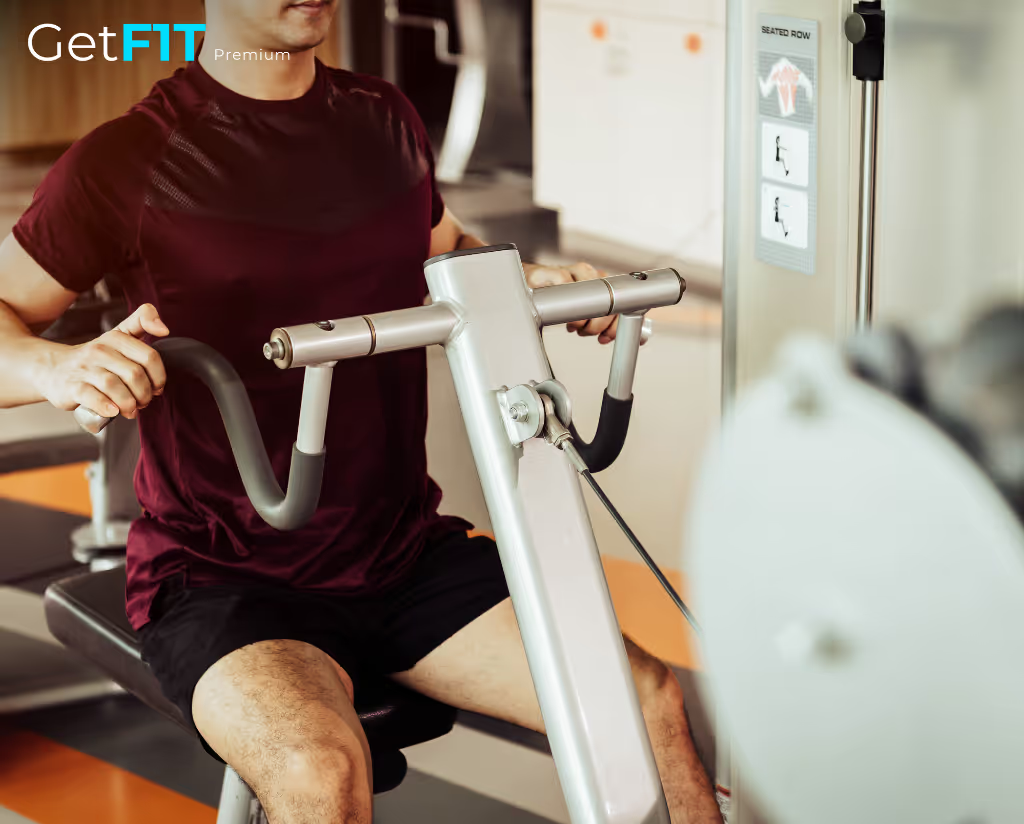
The seated leg curl machine is a lower-body isolation exercise that trains the hamstrings by bending the knees against resistance. You sit with your thighs supported, position your lower legs against a padded roller, and pull your heels downward and backward toward the machine.
Unlike Romanian deadlifts, which train the hamstrings primarily through hip extension demands, seated leg curls challenge them directly through knee flexion. The seated position also keeps the hips flexed, placing several hamstring muscles at a relatively long operating length.
This makes the seated leg curl particularly useful for hamstring hypertrophy, direct knee-flexion strength, and adding posterior-thigh training without performing another demanding hip-hinge exercise.
What Muscles Does the Seated Leg Curl Work?
The seated leg curl primarily trains the hamstrings, with assistance from other muscles that contribute to knee flexion. Its main movement occurs at the knee joint, while the machine supports the thighs, pelvis, and torso.
Biceps Femoris: Outer Hamstring
The biceps femoris is located along the outer portion of the back of the thigh and consists of two heads.
The long head crosses both the hip and knee joints, contributing to hip extension and knee flexion. The short head crosses only the knee and contributes to knee flexion.
Both heads assist in bending the knee during seated leg curls.
Because the long head crosses the hip, the seated position influences its operating length differently from that of the short head.
Semitendinosus: Inner Hamstring
The semitendinosus is located toward the inner portion of the posterior thigh.
It contributes to knee flexion, hip extension, and internal rotation of the lower leg when the knee is bent.
During seated leg curls, it works with the other hamstring muscles to pull the lower legs against the machine's resistance.
Its length is influenced by the position of both the hip and knee joints.
Semimembranosus: Deep Inner Hamstring
The semimembranosus lies deeper along the inner portion of the posterior thigh.
It contributes to knee flexion and hip extension and helps control rotation around the knee.
The seated leg curl provides direct resistance to its knee-flexion function.
Like the semitendinosus and biceps femoris long head, it crosses both the hip and knee joints.
Gastrocnemius: Secondary Knee Flexor
The gastrocnemius is a calf muscle that crosses both the knee and ankle joints.
Although its primary role is plantar flexion at the ankle, it can also assist with knee flexion.
During seated leg curls, its contribution is secondary to the hamstrings.
The exercise should not be treated as a replacement for calf raises.
Other Assisting and Stabilizing Muscles
The sartorius, gracilis, and popliteus can contribute to knee flexion or knee control, although their roles are smaller than those of the primary hamstring muscles.
The abdominal muscles and other trunk stabilizers help maintain your seated position.
Your glutes help maintain pelvic contact with the seat, but they do not perform the primary movement.
The machine substantially reduces the stabilization demands compared with unsupported free-weight exercises.
Are Seated Leg Curls Effective for Hamstring Growth?
Yes. Seated leg curls are effective for developing the hamstrings because they directly load knee flexion while positioning several hamstring muscles at relatively long lengths.
This distinguishes them from lying leg curls, standing leg curls, and hip-hinge exercises.
Hamstring Training at Longer Muscle Lengths
Three of the major hamstring components cross both the hip and knee joints.
When you sit with your hips flexed, these muscles are lengthened at the hip compared with positions where the hips remain extended.
The seated leg curl then challenges them through knee flexion while maintaining that hip position.
Research comparing seated and lying leg curls has found that seated variations can produce greater growth in the biarticular hamstrings under certain training conditions.
However, the result does not mean every person must use seated leg curls or that lying variations are ineffective.
Direct Knee-Flexion Training
Romanian deadlifts and good mornings challenge the hamstrings through their role in controlling and extending the hip.
Seated leg curls train their knee-flexion function more directly.
Combining these movement patterns provides a more complete approach to hamstring training than relying exclusively on one exercise.
Minimal Lower-Back Fatigue
The machine supports your torso and pelvis while you perform knee flexion.
This reduces the need for spinal erector involvement compared with Romanian deadlifts and other unsupported hip hinges.
Seated leg curls can therefore add hamstring volume without substantially increasing lower-back fatigue.
Straightforward Resistance Progression
Most seated leg curl machines allow you to increase resistance in relatively small increments.
You can track working weight, repetitions, and sets while maintaining consistent equipment settings.
This makes the exercise practical for long-term hypertrophy programming.
Main Benefits of the Seated Leg Curl Machine
Building Hamstring Muscle Without Heavy Hip Hinges
The seated leg curl allows direct hamstring training without loading a barbell or holding heavy dumbbells.
This is particularly useful after demanding compound exercises or when your lower back is already fatigued.
It does not replace hip-hinge training entirely, but it complements it effectively.
Training the Hamstrings Through Knee Flexion
The hamstrings perform more than one joint action.
Seated leg curls train knee flexion, while Romanian deadlifts primarily challenge the hip-extension function of the biarticular hamstrings.
Including both patterns helps cover different muscular functions and loading conditions.
Reducing Balance and Coordination Requirements
The machine provides external support, allowing you to concentrate on moving the resistance through a controlled range.
You do not need to balance on one leg or stabilize a free weight.
This makes the movement accessible to beginners and useful for experienced lifters performing demanding accessory sets.
Adding Hamstring Volume to a Lower-Body Workout
Seated leg curls can be placed after squats, leg presses, or Romanian deadlifts.
Because they isolate knee flexion, they allow additional hamstring work without repeating the same movement pattern as a hip hinge.
This can help distribute training stress across a lower-body session.
How to Adjust the Seated Leg Curl Machine Correctly
Correct setup is important because the machine uses a fixed movement path.
The seat, backrest, thigh restraint, and lower-leg roller should accommodate your leg length and allow comfortable knee movement.
Step 1: Adjust the Seat and Backrest
Sit on the machine with your back supported.
Adjust the seat so your knees align approximately with the machine's pivot point.
Your thighs should rest on the seat without excessive pressure behind the knees.
Avoid sitting so far forward that your knees extend beyond the machine's intended axis.
Step 2: Position the Lower-Leg Roller
Place the lower roller against the back of your lower legs, generally just above the heels or ankles.
The pad should provide secure contact without pressing uncomfortably against the ankle joint or Achilles tendon.
Check that both legs are positioned evenly.
Step 3: Secure the Thigh Pad
Adjust the upper thigh pad so it rests firmly over your thighs.
It should prevent your legs from lifting during the movement without creating unnecessary pressure.
The pad should not force your knees into an awkward position.
Step 4: Set the Starting Position
If your machine has an adjustable starting angle, select a position that allows your knees to begin relatively extended without forcing them into an uncomfortable position.
Starting with the knees closer to straight places the hamstrings at longer lengths.
However, the appropriate starting angle depends on the machine and your individual comfort.
Step 5: Choose an Appropriate Weight
Begin with light resistance to confirm that the adjustments feel comfortable.
You should be able to bend your knees smoothly without lifting your hips or leaning backward to move the weight.
Increase resistance only after you can control the full intended movement.
How to Perform the Seated Leg Curl Step by Step
Step 1: Establish Your Starting Position
Sit upright with your back against the backrest.
Keep your thighs secured beneath the upper pad and your lower legs positioned against the roller.
Hold the handles if the machine provides them.
Maintain a stable pelvis and allow your knees to begin in the machine's comfortable extended position.
Step 2: Curl Your Lower Legs Downward
Bend your knees to pull the padded lever downward and backward.
Focus on moving through the knee joints rather than shifting your torso.
Keep your thighs secured and avoid lifting your hips from the seat.
Step 3: Reach a Controlled Finishing Position
Continue bending your knees through the available comfortable range.
Depending on the machine, your heels may move beneath the seat or toward the back of your thighs.
Pause briefly if you can maintain control without forcing additional movement.
Do not lean backward aggressively to complete the repetition.
Step 4: Return the Weight Slowly
Gradually straighten your knees to return the roller toward the starting position.
Control the resistance rather than allowing the weight stack to pull your legs forward.
Maintain contact with the thigh restraint and backrest.
Step 5: Repeat Without Changing Your Body Position
Perform each repetition through approximately the same range of motion.
Avoid using momentum as the hamstrings fatigue.
Finish the set when you can no longer complete controlled repetitions with your intended technique.
How Should You Breathe During Seated Leg Curls?
Exhale as you bend your knees and pull the resistance downward. Inhale as you straighten your legs during the return phase.
Keep your breathing steady rather than holding your breath throughout the set.
Because the machine supports your torso, aggressive bracing is generally unnecessary.
Maintain enough abdominal tension to prevent excessive movement through your pelvis and lower back.
What Range of Motion Should You Use for Seated Leg Curls?
Use the largest comfortable range of motion that allows you to maintain your seated position and control the resistance.
For many lifters, this means starting with the knees relatively straight and curling them as far as the machine comfortably allows.
Should You Fully Straighten Your Knees?
Starting with the knees relatively extended can provide a substantial hamstring stretch.
You do not need to force your knees into hyperextension or push beyond the machine's comfortable starting position.
If the fully extended position causes discomfort, adjust the starting angle or use a slightly reduced range.
How Far Should You Curl the Weight?
Bend your knees as far as you can while keeping your thighs secured and pelvis stable.
The exact finishing angle depends on the machine's design.
Avoid lifting your hips or pulling your torso backward simply to move the roller farther.
Are Partial Seated Leg Curls Effective?
Partial repetitions can train the hamstrings, but they challenge a smaller portion of the movement.
Lengthened-position partials may be useful in some training contexts, but they are not necessary for building muscle.
For general hypertrophy training, begin with controlled repetitions through a substantial comfortable range.
What Is the Best Tempo for Seated Leg Curls?
A controlled lifting and lowering tempo works well for most seated leg curl sets.
A practical starting point is:
- Curling phase: Approximately 1–2 seconds.
- Contracted position: Brief pause when comfortable.
- Return phase: Approximately 2–3 seconds.
These are guidelines rather than strict requirements.
The most important consideration is maintaining control without swinging the resistance or allowing the weight stack to crash.
Extremely slow repetitions are not required for hypertrophy.
Common Seated Leg Curl Mistakes and How to Fix Them
Using Too Much Weight
Problem: Excessive resistance may cause shortened repetitions, hip movement, or jerking.
Correction: Reduce the load until you can perform smooth knee flexion without changing your seated position.
Allowing the Hips to Lift
Problem: Lifting the hips changes the position of the hamstrings and reduces consistency between repetitions.
Correction: Keep your pelvis supported, secure the thigh pad properly, and lower the resistance if necessary.
Incorrect Knee Alignment
Problem: Poor alignment with the machine's pivot point may cause the roller to move awkwardly against your lower legs.
Correction: Adjust the seat so your knees align as closely as practical with the machine's intended axis.
Positioning the Thigh Pad Incorrectly
Problem: A loose thigh restraint allows your legs to lift, while an excessively tight pad can create discomfort.
Correction: Position the restraint firmly over your thighs without excessive pressure.
Swinging the Weight Downward
Problem: Jerking the resistance uses momentum instead of maintaining controlled muscular effort.
Correction: Begin each repetition smoothly and avoid accelerating aggressively through the movement.
Letting the Weight Stack Crash
Problem: Dropping the resistance during the return phase reduces control and makes repetitions inconsistent.
Correction: Gradually extend your knees while maintaining tension and a stable seated position.
Leaning Backward to Finish Repetitions
Problem: Excessive torso movement changes hip position and can help you move resistance that is too heavy.
Correction: Keep your back against the support and select a load you can curl without compensating.
Using Only Short Partial Repetitions
Problem: Consistently cutting the movement short limits the range through which the hamstrings are challenged.
Correction: Use a resistance that allows substantial comfortable knee extension and flexion.
Forcing an Uncomfortable Knee Position
Problem: Attempting to move beyond your comfortable joint range may create unnecessary discomfort.
Correction: Adjust the machine's starting angle or use a slightly shorter range while maintaining control.
Seated Leg Curl Variations for Different Training Levels
Beginner: Light-Resistance Seated Leg Curl
Start with a light weight and focus on learning the machine's movement path.
Perform approximately 2–3 sets of 12–15 repetitions.
Keep your hips stable and control both phases of the movement.
This is a practical starting point for learning direct hamstring training.
Intermediate: Standard Bilateral Seated Leg Curl
Train both legs together using a challenging resistance.
Perform approximately 3 sets of 8–15 repetitions while maintaining consistent technique.
Gradually increase repetitions before adding resistance.
Intermediate: Single-Leg Seated Curl
Some machines allow each leg to move independently.
A unilateral variation lets you compare hamstring performance between sides and focus on controlling each leg.
Use lighter resistance than you would for bilateral repetitions.
Do not force unilateral use on machines that cannot safely accommodate it.
Intermediate: Paused Seated Leg Curl
Pause briefly near the fully curled position.
This can help reduce momentum and improve control.
Use a manageable resistance so the pause does not require excessive hip or torso movement.
Advanced: Slow-Eccentric Seated Leg Curl
Take approximately three to four seconds to return the resistance toward the starting position.
This emphasizes controlled lowering and can help you maintain consistent technique.
Slower repetitions are an optional training variation, not a requirement for superior hypertrophy.
Advanced: Seated Leg Curl Drop Sets
Perform a challenging set, reduce the resistance, and continue with additional controlled repetitions.
For example, complete 12 repetitions, lower the weight by a manageable amount, and perform another 5–8 repetitions.
Drop sets can increase local fatigue and training density.
Use them selectively rather than automatically adding them to every set.
Advanced: Rest-Pause Seated Leg Curls
Complete a challenging set, rest approximately 15–20 seconds, and perform a few additional repetitions with the same resistance.
For example, perform 12 repetitions, rest briefly, and complete another 3–5 controlled repetitions.
This can make a set more demanding without adding another full working set.
It is optional and should not replace consistent progression over time.
Best Seated Leg Curl Alternatives and Equipment Substitutions
The closest alternatives to seated leg curls involve knee flexion against resistance.
Hip-hinge exercises also train the hamstrings, but they emphasize a different joint action and should be considered complementary rather than mechanically identical.
Lying Leg Curl Machine
Equipment: Prone leg curl machine.
The lying leg curl trains the hamstrings through knee flexion while the hips remain closer to extension.
It uses a similar knee movement but changes the operating length of the biarticular hamstrings.
Choose it when a seated machine is unavailable or when you want another knee-flexion variation.
Standing Single-Leg Curl Machine
Equipment: Standing leg curl machine.
This exercise trains one leg at a time through knee flexion.
It can be useful for unilateral hamstring training and requires less equipment adjustment than some seated machines.
The hip position and support differ from those of the seated leg curl.
Dumbbell Lying Leg Curl
Equipment: Dumbbell and flat bench.
Lie face down on a bench and carefully secure a light dumbbell between your feet.
Bend your knees to raise the resistance while keeping your hips supported.
This trains knee flexion but requires careful equipment handling.
Because holding a dumbbell between the feet can be awkward and insecure, a dedicated machine or resistance band is generally more practical.
Resistance Band Leg Curl
Equipment: Resistance band and secure anchor.
Attach the band so it resists knee flexion.
You can perform the movement lying down, standing, or seated, depending on the setup.
This is a practical home alternative because it trains the hamstrings through knee flexion.
Band resistance changes throughout the movement, so the loading profile differs from that of a machine.
Cable Standing Leg Curl
Equipment: Cable machine and ankle attachment.
Attach the cable to one ankle and bend your knee against the resistance while holding a stable support.
The exercise provides direct unilateral knee-flexion training.
Keep your thigh relatively stationary and avoid swinging the leg.
Sliding Hamstring Curl
Equipment: Sliders, towels on a suitable floor, or a sliding exercise device.
Lie on your back with your heels on the sliders.
Raise your hips and bend your knees to pull your heels toward your body.
This trains the hamstrings through knee flexion while also requiring hip and trunk stabilization.
It is more demanding for overall body control than the seated machine variation.
Stability Ball Hamstring Curl
Equipment: Exercise ball.
Lie on your back with your heels supported on the ball.
Lift your hips and bend your knees to roll the ball toward you.
This combines hamstring knee flexion with hip-extension stabilization.
It is useful for home training but provides less straightforward resistance progression than a machine.
Nordic Hamstring Curl
Equipment: Secure ankle restraint or Nordic curl station.
Begin kneeling with your ankles firmly secured.
Lower your torso forward while controlling knee extension through the hamstrings.
The Nordic curl places substantial eccentric demands on the knee flexors.
It is generally more challenging than a seated leg curl and may require assistance or a reduced range initially.
Dumbbell Romanian Deadlift
Equipment: Dumbbells.
The Romanian deadlift trains the hamstrings primarily through hip-extension demands while also involving the glutes and spinal erectors.
It is a compound hip-hinge exercise rather than a direct knee-flexion movement.
Choose it when you want to train the hamstrings in a lengthened position while developing hip-hinge strength.
For balanced hamstring training, Romanian deadlifts and seated leg curls work well together.
Barbell Romanian Deadlift
Equipment: Barbell.
The barbell Romanian deadlift challenges the hamstrings and glutes through controlled hip flexion and extension.
It generally allows greater external loading than a dumbbell variation.
However, it requires more trunk stabilization and hip-hinge technique than a seated leg curl.
It is best treated as a complementary exercise rather than a direct substitute.
Seated Leg Curl vs. Lying Leg Curl: Which Is Better?
Both exercises train the hamstrings through knee flexion, but the main difference is hip position.
The seated leg curl places the hips in flexion, while the lying leg curl typically positions them closer to extension.
Why Hip Position Changes Hamstring Loading
The biceps femoris long head, semitendinosus, and semimembranosus cross both the hip and knee joints.
Flexing the hips lengthens these muscles at the hip.
As a result, seated leg curls generally train these muscles at longer operating lengths than lying leg curls.
The biceps femoris short head crosses only the knee, so its length is not influenced by hip position in the same way.
Which Variation Is Better for Muscle Growth?
Research comparing seated and lying leg curls has reported greater hypertrophy in the biarticular hamstrings with seated training in certain conditions.
This provides a reasonable basis for prioritizing seated leg curls when hamstring hypertrophy is the main objective.
However, lying leg curls remain effective and may be preferable depending on equipment availability, comfort, and training variety.
When to Choose Lying Leg Curls
Lying leg curls may be preferable when:
- Your gym does not have a seated machine.
- The seated machine does not fit your body comfortably.
- You prefer the prone position.
- You want variation in hip position across your training program.
The most useful exercise is one you can perform consistently with sufficient resistance and control.
Seated Leg Curl vs. Romanian Deadlift: Do You Need Both?
Seated leg curls and Romanian deadlifts train the hamstrings through different joint actions.
The seated leg curl emphasizes knee flexion, while the Romanian deadlift emphasizes the hip-extension function of the hamstrings.
What Seated Leg Curls Provide
- Direct knee-flexion resistance.
- A supported seated position.
- Relatively low lower-back demands.
- Straightforward machine progression.
- Hamstring loading with the hips flexed.
What Romanian Deadlifts Provide
- Loaded hip-hinge training.
- Substantial hamstring loading during hip flexion.
- Glute involvement.
- Greater trunk stabilization demands.
- Transfer to hip-hinge strength and coordination.
For a complete hamstring-focused workout, including both exercises is a practical approach.
They do not need to be performed with equal volume, and the best balance depends on your goals and other lower-body exercises.
How Many Sets and Reps of Seated Leg Curls Should You Do?
Seated leg curls work well across a range of repetitions, but moderate repetition sets are often practical because they allow controlled knee flexion without requiring unnecessarily heavy loading.
For Hamstring Hypertrophy
- Working sets: 2–4.
- Repetitions: 8–15.
- Rest: 60–120 seconds.
- Effort: Approximately 1–3 repetitions in reserve.
Sets of 10–15 repetitions are a useful starting point for many lifters.
Higher or lower repetitions can also build muscle when performed with sufficient effort.
For Knee-Flexion Strength
- Working sets: 3–4.
- Repetitions: 6–10.
- Rest: 90–150 seconds.
- Effort: Challenging resistance with controlled execution.
Seated leg curls can improve knee-flexion strength.
However, they do not replace hip-hinge training or sprint-specific training when those are your main performance goals.
Very heavy, low-repetition sets are generally unnecessary for most hamstring hypertrophy programs.
For Muscular Endurance
- Working sets: 2–3.
- Repetitions: 15–25.
- Rest: 45–90 seconds.
- Effort: Maintain controlled repetitions as fatigue increases.
Higher-repetition sets can create substantial local hamstring fatigue.
Reduce resistance if your hips begin lifting or you can no longer maintain your intended range.
Should You Do Seated Leg Curls Before or After Romanian Deadlifts?
The best exercise order depends on which movement you want to prioritize.
For many hamstring-focused workouts, Romanian deadlifts are performed first because they require more coordination and trunk stabilization.
Seated leg curls can then provide direct knee-flexion training.
Romanian Deadlifts First
Performing Romanian deadlifts first allows you to practice the hip hinge while relatively fresh.
This is useful when maintaining free-weight performance and technique is important.
Seated leg curls can follow as an accessory exercise.
Seated Leg Curls First
Performing seated leg curls first can make sense when direct knee-flexion strength or hamstring isolation is your priority.
However, fatiguing the hamstrings before Romanian deadlifts may reduce your subsequent performance.
Choose this order deliberately rather than assuming pre-fatigue is automatically better for muscle growth.
Seated Leg Curls After Squats or Leg Presses
Squats and leg presses primarily train coordinated knee and hip extension.
Seated leg curls can provide direct hamstring work afterward without repeating those movement patterns.
This is a practical way to include hamstring training in a balanced lower-body session.
How to Progress on the Seated Leg Curl Machine
Progressive overload involves gradually increasing the training challenge while maintaining consistent machine adjustments and movement quality.
A double-progression method is particularly straightforward for seated leg curls.
Step 1: Choose a Repetition Range
Suppose your goal is 3 sets of 10–15 repetitions.
Select a resistance that allows approximately 10 controlled repetitions per set while leaving 1–3 repetitions in reserve.
Step 2: Gradually Add Repetitions
Keep the same resistance while increasing repetitions over several workouts.
For example:
- Week 1: 30 kg × 10, 10, 10.
- Week 2: 30 kg × 12, 11, 10.
- Week 3: 30 kg × 13, 12, 12.
- Week 4: 30 kg × 15, 14, 13.
- Week 5: 30 kg × 15, 15, 15.
These numbers illustrate the method rather than predicting a specific rate of progress.
Step 3: Increase the Resistance
Once you can complete all three sets at the upper end of the range with consistent technique, increase the resistance by the smallest practical increment.
For example, move from 30 kg to 32.5 kg if the machine allows it.
Return toward the lower end of the repetition range and repeat the process.
Step 4: Maintain the Weight When Technique Changes
Do not increase resistance if you need to:
- Lift your hips off the seat.
- Lean backward to finish repetitions.
- Swing the roller downward.
- Shorten the range substantially.
- Allow the weight stack to crash.
- Force your knees into uncomfortable positions.
Maintaining consistent technique makes your performance comparisons more meaningful.
Step 5: Adjust Total Hamstring Training Volume
Count seated leg curls alongside lying curls, Romanian deadlifts, Nordic curls, and other hamstring exercises.
These movements overlap in muscle involvement but differ in joint action and loading.
If you are progressing with your current workload, additional sets may not be necessary.
Increase volume gradually when recovery is good and your existing training stimulus appears insufficient.
Practical Coaching Tips for Better Seated Leg Curls
Keep Your Pelvis Stable
Your hips should remain supported throughout the repetition.
If your pelvis lifts, check the thigh pad adjustment and reduce the load if necessary.
Prioritize the Starting Position
Beginning with your knees relatively extended can provide substantial hamstring loading at longer muscle lengths.
Use the machine's available starting-angle adjustments to find a comfortable position.
Avoid forcing a stretch beyond your natural range.
Keep Your Back Against the Support
Excessive backward leaning changes your hip position during the repetition.
Maintaining contact with the backrest makes the movement more consistent.
Use the Same Machine Settings Across Workouts
Seat and roller adjustments influence leverage and range of motion.
Recording these settings helps you compare performance more accurately.
Avoid Chasing Heavier Weight at the Expense of Control
A heavier selected weight is not necessarily better if you shorten the movement or rely on momentum.
Progress when you can maintain the intended range and body position.
Distinguish Hamstring Fatigue From Joint Discomfort
A burning sensation or muscular fatigue in the back of your thighs is common during challenging sets.
Sharp pain, unusual knee discomfort, or worsening symptoms are reasons to stop and reassess.
Adjust resistance, machine setup, or range of motion. If discomfort persists, use a more comfortable alternative and seek appropriate professional assessment when necessary.

More Exercises
All Exercises











Everything You Need for a Fitter Body is here in GetFIT App!
Set calorie and macro goals, track your meals and activity, follow structured workout and meal plans, and monitor your progress over time. GetFIT App brings nutrition tracking, fitness planning, and everyday tools together in one simple membership.
High-Protein Recipes & Meal Plans
Discover hundreds of high-protein recipes, ready-made 4 week meal plans, and healthy meal ideas for weight loss and muscle building. Every recipe includes clear calorie and macro information, so eating for your goals is simple.


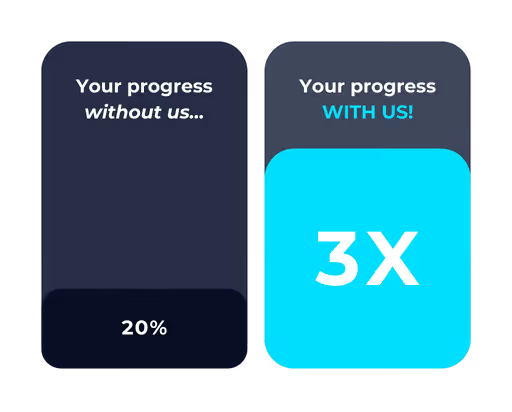
Join Thousands of GetFIT App Users Worldwide
Thousands of people around the world have already joined GetFIT App to track their nutrition, follow workout programs, and work toward their fitness goals. Join our growing global community and get the tools you need to manage your fitness journey in one place.

Try GetFIT App for 5 days free!
Discover the premium features of the GetFIT App during a free trial: personalized calorie calculation and tracking, meal plans, recipes, workout programs, e-books, and much more. Start your transformation today!

Dear User! Unlock your Dream Body Today!
Start your free trial today! With your premium membership, you’ll get immediate access to all the tools and content that help you lose weight, build muscle, and develop a healthy lifestyle.