Leg extension isolates the quadriceps. Perform it slowly and hold the peak contraction.

Train & diet effectively with the help of the GetFIT App. Our app tracks your calorie intake and workouts, and offers effective plans, recipes, and programs.

(Free trial for new users - cancel anytime)
Our Meal Plans


Blog Articles








Blog Articles

Quad-Focused Leg Workout With Seated Leg Extensions
1. Hack Squat Machine
- 3 sets × 6–10 reps
- Rest: 2–3 minutes
2. Seated Leg Extension Machine
- 3 sets × 10–15 reps
- Rest: 90–120 seconds
3. Bulgarian Split Squat
- 2 sets × 10–12 reps per leg
- Rest: 90–120 seconds
4. Seated Leg Curl
- 3 sets × 10–15 reps
- Rest: 60–90 seconds
5. Standing Calf Raise
- 3 sets × 10–15 reps
- Rest: 60–90 seconds
1. Hack Squat Machine: 3 × 6–10
The hack squat is the primary compound movement in this session. It trains the quadriceps, glutes, and adductors through a supported squat pattern.
Performing it first allows you to use challenging resistance before your quadriceps become fatigued from leg extensions.
How to perform it:
- Position your shoulders and back against the machine's support pads.
- Place your feet approximately shoulder-width apart.
- Unlock the safety mechanism and brace your torso.
- Bend your knees and hips to lower through a comfortable range.
- Press through your feet to return to the starting position.
- Secure the machine before stepping away.
Training tips:
- Keep your heels supported.
- Allow your knees to travel naturally in line with your toes.
- Maintain contact with the support pads.
- Avoid bouncing at the bottom.
- Use a resistance that allows controlled repetitions.
Rest 2–3 minutes between working sets.
2. Seated Leg Extension Machine: 3 × 10–15
The seated leg extension provides direct quadriceps training after the compound hack squat.
Because your hips and torso are supported, you can focus on knee extension without relying on balance or additional hip-extension strength.
How to perform it:
- Adjust the seat so your knees align with the machine's pivot point.
- Position the roller against your lower shins.
- Keep your back and hips supported.
- Extend your knees smoothly to raise the resistance.
- Briefly control the top position.
- Lower the weight without letting the stack crash.
Training tips:
- Avoid swinging your legs.
- Keep your hips against the seat.
- Use a comfortable range of motion.
- Maintain approximately 1–2 repetitions in reserve on most working sets.
- Increase the resistance only when you can complete all prescribed repetitions with consistent technique.
Rest 90–120 seconds between sets.
3. Bulgarian Split Squat: 2 × 10–12 Per Leg
Bulgarian split squats add unilateral quadriceps and glute training.
They also allow you to compare performance between legs and provide a different loading pattern from the hack squat and leg extension.
How to perform it:
- Stand in front of a bench with one foot elevated behind you.
- Position your front foot far enough forward to maintain balance.
- Bend your front knee and lower under control.
- Keep your front heel supported.
- Push through your front leg to return to standing.
Training tips:
- Start with bodyweight or light dumbbells if necessary.
- Keep most of the working pressure through the front leg.
- Avoid pushing excessively through the rear foot.
- Use a consistent depth on both sides.
- Reduce the resistance if balance becomes the limiting factor.
Rest 90–120 seconds between sets.
4. Seated Leg Curl: 3 × 10–15
The seated leg curl trains the hamstrings through knee flexion.
Including it balances the session by adding direct hamstring work alongside the quadriceps-focused exercises.
How to perform it:
- Adjust the seat and support pads to match your leg length.
- Position your thighs securely beneath the upper pad.
- Bend your knees to pull the resistance downward and backward.
- Keep your hips against the seat.
- Return the resistance gradually.
Training tips:
- Avoid lifting your hips.
- Do not swing the weight.
- Use a substantial, comfortable range of motion.
- Maintain control during the lowering phase.
Rest 60–90 seconds between sets.
5. Standing Calf Raise: 3 × 10–15
Standing calf raises provide direct training for the calf muscles, particularly the gastrocnemius.
They finish the session without requiring another demanding quadriceps or hip-extension exercise.
How to perform it:
- Position your feet securely on the machine's platform.
- Keep your knees relatively straight.
- Raise your heels by pushing through the balls of your feet.
- Control the top position briefly.
- Lower your heels through a comfortable range.
Training tips:
- Avoid bouncing.
- Keep the movement primarily at your ankles.
- Maintain consistent control.
- Use a resistance that allows the prescribed repetitions without shortening the movement excessively.
Rest 60–90 seconds between sets.
How to Warm Up Before This Quad-Focused Leg Workout
Spend approximately 5–8 minutes preparing for the session, followed by progressive warm-up sets for the hack squat.
A practical warm-up includes:
- 3–5 minutes: Easy cycling or treadmill walking.
- 1–2 minutes: Controlled bodyweight squats and comfortable knee-bending movements.
- 2–3 warm-up sets: Gradually increase the resistance on the hack squat before beginning your first working set.
For example, if your planned working resistance is 80 kg, you might perform lighter sets at approximately 30 kg, 50 kg, and 65 kg.
These loads are illustrative and depend on the machine.
Warm-up sets should prepare you for the working resistance without creating substantial fatigue.
Because the leg extension follows the hack squat, your quadriceps will already be warm. However, one lighter leg extension set may still be useful to check the machine adjustments and practice the movement.
How Hard Should You Train During This Leg Workout?
Use repetitions in reserve (RIR) to manage training effort.
RIR refers to the number of additional repetitions you could complete before reaching muscular failure.
For this session:
- Hack squat: Approximately 1–3 RIR.
- Seated leg extension: Approximately 1–2 RIR.
- Bulgarian split squat: Approximately 1–3 RIR.
- Seated leg curl: Approximately 1–2 RIR.
- Standing calf raise: Approximately 1–2 RIR.
You do not need to train every set to failure.
On compound movements, maintaining consistent technique and avoiding excessive fatigue are particularly important.
Isolation exercises such as leg extensions and leg curls can often be performed relatively close to failure because they involve less coordination.
However, stop the set when you can no longer complete controlled repetitions through your intended range.
How to Progress This Quad-Focused Workout Over Several Weeks
Step 1: Begin Near the Lower End of Each Repetition Range
For example, if your leg extension target is 3 sets of 10–15 repetitions, choose a resistance that allows approximately 10 controlled repetitions per set.
Keep the same machine adjustments between workouts.
Step 2: Gradually Increase Repetitions
Maintain the resistance while working toward the upper end of the prescribed range.
For example:
- Week 1: 3 × 10.
- Week 2: 3 × 11.
- Week 3: 3 × 12.
- Week 4: 3 × 13.
- Week 5: 3 × 15.
This is an illustrative progression. Actual performance may vary between sets and weeks.
Step 3: Increase Resistance When You Reach the Target
Once you complete all working sets at the upper end of the repetition range with consistent technique, increase the resistance by the smallest practical increment.
Return toward the lower end of the range and gradually build repetitions again.
Step 4: Apply the Same Method to the Other Exercises
Use the prescribed repetition ranges for hack squats, Bulgarian split squats, leg curls, and calf raises.
Increase resistance only when you can maintain the intended movement and repetitions.
For unilateral exercises, use a consistent progression approach for both legs.
Step 5: Manage Fatigue and Recovery
If your performance consistently declines, soreness interferes with subsequent training, or you cannot maintain proper technique, consider temporarily reducing training volume or intensity.
You do not need to increase resistance or repetitions every workout.
Long-term progress depends on maintaining a training workload you can recover from.
How to Fit This Leg Extension Workout Into a 4–6-Day Training Split
This session works well as a quadriceps-focused lower-body day within a four-, five-, or six-day resistance training routine.
For a four-day upper/lower split, a practical arrangement is:
- Monday: Upper body.
- Tuesday: Quad-focused lower-body workout.
- Thursday: Upper body.
- Friday: Hamstring- and glute-focused lower-body workout.
The second lower-body session could emphasize Romanian deadlifts, hip thrusts, leg curls, and a smaller amount of additional quadriceps training.
This arrangement provides two lower-body sessions while distributing the workload across different movement patterns.
For a five- or six-day routine, the same workout can be placed within a push/pull/legs or another appropriately structured split.
Account for quadriceps training performed during squats, leg presses, lunges, and other compound movements.
The hack squat, leg extension, and Bulgarian split squat already provide eight direct or substantially quadriceps-involving working sets in this session.
If you train your quadriceps again later in the week, adjust the additional workload according to your experience, recovery, and performance rather than repeating the same volume automatically.
Seated Leg Extension Machine: Muscles Worked, Benefits, and Proper Form
The seated leg extension machine is an isolation exercise that trains the quadriceps by straightening the knees against resistance. Unlike squats and leg presses, which involve movement at both the hips and knees, leg extensions primarily involve movement at the knee joint.
The exercise is commonly performed on a selectorized machine with an adjustable seat, backrest, thigh support, and padded roller positioned near the lower legs. Some machines use plate-loaded resistance or independent levers, but the basic movement remains the same.
Seated leg extensions are particularly useful for adding direct quadriceps training to a lower-body workout. They allow you to challenge the front of your thighs without relying on your glutes, balance, or lower-back strength to complete the repetition.
What Muscles Does the Seated Leg Extension Work?
The seated leg extension primarily trains the quadriceps femoris, a group of four muscles responsible for extending the knee. The movement is more isolated than a squat or leg press because the hips remain relatively stationary while the lower legs move.
Rectus Femoris
The rectus femoris runs along the front of the thigh and crosses both the hip and knee joints.
It contributes to knee extension and also assists with hip flexion. Because it crosses two joints, its contribution can change depending on hip position and the demands of the movement.
The seated position places the hips in flexion, which influences the rectus femoris's operating length. This does not mean the muscle is inactive, but its training stimulus may differ from exercises performed with the hips more extended.
Vastus Lateralis
The vastus lateralis is located along the outer portion of the thigh.
It is a major contributor to knee extension and works throughout the leg extension movement.
Developing this muscle contributes to overall quadriceps size, but changing your toe angle does not reliably isolate it from the other quadriceps muscles.
Vastus Medialis
The vastus medialis is located toward the inner portion of the thigh, near the knee.
It contributes to knee extension alongside the other quadriceps muscles.
The lower portion is often referred to as the vastus medialis oblique, or VMO. Although this region plays a role in patellar mechanics, there is limited justification for claiming that a particular foot rotation selectively trains it in isolation.
Vastus Intermedius
The vastus intermedius lies beneath the rectus femoris.
Its primary function is knee extension, making it an important contributor during seated leg extensions.
Because it is located beneath another quadriceps muscle, it is less visible from the surface but still contributes to overall quadriceps development.
Do Leg Extensions Train the Hamstrings or Glutes?
The hamstrings and glutes are not primary movers during seated leg extensions.
The hamstrings act mainly as knee flexors, which is the opposite of the movement being performed. They may contribute to joint control, but they do not provide the main force that raises the resistance.
The glutes help maintain pelvic position against the seat, but the exercise does not involve meaningful loaded hip extension.
The abdominal muscles and other trunk stabilizers also help maintain body position, although their demands are relatively low compared with unsupported compound lifts.
Are Seated Leg Extensions Effective for Quadriceps Growth?
Yes. Seated leg extensions can effectively build quadriceps muscle when performed with sufficient resistance, a consistent range of motion, and progressive overload.
Because the machine isolates knee extension, the quadriceps receive a direct training stimulus without the movement being limited by the glutes, lower back, or balance.
Direct Quadriceps Training Without a Compound Lift
During a squat or leg press, several large muscle groups share the workload.
In a leg extension, the quadriceps are responsible for producing nearly all of the intended movement.
This makes the exercise useful when you want additional quadriceps volume without performing another demanding compound lower-body exercise.
Useful for Training After Squats and Leg Presses
Squats and leg presses can create substantial overall fatigue.
Leg extensions allow you to continue training the quadriceps while seated, with external support and relatively little coordination required.
They are therefore a practical accessory exercise after compound movements.
Easy to Track and Progress
Most leg extension machines allow small resistance adjustments.
You can track the selected weight, repetitions, and working sets to monitor performance over time.
For meaningful comparisons, use the same machine and settings whenever possible, because resistance profiles and lever lengths differ between manufacturers.
A Complement to Squats, Not a Complete Replacement
Leg extensions train knee extension directly but do not develop the loaded hip-extension pattern used in squats, lunges, and leg presses.
They also provide little direct training for the glutes or hamstrings.
For balanced lower-body development, combine leg extensions with compound exercises and appropriate posterior-chain movements.
How to Set Up the Seated Leg Extension Machine Correctly
Proper machine adjustment helps you perform knee extension comfortably and maintain a consistent movement path.
Seat dimensions, roller positions, and lever mechanisms vary between machines, so use the available adjustments rather than forcing your body into an unsuitable setup.
Step 1: Adjust the Seat and Backrest
Sit on the machine with your back against the backrest.
Adjust the seat so your knees are approximately aligned with the machine's pivot point.
Your thighs should rest comfortably on the seat without excessive pressure behind your knees.
If the seat is too far forward or backward, your knee position may not match the machine's intended movement path.
Step 2: Position the Lower-Leg Roller
Adjust the padded roller so it rests against the lower part of your shins, generally just above the ankles.
The pad should not sit directly on your feet or press uncomfortably against the ankle joint.
Make sure both legs are positioned evenly.
Step 3: Set the Starting Angle
Adjust the machine's starting position, if available, to allow a comfortable degree of knee flexion.
You should feel a manageable quadriceps stretch without being forced into an uncomfortable knee position.
A deeper starting position increases the range of knee extension, but the appropriate angle depends on the machine and your individual comfort.
Step 4: Secure Your Body Position
Keep your hips and back supported against the seat.
Hold the machine's handles if provided.
Maintain a stable pelvis and avoid sliding forward or lifting your hips as the resistance becomes challenging.
Select a light resistance for your first warm-up set.
How to Perform Seated Leg Extensions Step by Step
Step 1: Establish the Starting Position
Sit upright with your back supported and your knees aligned with the machine's pivot point.
Position your lower shins against the roller pad.
Keep your feet relaxed or in a comfortable neutral position rather than deliberately forcing your toes inward or outward.
Step 2: Extend Your Knees
Contract your quadriceps to straighten your knees and raise the padded lever.
Move smoothly without kicking or using your torso to generate momentum.
Keep your hips against the seat and maintain contact with the backrest.
Step 3: Control the Top Position
Extend your knees toward a straight position within your comfortable range of motion.
A brief pause can help you maintain control and avoid swinging the resistance.
Do not aggressively snap your knees into extension or force them beyond their natural range.
Step 4: Lower the Resistance
Bend your knees gradually to return the padded lever toward the starting position.
Maintain tension and avoid allowing the weight stack to crash between repetitions.
Control the lowering phase rather than letting the machine pull your legs downward.
Step 5: Repeat With Consistent Technique
Perform each repetition through approximately the same range of motion.
Maintain a stable seated position and avoid changing your technique to complete additional repetitions.
When you finish, lower the resistance fully before leaving the machine.
How Should You Breathe During Leg Extensions?
Exhale as you extend your knees and raise the resistance. Inhale as you lower your legs toward the starting position.
Because seated leg extensions involve relatively little trunk loading, aggressive breath-holding is generally unnecessary.
Maintain enough abdominal tension to keep your torso stable, especially during challenging repetitions.
Avoid changing your breathing pattern so dramatically that your hips or back lift away from the seat.
How Far Should You Straighten Your Legs During Leg Extensions?
Use a comfortable range of motion that allows substantial knee movement without forcing the joint beyond its natural limits.
For many people, this means starting with the knees bent and extending them toward a nearly straight position.
Should You Fully Extend Your Knees?
Straightening the knees is the primary purpose of the exercise.
Reaching a straight position is not inherently problematic when performed with appropriate resistance and control.
However, avoid forcefully snapping the knees into extension or pushing beyond your comfortable joint position.
If full extension causes discomfort, use a slightly shorter range while maintaining controlled repetitions.
How Far Should You Lower the Weight?
Lower the resistance until your knees reach the machine's intended starting position or your comfortable degree of flexion.
Using a substantial range of motion trains the quadriceps through more of the movement than performing only small partial repetitions.
Do not force excessive knee bending if the machine setup makes the position uncomfortable.
Are Partial Leg Extensions Effective?
Partial repetitions can provide a quadriceps training stimulus, but they emphasize a smaller portion of the movement.
They may be useful as an additional technique or when a particular range is uncomfortable.
For general hypertrophy training, start with a consistent, substantial, comfortable range of motion rather than using partial repetitions solely to lift heavier weights.
What Is the Best Tempo for Seated Leg Extensions?
A controlled lifting phase and deliberate lowering phase are practical for most leg extension sets.
A useful starting point is:
- Lifting phase: Approximately 1–2 seconds.
- Top position: Briefly control the movement.
- Lowering phase: Approximately 2–3 seconds.
These timings are guidelines, not strict requirements.
The main objective is to prevent momentum from replacing muscular effort.
Extremely slow repetitions are not necessary for hypertrophy and may require substantially lighter resistance.
Should Your Toes Point Forward, Inward, or Outward During Leg Extensions?
A comfortable, neutral foot position is the most practical default for seated leg extensions.
The quadriceps work together to extend the knee, and changing foot rotation does not reliably isolate one quadriceps head.
Toes Pointing Forward
A neutral position generally allows straightforward knee tracking and consistent repetitions.
Use this as your starting position unless your anatomy or the machine makes another comfortable position preferable.
Toes Pointing Inward
Turning the feet inward changes lower-leg rotation but does not guarantee greater activation or growth of the outer quadriceps.
Avoid forcing inward rotation to target a specific muscle region.
Toes Pointing Outward
Turning the feet outward does not reliably isolate the vastus medialis or the region commonly called the VMO.
Choose a position that feels natural rather than using exaggerated foot rotation.
Common Seated Leg Extension Mistakes and How to Fix Them
Using Too Much Weight
Problem: Excessive resistance can cause kicking, shortened repetitions, and unnecessary torso movement.
Correction: Reduce the load until you can raise and lower the resistance without swinging or losing your seated position.
Incorrect Knee Alignment With the Machine
Problem: When the knees sit noticeably away from the machine's pivot point, the roller may shift awkwardly along the shins during the movement.
Correction: Adjust the seat and backrest so your knees align as closely as practical with the machine's intended axis.
Positioning the Roller Too High or Too Low
Problem: An incorrectly positioned roller can create discomfort or make the movement awkward.
Correction: Place the pad against the lower shins, generally just above the ankles, according to the machine's adjustment options.
Lifting the Hips Off the Seat
Problem: Raising the hips changes body position and may allow momentum or compensation to assist the repetition.
Correction: Keep your pelvis supported, hold the handles, and reduce the resistance if necessary.
Swinging the Weight Upward
Problem: Rapidly kicking the resistance makes the movement less controlled and can cause the weight stack to bounce.
Correction: Initiate the movement through deliberate quadriceps contraction and use a smooth lifting phase.
Dropping the Weight Too Quickly
Problem: Allowing the resistance to fall rapidly reduces control during the lowering phase.
Correction: Lower your legs deliberately while keeping your hips and back supported.
Cutting Every Repetition Short
Problem: Using only a small range may reduce the amount of training performed through deeper knee flexion or near-full extension.
Correction: Choose a resistance that allows a substantial, comfortable range of motion.
Forcing Knee Extension Beyond Comfort
Problem: Aggressively snapping the knees straight or pushing through discomfort can make the movement unnecessarily unpleasant.
Correction: Extend smoothly to a comfortable finishing position without forcing the joint backward.
Rotating the Feet Excessively
Problem: Deliberately twisting the feet inward or outward may create an awkward position without providing a reliable muscle-isolation advantage.
Correction: Use a natural foot position and focus on controlled knee extension.
Seated Leg Extension Variations for Beginners and Advanced Lifters
Beginner: Light-Resistance Seated Leg Extension
Start with a light weight that allows you to learn the movement without using momentum.
Perform 2–3 sets of 12–15 controlled repetitions.
Prioritize machine adjustment, stable hip positioning, and a consistent range of motion.
Intermediate: Standard Bilateral Leg Extension
Train both legs together using a challenging but manageable resistance.
This is a practical default for quadriceps hypertrophy.
Use approximately 8–15 repetitions per set and increase the resistance gradually as performance improves.
Intermediate: Single-Leg Extension
Perform the exercise one leg at a time on a machine designed to accommodate unilateral use.
This allows you to compare performance between legs and concentrate on maintaining consistent movement.
Begin with lighter resistance because the exercise is performed with one leg rather than two.
Intermediate: Paused Leg Extension
Pause briefly near the top of each repetition before lowering the resistance.
This can help reduce momentum and improve repetition consistency.
Use a manageable load and avoid turning the pause into an aggressive attempt to force additional knee extension.
Advanced: Slow-Eccentric Leg Extension
Lower the resistance over approximately three to four seconds.
This increases the time spent controlling the lowering phase and may be useful for technique practice.
It is not necessary to use unusually slow repetitions to achieve muscle growth.
Advanced: Leg Extension Drop Sets
Perform a challenging set, reduce the resistance, and continue with additional controlled repetitions.
This can increase training density without requiring another exercise.
Drop sets can also increase local fatigue, so they are best used selectively rather than on every working set.
Advanced: Rest-Pause Leg Extensions
Complete a challenging set, rest briefly, and perform a few additional repetitions using the same resistance.
For example, perform 12 repetitions, rest approximately 15–20 seconds, and complete another 3–5 controlled repetitions.
This technique can make a set more demanding but is optional and should not replace consistent training progression.
Best Seated Leg Extension Alternatives Without a Machine
Leg extensions are unusual because they isolate knee extension while keeping the hips relatively stationary.
Most free-weight and bodyweight alternatives train the quadriceps through compound movements rather than reproducing the exact mechanics of a leg extension.
Dumbbell Goblet Squat
Equipment: Dumbbell or kettlebell.
The goblet squat trains the quadriceps, glutes, and adductors through coordinated knee and hip extension.
It is a compound movement rather than a direct knee-extension isolation exercise.
Choose it when you want a practical quadriceps exercise at home without a leg extension machine.
Heel-Elevated Squat
Equipment: Stable heel wedges and optional dumbbell or barbell.
Elevating the heels can allow greater forward knee travel and a more upright torso.
This can increase the relative knee-extension demands of the squat, although the glutes and other hip extensors remain involved.
It is a useful alternative when quadriceps emphasis is the priority.
Barbell Front Squat
Equipment: Barbell and squat rack.
The front squat trains the quadriceps and hip extensors while requiring substantial trunk stabilization.
The front-loaded position typically encourages a relatively upright torso.
Choose it when you want a compound quadriceps exercise that also develops free-weight strength and coordination.
Reverse Nordic Curl
Equipment: Exercise mat and optional support.
The reverse Nordic curl involves leaning backward from a tall kneeling position while maintaining a relatively straight line from the knees through the torso.
The quadriceps control the movement, with particular relevance to the rectus femoris because the hips remain relatively extended.
It is a demanding bodyweight exercise and should be introduced gradually through a comfortable range.
Unlike a seated leg extension, it involves a different hip position and loading pattern.
Spanish Squat
Equipment: Strong resistance band or purpose-built strap anchored securely behind the knees.
The Spanish squat uses external support around the lower legs while you perform a squat-like movement.
It can provide substantial quadriceps loading while allowing a relatively upright torso.
It remains a compound movement rather than a true leg extension substitute.
Cable Knee Extension
Equipment: Cable machine and appropriate ankle attachment.
A cable knee extension can reproduce loaded knee extension more directly than a squat variation.
Depending on the setup, it may be performed seated or from another supported position.
Choose a configuration that keeps the cable path comfortable and allows controlled knee movement.
Resistance Band Leg Extension
Equipment: Resistance band and stable anchor.
Sit on a sturdy bench or chair and attach the band so it provides resistance as you straighten your knee.
This is one of the closer home alternatives to the machine exercise because it also involves isolated knee extension.
Band resistance changes throughout the movement, so the loading profile will differ from that of a machine.
Sissy Squat
Equipment: Optional stable support.
The sissy squat uses substantial knee movement while the torso leans backward and the hips remain relatively extended.
It can create a demanding quadriceps stimulus using bodyweight or added resistance.
It requires more balance and movement control than seated leg extensions, and not everyone will find its range comfortable.
Seated Leg Extensions vs. Squats: Which Is Better for Quadriceps Growth?
Both exercises can build the quadriceps, but they train them through different movement patterns.
Squats involve coordinated movement at the hips, knees, and ankles. Leg extensions primarily involve knee extension.
When Leg Extensions Are More Useful
Leg extensions are particularly useful when you want:
- Direct quadriceps isolation.
- Additional quadriceps training after compound lifts.
- Minimal balance requirements.
- Relatively low trunk stabilization demands.
- A simple machine exercise with measurable resistance progression.
When Squats Are More Useful
Squats are particularly useful when you want:
- Compound lower-body training.
- Simultaneous quadriceps and glute loading.
- Free-weight strength development.
- Practice with squat-specific coordination.
- Greater trunk stabilization demands.
For complete lower-body development, the exercises complement each other rather than serving as interchangeable movements.
Seated Leg Extensions vs. Leg Press: What Is the Difference?
The seated leg extension isolates knee extension, while the leg press combines knee and hip extension.
Both can provide substantial quadriceps training, but the leg press also loads the glutes and adductors more directly.
The leg press generally allows much greater total external resistance because several large muscle groups contribute to the movement.
That does not mean it provides a proportionally greater quadriceps stimulus.
Leg extensions are useful when you want to challenge the quadriceps without performing another compound exercise.
Seated vs. Lying Leg Extensions: Does Hip Position Matter?
Most conventional leg extension machines use a seated position with the hips flexed.
Alternative designs that position the hips closer to extension can change the operating length of the rectus femoris.
Because the rectus femoris crosses both the hip and knee joints, hip position can influence how it is loaded during knee extension.
This distinction matters when comparing machines with substantially different seat angles or specialized leg extension setups.
However, the three vasti remain major contributors to knee extension regardless of hip position.
For most lifters, consistent training on a well-adjusted seated machine remains a practical approach to quadriceps development.
How Many Sets and Reps of Seated Leg Extensions Should You Do?
Leg extensions are generally well suited to moderate and higher repetition ranges because they are an isolation exercise with relatively low technical demands.
The best prescription depends on your training experience, total quadriceps volume, and how close you train to failure.
For Quadriceps Hypertrophy
- Working sets: 2–4.
- Repetitions: 10–15.
- Rest: 60–120 seconds.
- Effort: Approximately 1–3 repetitions in reserve.
Sets of 8–20 repetitions can also be productive when performed with appropriate effort and control.
For Strength Development
- Working sets: 3–4.
- Repetitions: 6–10.
- Rest: 90–150 seconds.
- Effort: Use challenging resistance without swinging or shortening the movement.
Leg extensions can improve knee-extension strength, but they are not a substitute for practicing squats or other compound lifts when those movements are your primary strength goals.
Extremely heavy, low-repetition leg extensions are generally unnecessary for most hypertrophy programs.
For Muscular Endurance
- Working sets: 2–3.
- Repetitions: 15–25.
- Rest: 45–90 seconds.
- Effort: Maintain a consistent range of motion as fatigue increases.
Higher-repetition sets may produce substantial local quadriceps fatigue, so reduce resistance if technique deteriorates.
Should You Do Leg Extensions Before or After Squats?
For most lower-body hypertrophy sessions, leg extensions work well after squats, leg presses, or another demanding compound movement.
However, performing them earlier can make sense when quadriceps isolation is the main priority.
Leg Extensions After Squats
Performing squats first allows you to complete the more technically demanding exercise while relatively fresh.
Leg extensions can then add direct quadriceps volume without requiring another demanding compound movement.
This is a practical arrangement for most balanced leg workouts.
Leg Extensions Before Squats
Performing leg extensions first creates quadriceps fatigue before squatting.
This may make the quadriceps feel more involved during subsequent sets, but it can also reduce the weight or repetitions you can perform in squats.
If squat strength or performance is a major goal, prioritize squats first.
Leg Extensions as the First Exercise
You can begin with leg extensions when your workout specifically prioritizes quadriceps isolation.
This may be appropriate in a machine-focused session or when you want to perform the exercise before other movements create fatigue.
However, leg extensions alone do not provide complete lower-body training.
Leg Extensions at the End of a Workout
Leg extensions are also useful as a final quadriceps exercise after squats, lunges, or leg presses.
Their supported setup makes them relatively straightforward to perform when your legs are already fatigued.
Avoid adding excessive sets if your quadriceps have already received substantial training volume.
How to Progress on the Seated Leg Extension Machine
Progressive overload means gradually increasing the training challenge while maintaining a consistent setup and controlled technique.
For leg extensions, a double-progression approach is simple and practical.
Step 1: Choose a Repetition Range
Suppose your target is 3 sets of 10–15 repetitions.
Select a resistance that allows approximately 10 controlled repetitions per set while leaving 1–3 repetitions in reserve.
Step 2: Add Repetitions Before Increasing Weight
Maintain the same resistance while gradually increasing repetitions.
For example:
- Week 1: 30 kg × 10, 10, 10.
- Week 2: 30 kg × 12, 11, 10.
- Week 3: 30 kg × 13, 12, 12.
- Week 4: 30 kg × 15, 14, 13.
- Week 5: 30 kg × 15, 15, 15.
These numbers are illustrative. Progress may be slower or less consistent in practice.
Step 3: Increase the Resistance
Once you can complete all three sets at the upper end of your repetition range with consistent technique, increase the resistance by the smallest practical increment.
For example, move from 30 kg to 32.5 kg if your machine allows it.
Return toward the lower end of the repetition range and repeat the process.
Step 4: Keep the Same Weight When Necessary
Do not increase resistance if you need to:
- Swing your legs to complete repetitions.
- Lift your hips off the seat.
- Shorten your range of motion substantially.
- Let the weight stack crash between repetitions.
- Force knee extension through discomfort.
Consistent movement quality is more useful than increasing the selected weight at the expense of technique.
Step 5: Adjust Weekly Quadriceps Volume
Count leg extensions alongside squats, leg presses, lunges, and other quadriceps-focused exercises.
If your current training produces steady progress, you may not need additional sets.
Consider increasing volume gradually when recovery is good and your existing workload is relatively low.
Practical Tips for Better Seated Leg Extension Performance
Match the Machine to Your Body
Adjust the seat, backrest, roller, and starting angle before selecting a challenging weight.
Poor equipment positioning can make even a light set uncomfortable.
Keep Your Hips Against the Seat
Maintain stable contact with the backrest and seat throughout the repetition.
If your hips lift, reduce the resistance or check your setup.
Use a Consistent Knee-Extension Range
Try to begin and finish each repetition at approximately the same joint angles.
This makes your performance easier to track across workouts.
Avoid Using Momentum to Finish the Set
As your quadriceps fatigue, resist the temptation to kick the weight upward.
End the set when you can no longer complete repetitions with your intended technique.
Use Moderate Resistance Before Experimenting With Heavy Sets
Leg extensions are well suited to challenging sets in moderate repetition ranges.
There is little reason to sacrifice control simply to perform very heavy sets of three or four repetitions.
Recognize When an Adjustment Is Needed
Quadriceps fatigue and a burning sensation during challenging sets are common.
Sharp pain, worsening knee discomfort, or unusual joint symptoms are reasons to stop and reassess the exercise.
Try adjusting the seat, resistance, or range of motion. If discomfort persists, choose a more comfortable alternative and seek appropriate professional assessment when necessary.

More Exercises
All Exercises











Everything You Need for a Fitter Body is here in GetFIT App!
Set calorie and macro goals, track your meals and activity, follow structured workout and meal plans, and monitor your progress over time. GetFIT App brings nutrition tracking, fitness planning, and everyday tools together in one simple membership.
High-Protein Recipes & Meal Plans
Discover hundreds of high-protein recipes, ready-made 4 week meal plans, and healthy meal ideas for weight loss and muscle building. Every recipe includes clear calorie and macro information, so eating for your goals is simple.


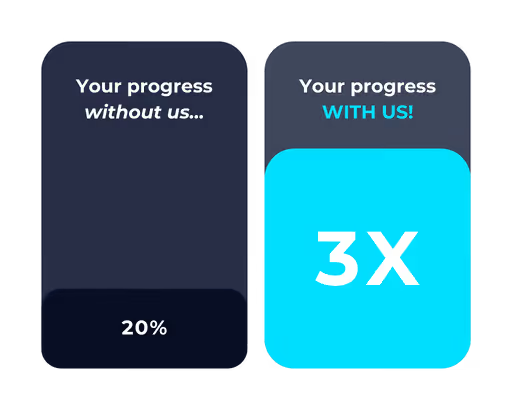
Join Thousands of GetFIT App Users Worldwide
Thousands of people around the world have already joined GetFIT App to track their nutrition, follow workout programs, and work toward their fitness goals. Join our growing global community and get the tools you need to manage your fitness journey in one place.

Try GetFIT App for 5 days free!
Discover the premium features of the GetFIT App during a free trial: personalized calorie calculation and tracking, meal plans, recipes, workout programs, e-books, and much more. Start your transformation today!

Dear User! Unlock your Dream Body Today!
Start your free trial today! With your premium membership, you’ll get immediate access to all the tools and content that help you lose weight, build muscle, and develop a healthy lifestyle.