Seated oblique machine targets the oblique muscles directly. Perform slowly and with focus for maximum effectiveness.

Train & diet effectively with the help of the GetFIT App. Our app tracks your calorie intake and workouts, and offers effective plans, recipes, and programs.

(Free trial for new users - cancel anytime)
Our Meal Plans


Blog Articles








Blog Articles

Rotary Torso Machine – Isolated Oblique Training for Core Strength
The rotary torso machine is an isolation exercise designed to target the obliques through controlled trunk rotation. Unlike many free-weight rotational movements, the machine provides support and guidance, making it easier to focus on the muscles responsible for twisting the torso without relying on momentum.
This exercise is commonly used to strengthen the sides of the abdominal wall, improve trunk stability, and add variety to a core training routine.
Benefits of the Rotary Torso Machine
One of the biggest advantages of the rotary torso machine is the ability to perform rotational movements in a stable environment. Because the hips and lower body remain fixed, the obliques are forced to do most of the work.
The guided movement also makes it easier for beginners to learn proper rotation mechanics. Compared to free-weight exercises, there is less opportunity to compensate with excessive body movement or poor technique.
Another benefit is the ability to adjust resistance precisely, allowing gradual progression without sacrificing control.
Muscles Worked
Primary Muscles
The external and internal obliques are the main muscles involved during the exercise. These muscles are responsible for trunk rotation and play an important role in overall core function.
Secondary Muscles
The rectus abdominis helps stabilize the torso throughout the movement, while the deeper core muscles contribute to maintaining posture and spinal stability.
How to Perform the Rotary Torso Machine Correctly
Begin by sitting in the machine and adjusting the pads so they fit comfortably against your upper body. Position your feet securely and keep your hips firmly in place throughout the set.
Start the movement by rotating your torso slowly toward one side. The motion should come from the trunk, not from shifting the hips or using momentum. Once you reach the end of the range that feels comfortable and controlled, briefly contract the obliques before returning to the starting position.
Perform all repetitions on one side before switching, or alternate sides depending on the design of the machine.
Breathing Technique
Exhale as you rotate into the movement and contract the obliques. Inhale as you slowly return to the starting position.
Maintaining steady breathing helps keep the movement controlled and prevents unnecessary tension.
Range of Motion and Technique
The movement should consist of rotation rather than side bending. Your hips should remain fixed against the seat while the torso rotates under control.
Avoid forcing the range of motion. Rotating too far or using excessive speed usually reduces effectiveness and places unnecessary stress on the lower back.
Variations and Alternatives
Although the machine offers a convenient way to train the obliques, several other exercises can provide a similar stimulus.
Cable wood chops challenge the core through rotational movement while allowing freedom of motion. Russian twists add an element of balance and coordination, while side planks emphasize anti-lateral flexion and overall trunk stability.
These exercises can be used alongside the rotary torso machine or as alternatives when machine access is limited.
When to Include It in Your Workout
The rotary torso machine works well near the end of a workout as part of a dedicated abdominal routine. It can also be used during core-focused sessions or as supplemental work for athletes who want to improve rotational strength and trunk control.
Because it is not highly demanding on the cardiovascular system or large muscle groups, it pairs well with other abdominal exercises.
Sets, Repetitions, and Rest
For most people, three to four sets of 12 to 20 repetitions per side work well. Rest periods of 45 to 75 seconds are usually enough between sets.
Higher repetitions and controlled execution generally produce better results than using heavy resistance.
Common Mistakes
Using too much weight is one of the most common problems. Heavy loads often lead to excessive momentum and reduce the involvement of the obliques.
Another mistake is allowing the hips to rotate along with the torso. This shifts tension away from the target muscles and defeats the purpose of the exercise.
Fast, jerky repetitions are also common. A slow and controlled tempo allows the obliques to remain under tension and improves overall exercise quality.
Sample Core Workout
The rotary torso machine can fit well into a simple core session. Three or four sets of 15 repetitions per side can be paired with side planks for three sets of 30 to 45 seconds and Russian twists for three sets of 20 total repetitions.
Combined with other core movements, the rotary torso machine can help strengthen the obliques and improve overall trunk stability.

More Exercises
All Exercises
.avif)

.avif)


.avif)

.avif)


.avif)
.avif)


.avif)




Everything You Need for a Fitter Body is here in GetFIT App!
Set calorie and macro goals, track your meals and activity, follow structured workout and meal plans, and monitor your progress over time. GetFIT App brings nutrition tracking, fitness planning, and everyday tools together in one simple membership.
High-Protein Recipes & Meal Plans
Discover hundreds of high-protein recipes, ready-made 4 week meal plans, and healthy meal ideas for weight loss and muscle building. Every recipe includes clear calorie and macro information, so eating for your goals is simple.


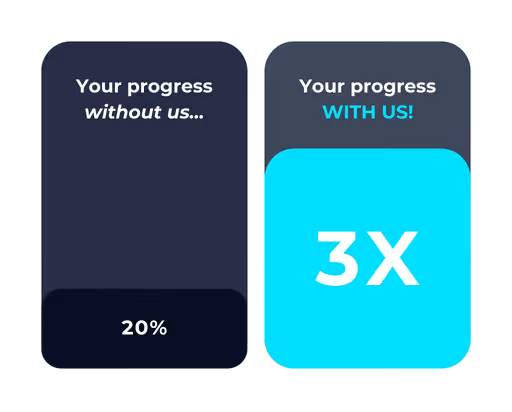
Join Thousands of GetFIT App Users Worldwide
Thousands of people around the world have already joined GetFIT App to track their nutrition, follow workout programs, and work toward their fitness goals. Join our growing global community and get the tools you need to manage your fitness journey in one place.
.webp)
Try GetFIT App for 5 days free!
Discover the premium features of the GetFIT App during a free trial: personalized calorie calculation and tracking, meal plans, recipes, workout programs, e-books, and much more. Start your transformation today!
.webp)
Dear User! Unlock your Dream Body Today!
Start your free trial today! With your premium membership, you’ll get immediate access to all the tools and content that help you lose weight, build muscle, and develop a healthy lifestyle.














































.png)