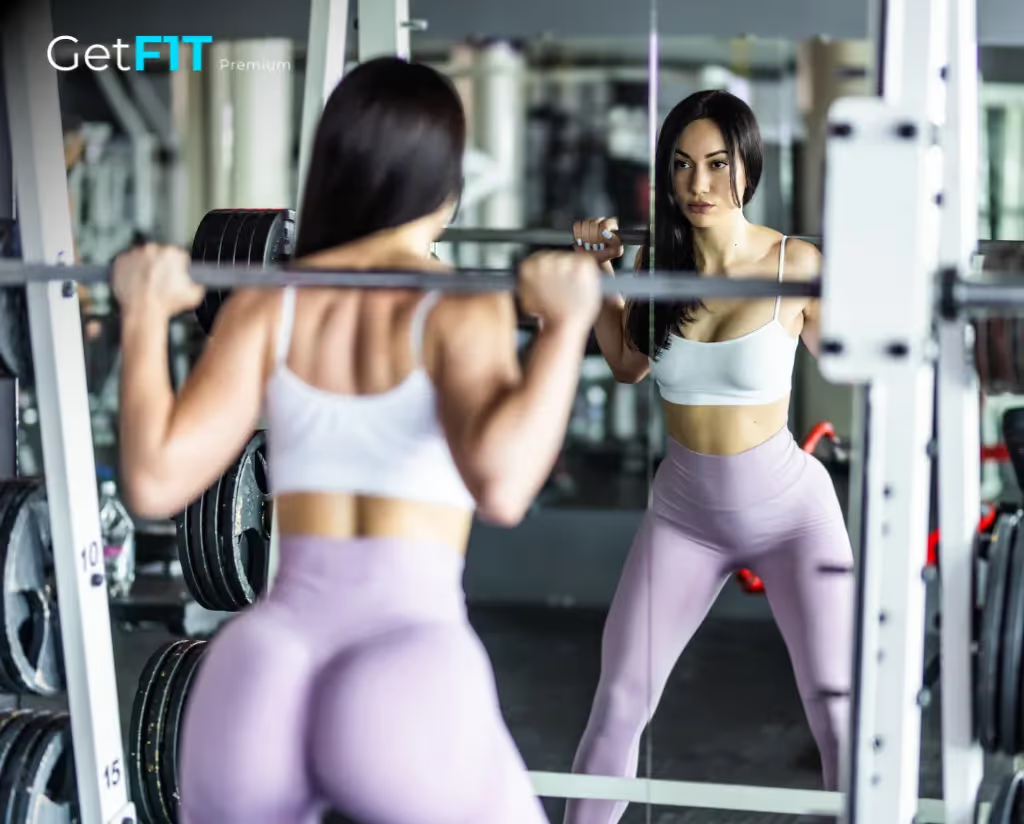
Squat is one of the most important foundational lower-body exercises, so proper knee and hip mechanics are essential.

Train & diet effectively with the help of the GetFIT App. Our app tracks your calorie intake and workouts, and offers effective plans, recipes, and programs.

(Free trial for new users - cancel anytime)
Our Meal Plans


Blog Articles





Blog Articles
Squat – The Best Lower Body Muscle-Building Exercise
The squat is one of the most important compound exercises, simultaneously developing the quadriceps, glutes, and core stability. When performed consistently, it builds a strong, functional, and aesthetic lower body.
Benefits Compared to Similar Exercises
Full-body activation
Multiple muscle groups work at the same time, making it highly efficient for strength and muscle growth.
Functional movement pattern
The squat closely reflects everyday movement patterns like sitting, lifting, and jumping.
Strength and muscle building
One of the most effective exercises for overall muscle mass and lower body strength.
Hormonal response
Due to the large muscle mass involved, squats can create a stronger anabolic response compared to isolation exercises.
Muscles Worked
Primary muscles
- Quadriceps (front thigh muscles)
- Gluteus maximus (glutes)
Secondary muscles
- Hamstrings
- Core muscles (abs and obliques)
- Spinal erectors (lower back stabilizers)
Proper Execution – How to Perform the Squat
- Stand with feet shoulder-width apart or slightly wider
- Point toes slightly outward
- Keep your chest up and back neutral
- Initiate the movement by pushing hips back (as if sitting down)
- Knees should track in line with your toes
- Lower yourself until at least parallel depth
- Push back up through your heels
Key principle: stable core + controlled movement → no collapsing or bouncing.
Breathing
- Inhale before descending (brace the core)
- Exhale while standing up
Range of Motion
- Bottom position: thighs at least parallel to the ground (or deeper if mobility allows)
- Top position: full hip and knee extension
Deeper range of motion generally leads to higher muscle activation.
Variations
Beginner variations
- Bodyweight squat
- Goblet squat
Advanced variations
- Back squat
- Front squat
- Pause squat
- Bulgarian split squat
When to Use the Squat
- At the beginning of leg day as the main compound lift
- For muscle building and strength development
- In full-body workouts
- For improving athletic performance
Alternatives
- Leg press
- Hack squat
- Lunges
- Smith machine squat
Sets, Reps, and Rest
Beginners
- 3–4 sets
- 8–12 reps
Advanced
- 4–6 sets
- 4–10 reps
Rest time: 60–120 seconds
Hypertrophy and Progressive Overload
The squat is one of the most powerful tools for building muscle mass.
How to progress effectively:
- Gradually increase weight over time
- Combine strength (4–6 reps) and hypertrophy (8–12 reps) ranges
- Increase total training volume (sets/reps)
- Use slow eccentric (lowering) phases
- Train close to muscular failure while maintaining form
Key principle: progressive overload + perfect technique = maximum results.
Sample Workout
- Squat – 4 × 6–8
- Leg extension – 3 × 12
- Leg curl – 3 × 12
Common Mistakes
- Leaning too far forward
- Knees collapsing inward
- Insufficient depth
- Using excessive weight that breaks form
Pro Tip
To improve stability and strength, brace your core before every rep as if you were about to take a punch.
The squat remains one of the most essential exercises for building a strong, muscular, and functionally developed lower body.

More Exercises
All Exercises
.avif)


.avif)


.avif)

.avif)


.avif)
.avif)


.avif)



Everything You Need for a Fitter Body is here in GetFIT App!
Set calorie and macro goals, track your meals and activity, follow structured workout and meal plans, and monitor your progress over time. GetFIT App brings nutrition tracking, fitness planning, and everyday tools together in one simple membership.
High-Protein Recipes & Meal Plans
Discover hundreds of high-protein recipes, ready-made 4 week meal plans, and healthy meal ideas for weight loss and muscle building. Every recipe includes clear calorie and macro information, so eating for your goals is simple.


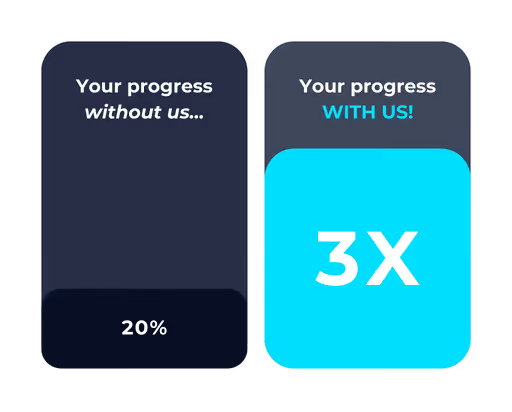
Join Thousands of GetFIT App Users Worldwide
Thousands of people around the world have already joined GetFIT App to track their nutrition, follow workout programs, and work toward their fitness goals. Join our growing global community and get the tools you need to manage your fitness journey in one place.
.webp)
Try GetFIT App for 5 days free!
Discover the premium features of the GetFIT App during a free trial: personalized calorie calculation and tracking, meal plans, recipes, workout programs, e-books, and much more. Start your transformation today!
.webp)
Dear User! Unlock your Dream Body Today!
Start your free trial today! With your premium membership, you’ll get immediate access to all the tools and content that help you lose weight, build muscle, and develop a healthy lifestyle.














































.png)