TRX row is a bodyweight exercise that develops the back and core stability. Keep your body straight and adjust difficulty with your angle.

Train & diet effectively with the help of the GetFIT App. Our app tracks your calorie intake and workouts, and offers effective plans, recipes, and programs.

(Free trial for new users - cancel anytime)
Our Meal Plans


Blog Articles










Blog Articles

T-Bar Row – Building Back Thickness and Strength
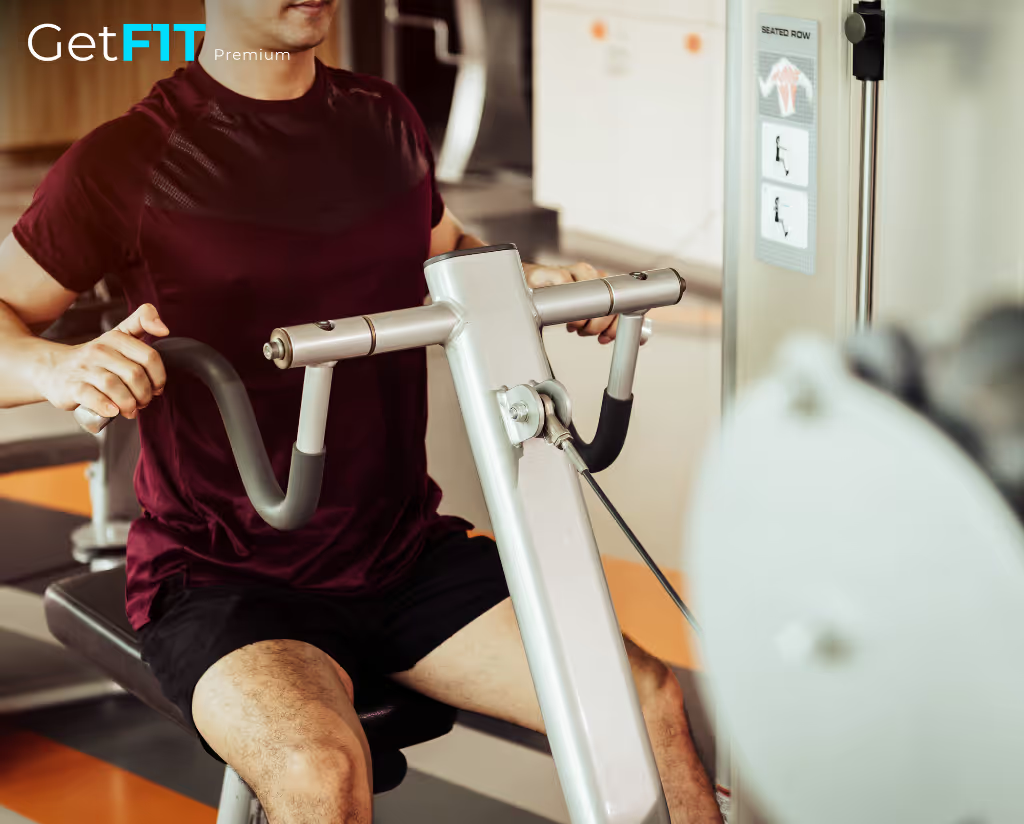
The T-Bar Row is one of the most effective rowing exercises for developing a thicker and stronger back. Unlike some free weight rowing variations, the movement provides greater stability, allowing you to handle heavier loads while maintaining good technique. It is a staple exercise for increasing back size and improving pulling strength.
Benefits of the T-Bar Row
One of the biggest advantages of the T-Bar Row is its ability to target the middle portion of the back. The exercise places significant tension on the lats, rhomboids, and middle trapezius, helping create a denser and more muscular upper body.
Because the movement is stable and allows for heavy loading, it is also excellent for building strength. Many lifters find it easier to progressively overload the T-Bar Row compared to traditional bent-over rows, making it a valuable exercise for long-term development.
Muscles Worked
Primary Muscles
The T-Bar Row primarily targets the latissimus dorsi, rhomboids, and middle trapezius. These muscles are responsible for pulling the shoulder blades together and creating thickness throughout the upper and mid-back.
Secondary Muscles
The biceps and rear deltoids assist during the pulling motion, while the spinal erectors and core muscles work to stabilize the torso throughout the exercise.
How to Perform the T-Bar Row Correctly
Starting Position
Stand over the T-bar machine and position your feet firmly on the platform. Hinge at the hips until your torso is roughly 30 to 45 degrees from the floor. Maintain a neutral spine and brace your core to keep your body stable.
Grip the handle with a neutral or close grip and allow your arms to extend fully at the bottom.
The Pull
Initiate the movement by driving your elbows back and pulling the weight toward your lower chest or upper abdomen. Focus on moving with the elbows rather than simply curling the weight with the arms.
At the top of the movement, squeeze your shoulder blades together and contract the back muscles before lowering the weight under control.
The Descent
Allow the arms to extend completely and stretch the lats before beginning the next repetition. Avoid dropping the weight or rushing through the lowering phase.
Breathing Technique
Exhale while pulling the weight toward your body and inhale as you lower it back to the starting position. Keeping a steady breathing pattern helps maintain stability and control.
Range of Motion and Technique Tips
A full range of motion is important for getting the most out of the exercise. Allow the arms to fully extend at the bottom and focus on achieving a strong contraction at the top.
Throughout the movement, keep the chest up and maintain a neutral spine. Avoid excessive body movement and let the back muscles perform the work.
Variations and Progressions
Beginners should start with lighter weights and focus on developing proper technique. As strength improves, heavier loads and slower negatives can be incorporated.
A chest-supported T-Bar Row variation provides additional stability and reduces stress on the lower back. Different grip widths can also shift emphasis between the lats and upper back. Single-arm rowing variations may help address strength imbalances between sides.
When to Include the T-Bar Row
The T-Bar Row fits best in the middle portion of a back workout, after heavier vertical pulling movements such as pull-ups or lat pulldowns. It is particularly effective when the goal is increasing overall back thickness and strength.
Alternative Exercises
If a T-Bar machine is unavailable, similar benefits can be achieved with barbell rows, seated cable rows, or machine rowing variations. Each exercise targets the back muscles through a similar horizontal pulling pattern.
Recommended Sets and Repetitions
For muscle growth, performing three to four sets of eight to twelve repetitions works well for most people.
Those focusing on strength can perform four to five sets of five to eight repetitions with heavier weights. Rest periods of 60 to 120 seconds are usually sufficient between sets.
Example Back Workout
A simple back session could begin with pull-ups for four sets of six to eight repetitions. T-Bar Rows can then be performed for four sets of ten repetitions, followed by lat pulldowns for three sets of twelve repetitions.
Common Mistakes
One of the most common mistakes is rounding the back during the movement. Maintaining a neutral spine helps protect the lower back and improves force production.
Using excessive momentum is another frequent issue. Swinging the torso reduces tension on the target muscles and often turns the movement into a full-body exercise rather than a back exercise.
Some lifters pull the weight too high toward the upper chest, which shifts emphasis away from the lats and middle back. Pulling toward the lower chest or upper abdomen usually creates better muscle activation.
Finally, using more weight than you can control often leads to poor form and incomplete repetitions. Selecting a manageable load and focusing on quality movement will produce better long-term results.

More Exercises
All Exercises
.avif)


.avif)


.avif)


.avif)


.avif)
.avif)


.avif)







Everything You Need for a Fitter Body is here in GetFIT App!
Set calorie and macro goals, track your meals and activity, follow structured workout and meal plans, and monitor your progress over time. GetFIT App brings nutrition tracking, fitness planning, and everyday tools together in one simple membership.
High-Protein Recipes & Meal Plans
Discover hundreds of high-protein recipes, ready-made 4 week meal plans, and healthy meal ideas for weight loss and muscle building. Every recipe includes clear calorie and macro information, so eating for your goals is simple.


Join Thousands of GetFIT App Users Worldwide
Thousands of people around the world have already joined GetFIT App to track their nutrition, follow workout programs, and work toward their fitness goals. Join our growing global community and get the tools you need to manage your fitness journey in one place.
.webp)
Try GetFIT App for 5 days free!
Discover the premium features of the GetFIT App during a free trial: personalized calorie calculation and tracking, meal plans, recipes, workout programs, e-books, and much more. Start your transformation today!
.webp)
Dear User! Unlock your Dream Body Today!
Start your free trial today! With your premium membership, you’ll get immediate access to all the tools and content that help you lose weight, build muscle, and develop a healthy lifestyle.














































.png)