Zottman curl combines biceps and forearm development in one exercise. Perform it slowly and with control for maximum effect.

Train & diet effectively with the help of the GetFIT App. Our app tracks your calorie intake and workouts, and offers effective plans, recipes, and programs.

(Free trial for new users - cancel anytime)
Our Meal Plans


Blog Articles









Blog Articles

Back, Biceps, and Forearm Hypertrophy Workout With Zottman Curls
- Lat Pulldown: 3 sets × 8–12 reps, rest 2 minutes.
- Chest-Supported Row: 3 sets × 8–12 reps, rest 2 minutes.
- Reverse Pec Deck Fly: 2 sets × 12–20 reps, rest 60–90 seconds.
- Standing Dumbbell Curl: 3 sets × 8–12 reps, rest 90 seconds.
- Zottman Curl: 2 sets × 10–15 reps, rest 60–90 seconds.
1. Lat Pulldown: 3 × 8–12
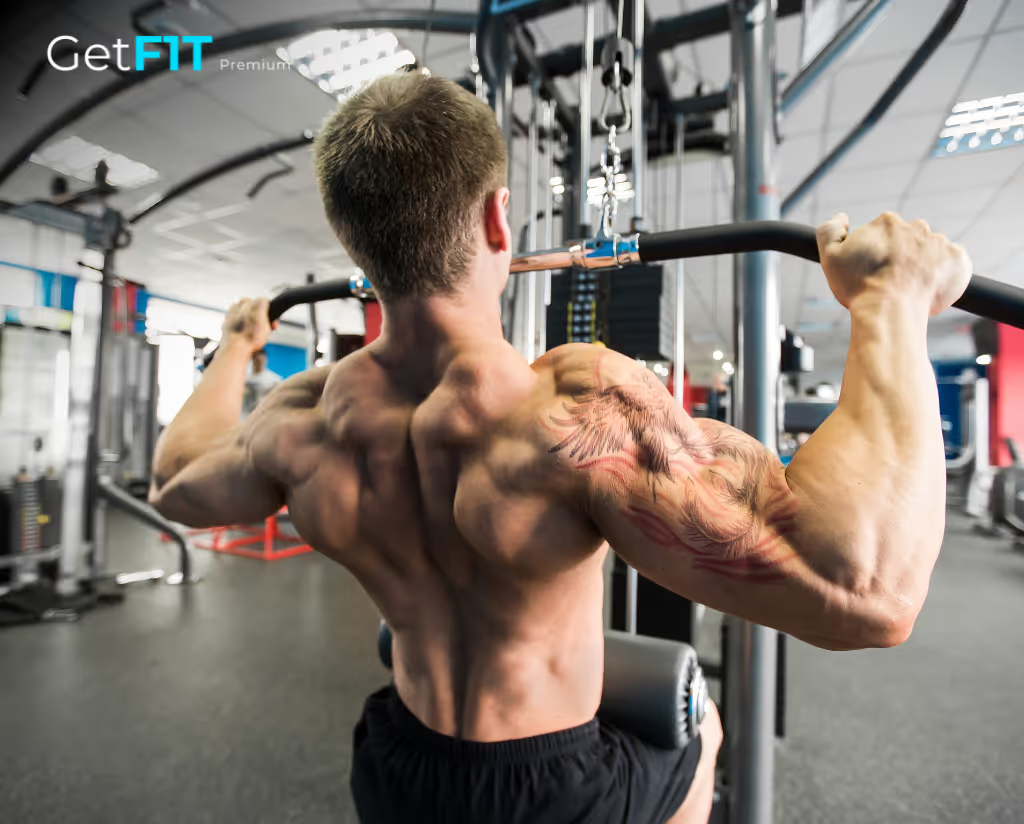
The lat pulldown is the primary vertical pulling exercise in this workout.
It trains the latissimus dorsi, other upper-back muscles, and elbow flexors.
How to perform it:
- Adjust the thigh pads so your legs remain secure.
- Grip the bar with a comfortable width.
- Sit upright with your torso stable.
- Pull the bar toward your upper chest.
- Allow your elbows to travel downward.
- Return the bar gradually without losing control.
Training tips:
- Avoid excessive backward leaning.
- Keep the movement controlled.
- Use a comfortable shoulder range.
- Maintain approximately 1–2 repetitions in reserve.
Rest approximately 2 minutes between sets.
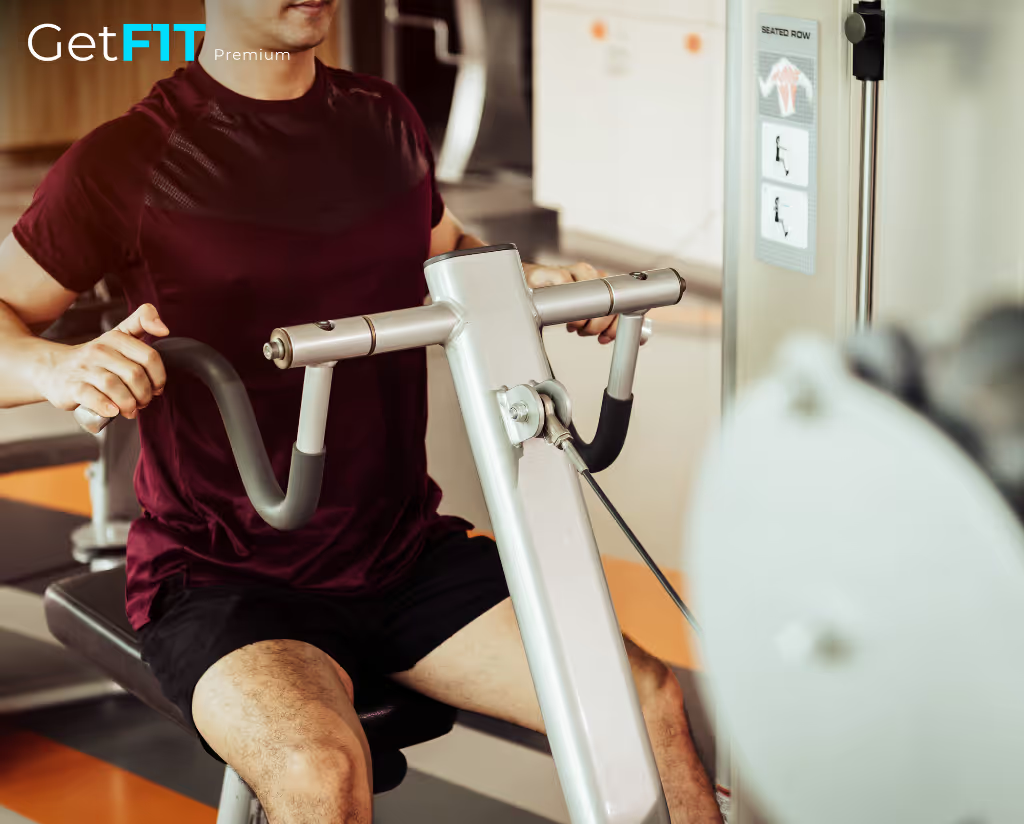
2. Chest-Supported Row: 3 × 8–12
The chest-supported row trains the upper back and lats while reducing the need to stabilize the torso.
It complements the lat pulldown with a horizontal pulling movement.
How to perform it:
- Adjust the bench or machine so your chest is supported.
- Hold the handles with a comfortable grip.
- Pull the resistance toward your torso.
- Move your elbows backward without excessive shrugging.
- Pause briefly if useful.
- Return the resistance under control.
Training tips:
- Keep your chest in contact with the support.
- Avoid using momentum.
- Maintain a comfortable shoulder position.
- Stop before technique deteriorates.
Rest approximately 2 minutes between sets.
3. Reverse Pec Deck Fly: 2 × 12–20
The reverse pec deck fly trains the posterior deltoids and upper-back muscles.
It provides direct rear-shoulder work after the larger pulling exercises.
How to perform it:
- Adjust the seat so the handles are approximately at shoulder height.
- Sit facing the machine with your chest supported.
- Hold the handles with a comfortable arm position.
- Move your arms outward and backward.
- Avoid excessive torso movement.
- Return the handles gradually.
Training tips:
- Use moderate resistance.
- Avoid pulling the arms excessively far backward.
- Maintain a consistent range.
- Keep approximately 1–2 repetitions in reserve.
Rest 60–90 seconds between sets.
4. Standing Dumbbell Curl: 3 × 8–12
The standing dumbbell curl is the primary direct biceps exercise in this workout.
It trains the biceps and brachialis through elbow flexion using a palms-up grip.
How to perform it:
- Stand upright with a dumbbell in each hand.
- Rotate your palms forward.
- Keep your upper arms close to your torso.
- Curl the dumbbells toward your shoulders.
- Avoid swinging your torso.
- Lower the dumbbells under control.
Training tips:
- Use a consistent range of motion.
- Avoid excessive wrist bending.
- Keep the elbows relatively stable.
- Maintain approximately 1–2 repetitions in reserve.
Rest approximately 90 seconds between sets.
5. Zottman Curl: 2 × 10–15
The Zottman curl provides additional biceps, brachialis, and forearm training through a combination of supinated lifting and pronated lowering.
It is performed after conventional curls because the grip transition and controlled descent generally work best with moderate resistance.
How to perform it:
- Hold light-to-moderate dumbbells with your palms facing forward.
- Curl both dumbbells upward while keeping your torso stable.
- Rotate your forearms at the top until your palms face downward.
- Lower the dumbbells gradually with a pronated grip.
- Return to a palms-up grip at the bottom.
- Repeat the sequence without swinging.
Training tips:
- Choose resistance based on the lowering phase.
- Keep your wrists reasonably neutral.
- Avoid abrupt forearm rotation.
- Stop when you cannot control the pronated descent.
- Maintain approximately 1–2 repetitions in reserve.
Rest 60–90 seconds between sets.
How to Warm Up Before This Back and Arm Workout
Spend approximately 5–8 minutes preparing your upper body before the working sets.
A practical warm-up includes:
- 2–3 minutes: Light rowing or another comfortable upper-body movement.
- 2 minutes: Controlled shoulder, elbow, and forearm movement.
- 2–3 warm-up sets: Gradually increase resistance on the lat pulldown.
For example, if your planned lat pulldown working weight is 50 kg, you might perform:
- 20 kg × 10 repetitions.
- 35 kg × 6 repetitions.
- 45 kg × 3 repetitions.
These numbers are illustrative and should be adjusted to your strength and equipment.
Before Zottman curls, perform a few light practice repetitions if the forearm rotation feels unfamiliar.
How Hard Should You Train During This Workout?
Use repetitions in reserve (RIR) to manage training effort.
RIR refers to the number of additional repetitions you could complete before reaching muscular failure.
For this workout:
- Lat pulldown: Approximately 1–2 RIR.
- Chest-supported row: Approximately 1–2 RIR.
- Reverse pec deck fly: Approximately 1–2 RIR.
- Standing dumbbell curl: Approximately 1–2 RIR.
- Zottman curl: Approximately 1–2 RIR.
You do not need to train every set to failure.
For compound pulling exercises, maintain stable torso and shoulder positioning.
For Zottman curls, stop when you can no longer rotate or lower the dumbbells smoothly.
How to Progress This Zottman Curl Workout Over Several Weeks
Progressive overload should involve gradually increasing repetitions or resistance while maintaining consistent technique.
Step 1: Start Near the Lower End of Each Repetition Range
For Zottman curls, select dumbbells that allow approximately ten controlled repetitions.
Maintain the same grip sequence and range of motion across workouts.
Step 2: Gradually Increase Repetitions
Keep resistance consistent while adding repetitions over time.
For example:
- Week 1: 2 × 10.
- Week 2: 2 × 11.
- Week 3: 2 × 12.
- Week 4: 2 × 13.
- Week 5: 2 × 15.
These numbers illustrate a possible progression rather than guaranteed weekly improvements.
Step 3: Increase Resistance When Appropriate
Once you reach the upper repetition limit across both working sets with consistent technique, increase dumbbell weight by the smallest practical increment.
Return toward the lower end of the repetition range.
If the next weight is too heavy to lower smoothly, maintain the current resistance.
Step 4: Progress the Other Exercises
Apply the same double-progression approach to pulldowns, rows, rear-delt flyes, and conventional curls.
Increase resistance only when you can maintain consistent technique.
Step 5: Manage Accumulated Fatigue
If your forearms or elbow flexors remain excessively fatigued during subsequent pulling workouts, consider reducing direct curl volume.
Avoid adding multiple additional forearm exercises automatically.
Consistent progression and adequate recovery are more important than performing every possible curl variation.
How to Fit This Back and Forearm Workout Into a 4–6-Day Training Split
This session works well as a pull-focused day within a four-, five-, or six-day resistance training routine.
For a four-day upper/lower split, it can be incorporated into one of the upper-body sessions.
For a five- or six-day routine, it can serve as one of your pull days.
If you train your back and biceps twice per week, distribute total pulling and curling volume across both sessions.
This workout includes six compound pulling sets, two rear-delt sets, and five direct elbow-flexor sets.
Account for other rows, pulldowns, chin-ups, curls, and forearm exercises when planning weekly training volume.
Allow sufficient recovery between demanding pulling sessions to maintain performance and controlled technique.
Zottman Curl: Muscles Worked, Benefits, and Proper Form
The Zottman curl is a dumbbell elbow-flexion exercise that combines a supinated curl on the way up with a pronated grip during the lowering phase. You lift the dumbbells with your palms facing upward, rotate your forearms near the top, and lower the weights with your palms facing downward.
This combination trains the biceps brachii, brachialis, and brachioradialis while also challenging the muscles responsible for controlling forearm rotation and wrist position.
Unlike a conventional dumbbell curl, which usually maintains a palms-up grip during both phases, the Zottman curl changes grip orientation within each repetition. This creates different mechanical demands during lifting and lowering.
The exercise is useful for arm hypertrophy, forearm development, and controlled elbow-flexor training. It works best as an accessory movement rather than a maximal-strength exercise because the rotation and pronated lowering phase generally require lighter weights.
What Muscles Does the Zottman Curl Work?
The Zottman curl primarily trains the biceps brachii, brachialis, and brachioradialis. Forearm muscles involved in pronation, supination, gripping, and wrist stabilization also contribute.
The palms-up lifting phase and palms-down lowering phase change the mechanical demands on these muscles.
Biceps Brachii: Long and Short Heads
The biceps brachii has two heads, commonly called the long head and short head.
Both contribute to elbow flexion and forearm supination.
During the upward phase of a Zottman curl, the palms-up position allows the biceps to contribute strongly to elbow flexion.
The biceps remain involved during the lowering phase, although their mechanical contribution changes when the forearms rotate into pronation.
The exercise trains both heads rather than isolating either one.
Brachialis
The brachialis lies underneath the biceps brachii and is a major elbow flexor.
Unlike the biceps, its elbow-flexion function is not dependent on forearm supination.
It contributes during both the upward and downward phases of the Zottman curl.
This makes the exercise useful for training elbow flexion through more than one forearm orientation.
Brachioradialis
The brachioradialis is a prominent forearm muscle running along the thumb-side of the forearm.
It contributes to elbow flexion, particularly when the forearm is near a neutral position, although it remains involved in other grip orientations.
During the pronated lowering phase, the brachioradialis helps control elbow extension against the dumbbell load.
This is one reason Zottman curls are often included in programs emphasizing both upper-arm and forearm development.
Forearm Pronators and Supinators
The pronator teres and pronator quadratus help rotate the forearm so the palm faces downward.
The supinator muscle and biceps brachii contribute to turning the palm upward.
During Zottman curls, these muscles help control the transition between grip positions.
The rotation should be smooth rather than forced or performed with momentum.
Wrist Flexors, Extensors, and Grip Muscles
The wrist flexors and extensors help stabilize the wrists while holding the dumbbells.
The finger flexors maintain grip throughout the repetition.
These muscles are especially relevant when controlling the weights in the pronated position.
However, the Zottman curl is primarily an elbow-flexion exercise rather than a direct wrist-curl exercise.
Shoulder and Core Stabilizers
The shoulder muscles help maintain upper-arm position while the elbows bend and straighten.
The abdominal and spinal muscles stabilize the torso during standing repetitions.
Their main role is to prevent unnecessary body movement rather than generate the curl itself.
Are Zottman Curls Good for Biceps and Forearm Growth?
Yes. Zottman curls can contribute to biceps and forearm hypertrophy when performed with sufficient resistance, controlled repetitions, and progressive overload.
The palms-up lifting phase trains the biceps and brachialis, while the pronated lowering phase changes the demands on the elbow flexors and forearm muscles.
However, Zottman curls are not automatically superior to conventional dumbbell curls, hammer curls, or reverse curls.
The exercise combines different grip positions within one repetition, but this does not guarantee greater muscle growth than performing separate exercises.
It is most useful when you want an accessory movement that trains elbow flexion and forearm control without requiring multiple pieces of equipment.
Main Benefits of the Zottman Curl
The Zottman curl offers several practical benefits for arm training.
- Biceps training: The supinated lifting phase challenges the biceps brachii through elbow flexion.
- Brachialis development: The brachialis contributes throughout both phases of the movement.
- Forearm involvement: The pronated lowering phase challenges the brachioradialis and forearm stabilizers.
- Grip-position variety: Each repetition includes both supination and pronation.
- Forearm rotation control: The exercise requires controlled rotation while holding resistance.
- Minimal equipment: Only a pair of dumbbells is required.
- Accessory versatility: Zottman curls fit well after compound pulling exercises or conventional biceps curls.
The main limitation is that the amount of weight you can use is often restricted by your ability to control the pronated lowering phase.
How to Set Up the Zottman Curl Correctly
The Zottman curl requires two dumbbells and enough space to move your forearms without obstruction.
Choose the Correct Dumbbell Weight
Start lighter than you would for a conventional standing dumbbell curl.
The pronated lowering phase may be more challenging than the palms-up lifting phase.
Choose a weight that allows you to control both phases without wrist bending, swinging, or dropping the dumbbells.
Position Your Feet and Torso
Stand with your feet approximately hip-width apart.
Keep your knees relaxed and your torso upright.
Maintain enough abdominal tension to avoid excessive backward leaning.
Start With Your Palms Facing Forward
Hold a dumbbell in each hand with your arms hanging comfortably beside your body.
Rotate your forearms so your palms face forward.
Keep your wrists reasonably aligned with your forearms.
Position Your Elbows Near Your Sides
Allow your upper arms to rest close to your torso.
Your elbows do not need to remain perfectly motionless, but avoid large forward movements during the curl.
This helps keep elbow flexion as the primary movement.
How to Perform the Zottman Curl Step by Step
Follow these steps to perform a standing dumbbell Zottman curl.
- Stand upright: Hold one dumbbell in each hand with your feet stable.
- Supinate your forearms: Begin with your palms facing forward.
- Curl the dumbbells upward: Bend your elbows while keeping your upper arms relatively stable.
- Reach the top position: Bring the dumbbells near shoulder height without swinging your torso.
- Rotate your forearms: Turn your palms downward while keeping the elbows bent.
- Begin the lowering phase: Slowly straighten your elbows with your palms facing the floor.
- Control the dumbbells: Resist gravity throughout the descent.
- Reach the bottom: Lower until your elbows approach comfortable extension.
- Rotate back to supination: Turn your palms forward again.
- Repeat: Maintain the same sequence and range of motion for each repetition.
The defining feature is the combination of a supinated lifting phase and a pronated lowering phase.
When Should You Rotate Your Wrists During a Zottman Curl?
Rotate your forearms near the top of the curl, after completing the palms-up lifting phase.
With your elbows bent, turn the dumbbells until your palms face downward.
Maintain a comfortable wrist position during the rotation.
At the bottom of the lowering phase, rotate your forearms back into supination before beginning the next repetition.
The movement should come primarily from forearm rotation rather than exaggerated wrist bending.
Should You Rotate the Dumbbells at the Bottom or Top?
Rotate into pronation at the top and return to supination at the bottom.
This allows the upward phase to use a palms-up grip and the downward phase to use a palms-down grip.
Rotating halfway through the lifting phase changes the intended exercise.
Should Your Wrists Bend During the Rotation?
Keep your wrists relatively neutral while rotating the forearms.
Avoid deliberately curling or extending the wrists to move the dumbbells.
If your wrists cannot remain comfortable, reduce the load or use a simpler curl variation.
How Should You Breathe During Zottman Curls?
Exhale while curling the dumbbells upward and inhale during the lowering phase.
Maintain a stable torso throughout the repetition.
A moderate abdominal brace can help prevent backward leaning.
There is usually no need for prolonged breath-holding during controlled Zottman curl sets.
How Far Should You Lower the Dumbbells?
Lower the dumbbells until your elbows approach full comfortable extension.
A substantial range of elbow motion allows the elbow flexors to work through the movement.
However, avoid forcing your elbows into hyperextension or allowing the dumbbells to drop at the bottom.
The exact range depends on elbow comfort, arm position, and your ability to maintain control.
Should You Fully Straighten Your Elbows?
Approaching full elbow extension is appropriate when comfortable.
Avoid snapping the elbows into a locked position.
Use a consistent bottom position across repetitions.
Should You Pause at the Top?
A brief pause can help you complete the forearm rotation without rushing.
The pause does not need to be long.
Focus on maintaining control rather than exaggerating the contraction.
What Is the Best Tempo for Zottman Curls?
A controlled lifting phase and slightly slower lowering phase work well for Zottman curls.
A practical starting tempo is:
- Supinated lifting phase: Approximately 1–2 seconds.
- Top rotation: Approximately 1 second.
- Pronated lowering phase: Approximately 2–4 seconds.
- Bottom rotation: Smoothly return to supination.
These timings are guidelines rather than strict requirements.
The pronated lowering phase should be slow enough to prevent the dumbbells from dropping.
Extremely slow repetitions are not necessary for muscle growth.
Common Zottman Curl Mistakes and How to Fix Them
The most common Zottman curl mistakes involve excessive resistance, poor forearm rotation, and uncontrolled lowering.
Using Too Much Weight
Mistake: Choosing dumbbells that can be curled upward but cannot be lowered under control with a pronated grip.
Why it matters: The lowering phase becomes rushed and technique deteriorates.
Correction: Select resistance based on your ability to complete the entire repetition, not just the lifting phase.
Swinging the Torso Backward
Mistake: Leaning backward to lift the dumbbells.
Why it matters: Momentum reduces the amount of controlled work performed by the elbow flexors.
Correction: Reduce resistance and maintain a stable standing position.
Rotating the Dumbbells Too Early
Mistake: Turning the palms downward before completing the upward curl.
Why it matters: This changes the exercise into a different combination of curl movements.
Correction: Finish the palms-up curl before rotating at the top.
Dropping the Dumbbells During the Lowering Phase
Mistake: Allowing the weights to fall rapidly once the palms face downward.
Why it matters: This reduces control during a defining phase of the exercise.
Correction: Use lighter dumbbells and lower them gradually.
Bending the Wrists Excessively
Mistake: Allowing the wrists to collapse forward or backward during rotation.
Why it matters: This introduces unnecessary wrist movement and may create discomfort.
Correction: Keep the wrists relatively aligned with the forearms.
Moving the Elbows Too Far Forward
Mistake: Raising the upper arms substantially to bring the dumbbells higher.
Why it matters: This introduces additional shoulder movement and makes repetitions less consistent.
Correction: Keep the elbows relatively close to your sides.
Rushing the Forearm Rotation
Mistake: Twisting the dumbbells abruptly at the top or bottom.
Why it matters: Fast rotation can make the weights harder to control.
Correction: Rotate smoothly with the elbows bent at the top and the arms lowered at the bottom.
Using Inconsistent Range of Motion
Mistake: Shortening the lowering phase as fatigue increases.
Why it matters: This makes performance harder to compare across sets.
Correction: Use a repeatable comfortable range and stop when you cannot maintain it.
Zottman Curl Variations for Beginners and Advanced Lifters
Zottman curls can be adjusted through body position, repetition speed, and loading.
Beginner: Light Standing Zottman Curl
Use light dumbbells and perform 2–3 sets of 10–15 repetitions.
Focus on learning the sequence of supination, elbow flexion, pronation, and controlled lowering.
This is the most practical starting variation.
Beginner: Seated Zottman Curl
Perform the exercise while seated on a flat bench.
The seated position reduces opportunities to use lower-body momentum.
Keep your torso upright and avoid leaning backward.
Intermediate: Standard Standing Zottman Curl
Perform 3 sets of approximately 8–12 repetitions.
Use resistance that challenges the elbow flexors without compromising forearm rotation.
Maintain consistent technique throughout the set.
Intermediate: Alternating Zottman Curl
Perform one repetition with one arm while the other remains at your side.
This allows you to concentrate on each arm separately.
It may be useful for monitoring side-to-side differences in control.
Intermediate: Paused Zottman Curl
Pause briefly at the top before rotating into pronation.
This reduces the tendency to rush the transition.
Use manageable resistance and maintain stable elbows.
Advanced: Controlled-Eccentric Zottman Curl
Lower the dumbbells over approximately four seconds with your palms facing downward.
This emphasizes controlled resistance during the lowering phase.
It is an optional variation rather than a requirement for hypertrophy.
Advanced: Zottman Curl Drop Set
Perform a challenging set, reduce dumbbell weight, and continue with additional controlled repetitions.
This increases training fatigue and can extend the set.
Use it selectively because the forearm rotation and lowering phase may become difficult to control when fatigued.
Best Zottman Curl Alternatives for Biceps and Forearm Training
Several exercises train overlapping muscle groups without using the same combination of forearm rotation and elbow flexion.
Standing Dumbbell Curl
The standing dumbbell curl trains the biceps and brachialis through elbow flexion.
It usually maintains a supinated grip during lifting and lowering.
It is useful when direct biceps training is the main priority.
Dumbbell Hammer Curl
The hammer curl uses a neutral grip with the palms facing inward.
It trains the brachialis, brachioradialis, and biceps.
It is a practical alternative for forearm and upper-arm development.
Reverse Dumbbell Curl
The reverse dumbbell curl uses a pronated grip during both lifting and lowering.
It trains the elbow flexors with different mechanical demands from a supinated curl.
It is useful when you want more consistent pronated-grip training.
Reverse Barbell Curl
The reverse barbell curl uses a straight or EZ-style bar with the palms facing downward.
It trains both arms simultaneously.
It can be useful for progressive loading when a bilateral pronated-grip movement is preferred.
EZ-Bar Curl
The EZ-bar curl uses an angled grip that may feel more comfortable than a straight bar.
It trains the biceps, brachialis, and other elbow flexors.
It is a straightforward option for heavier bilateral curling.
Cable Rope Hammer Curl
The rope hammer curl uses a cable machine and neutral grip.
It trains the brachialis, brachioradialis, and biceps.
It provides an adjustable cable alternative to dumbbell hammer curls.
Cable Reverse Curl
The cable reverse curl uses a pronated grip and cable resistance.
It trains the elbow flexors with an emphasis on controlling a palms-down grip.
It is useful when dumbbells or barbells are uncomfortable.
Incline Dumbbell Curl
The incline dumbbell curl places the upper arms behind the torso.
It changes shoulder position and the length at which the biceps are trained.
It is useful for direct biceps training rather than forearm rotation practice.
Preacher Curl
The preacher curl supports the upper arms against an angled pad.
It reduces opportunities for torso momentum.
It is useful when you want more stable elbow positioning.
Machine Biceps Curl
A machine curl provides a guided resistance path and often supports the upper arms.
It reduces stabilization demands compared with standing dumbbell curls.
It can be useful for controlled hypertrophy sets.
Chin-Up
The chin-up is a compound pulling exercise that trains the back and elbow flexors.
It is not a direct mechanical substitute for the Zottman curl.
However, it can contribute to biceps development while also training larger upper-body muscle groups.
Zottman Curl vs. Hammer Curl: Which Is Better for Forearms?
Both exercises train the elbow flexors and involve the brachioradialis.
The main difference is grip orientation.
A hammer curl maintains a neutral grip during both phases.
A Zottman curl uses a supinated lifting phase and a pronated lowering phase.
Hammer curls are often easier to perform with heavier dumbbells because they do not require rotation during the repetition.
Zottman curls provide additional practice controlling forearm rotation under load.
Neither exercise is universally superior for forearm hypertrophy.
Zottman Curl vs. Regular Biceps Curl
A conventional dumbbell curl usually maintains a palms-up grip throughout the repetition.
The Zottman curl changes to a palms-down grip for the lowering phase.
Both train the biceps and brachialis, but the change in forearm orientation alters the mechanical demands on the elbow flexors.
Regular curls are often easier to progressively overload because they do not require controlled pronated lowering.
Zottman curls are useful when you want to combine biceps work with additional forearm involvement.
Zottman Curl vs. Reverse Curl
A reverse curl maintains a pronated grip throughout both the lifting and lowering phases.
A Zottman curl lifts with a supinated grip and lowers with a pronated grip.
Reverse curls provide a more consistent pronated-grip movement.
Zottman curls allow the biceps to contribute strongly during the upward phase while changing the grip for the descent.
Choose reverse curls when pronated-grip elbow flexion is your main focus.
Choose Zottman curls when you want both grip positions within one exercise.
How Many Sets and Reps of Zottman Curls Should You Do?
Zottman curls are generally best performed with moderate or higher repetitions and controlled resistance.
Very heavy low-repetition loading is less practical because forearm rotation and pronated lowering can become difficult to control.
For Arm Hypertrophy
- Working sets: 2–3.
- Repetitions: 8–15.
- Rest: 60–120 seconds.
- Effort: Approximately 1–2 repetitions in reserve.
Choose resistance that allows a smooth grip transition and controlled lowering.
For Elbow-Flexor Strength
- Working sets: 2–4.
- Repetitions: 6–10.
- Rest: 90–150 seconds.
- Effort: Challenging but technically controlled.
Zottman curls can improve strength in the movement, but conventional curls and compound pulling exercises are generally more practical for heavier loading.
For Muscular Endurance
- Working sets: 2–3.
- Repetitions: 15–20.
- Rest: 45–90 seconds.
- Effort: Maintain smooth rotation and controlled lowering.
Use lighter dumbbells to prevent technique deterioration as fatigue increases.
Should You Do Zottman Curls Before or After Regular Curls?
Zottman curls usually work well after your main biceps exercise.
For example, you might perform conventional dumbbell curls or cable curls first, followed by Zottman curls for additional elbow-flexor and forearm work.
If forearm development and grip-position control are your main priorities, you can perform Zottman curls earlier.
However, avoid placing demanding curl sets before rows or pulldowns when back performance is the main goal.
Pre-fatiguing the elbow flexors can reduce the resistance or repetitions you can complete during compound pulling exercises.
How Often Should You Train Zottman Curls?
Training Zottman curls once or twice per week is a practical starting point.
The appropriate frequency depends on your total biceps and forearm training volume.
Rows, pulldowns, chin-ups, hammer curls, and conventional curls already involve overlapping muscles.
If your elbows or forearms remain fatigued between sessions, reduce direct curling volume or distribute it across the week.
How to Progress on the Zottman Curl
Progressive overload involves gradually increasing repetitions or resistance while maintaining the full movement sequence.
A double-progression method is useful because dumbbell weight increases can be relatively large for this exercise.
Step 1: Choose a Repetition Range
Suppose your goal is three sets of 10–15 repetitions.
Choose dumbbells that allow ten controlled repetitions while leaving approximately one or two repetitions in reserve.
Step 2: Gradually Add Repetitions
Maintain the same dumbbell weight while increasing repetitions.
For example:
- Week 1: 6 kg dumbbells × 10, 10, 10.
- Week 2: 6 kg × 11, 11, 10.
- Week 3: 6 kg × 12, 12, 11.
- Week 4: 6 kg × 13, 13, 12.
- Week 5: 6 kg × 15, 15, 15.
These numbers illustrate a possible progression rather than guaranteed weekly improvements.
Step 3: Increase Dumbbell Weight
Once you reach the upper repetition limit across all working sets with consistent technique, increase resistance by the smallest practical increment.
Return toward the lower end of the repetition range.
If the next dumbbell pair is too heavy to lower smoothly, continue progressing with the current weight.
Step 4: Maintain Weight When Technique Deteriorates
Do not increase resistance if you need to:
- Swing your torso.
- Rotate the dumbbells abruptly.
- Bend your wrists excessively.
- Drop the weights during the pronated lowering phase.
- Shorten the range of motion substantially.
Maintaining consistent technique makes progression easier to evaluate.
Step 5: Manage Total Curling Volume
Count Zottman curls alongside regular curls, hammer curls, reverse curls, and other direct elbow-flexor exercises.
You do not need to perform every curl variation in the same workout.
Choose complementary movements and adjust total volume according to recovery and progress.
Practical Coaching Tips for Better Zottman Curls
Use these adjustments to improve repetition quality:
- Start lighter than regular curls: The pronated lowering phase often limits usable resistance.
- Complete the palms-up curl first: Rotate only after reaching the top.
- Rotate smoothly: Avoid snapping the forearms into pronation.
- Keep your wrists aligned: Do not turn the exercise into a wrist curl.
- Lower under control: Maintain resistance throughout the pronated descent.
- Keep your upper arms stable: Avoid excessive shoulder movement.
- Use consistent range of motion: Repeat the same comfortable elbow extension each repetition.
- Progress gradually: Increase repetitions before moving to heavier dumbbells.
- Stop when rotation becomes uncontrolled: Technique quality matters more than forcing additional repetitions.
Zottman Curl Precautions and Limitations
Zottman curls should produce muscular effort in the biceps and forearms without sharp pain in the elbows, wrists, or shoulders.
The combination of forearm rotation and pronated lowering can feel uncomfortable for some lifters, especially when using excessive resistance.
If discomfort occurs, reduce the dumbbell weight, shorten the range to a comfortable position, or replace the exercise with regular curls or hammer curls.
Avoid forcing forearm rotation beyond your comfortable range.
The exercise is not essential for biceps or forearm development, and other curl variations can provide effective training.
Persistent or worsening joint pain should be assessed by an appropriate healthcare professional.

More Exercises
All Exercises
















Everything You Need for a Fitter Body is here in GetFIT App!
Set calorie and macro goals, track your meals and activity, follow structured workout and meal plans, and monitor your progress over time. GetFIT App brings nutrition tracking, fitness planning, and everyday tools together in one simple membership.
High-Protein Recipes & Meal Plans
Discover hundreds of high-protein recipes, ready-made 4 week meal plans, and healthy meal ideas for weight loss and muscle building. Every recipe includes clear calorie and macro information, so eating for your goals is simple.



Join Thousands of GetFIT App Users Worldwide
Thousands of people around the world have already joined GetFIT App to track their nutrition, follow workout programs, and work toward their fitness goals. Join our growing global community and get the tools you need to manage your fitness journey in one place.

Try GetFIT App for 5 days free!
Discover the premium features of the GetFIT App during a free trial: personalized calorie calculation and tracking, meal plans, recipes, workout programs, e-books, and much more. Start your transformation today!

Dear User! Unlock your Dream Body Today!
Start your free trial today! With your premium membership, you’ll get immediate access to all the tools and content that help you lose weight, build muscle, and develop a healthy lifestyle.