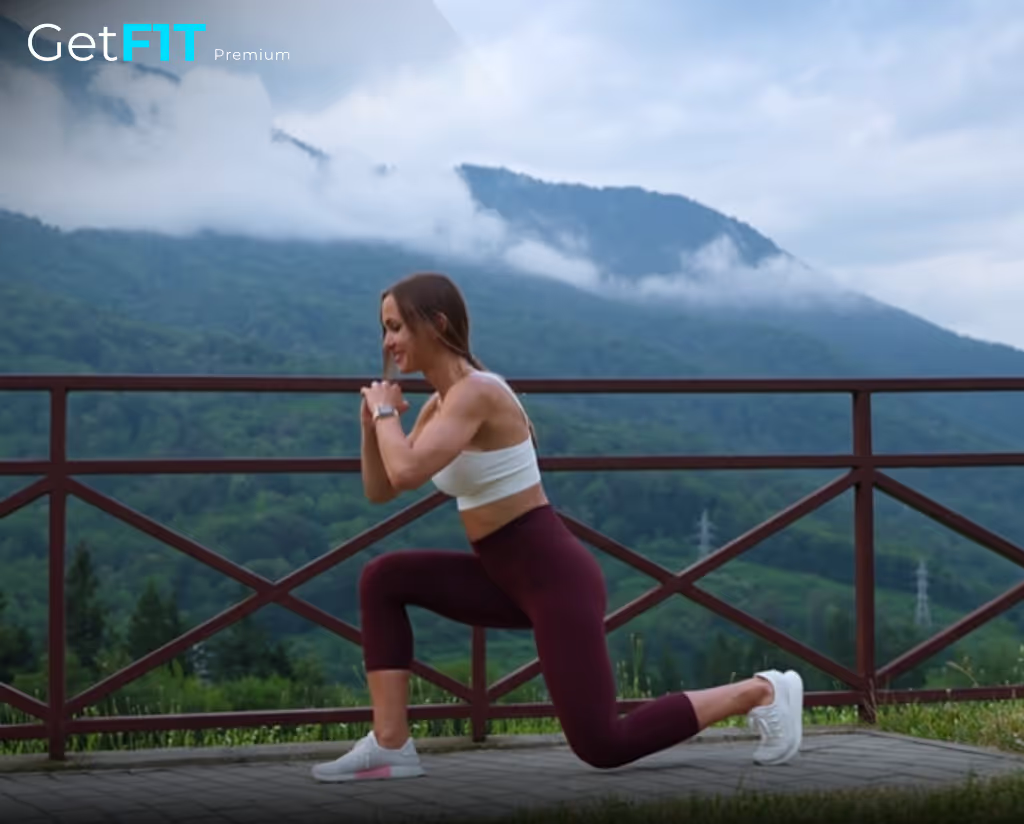
Walking lunge is an excellent lower-body exercise that improves balance and muscular symmetry. Focus on stable steps and proper knee positioning.

Train & diet effectively with the help of the GetFIT App. Our app tracks your calorie intake and workouts, and offers effective plans, recipes, and programs.

(Free trial for new users - cancel anytime)
Our Meal Plans


Blog Articles









Blog Articles

Walking Lunges – Dynamic Lower Body Strength and Balance Development
Walking lunges are a functional and dynamic lower body exercise that effectively develops the glutes, quadriceps, and balance while keeping the body in continuous motion.
Benefits Compared to Similar Exercises
Functional movement pattern
The movement closely resembles natural walking and stair climbing mechanics.
Improved balance and coordination
Because the exercise is performed one leg at a time, it significantly improves stability and coordination.
Increased muscle activation
Walking lunges strongly activate the glutes and quadriceps through a large range of motion.
Muscles Worked
Primary muscles
- Quadriceps (front thigh muscles)
- Gluteus maximus (glutes)
Secondary muscles
- Hamstrings
- Core muscles (abdominal stabilization)
- Spinal erectors (lower back stabilizers)
- Calves
Proper Execution – How to Perform Walking Lunges
Starting position
- Stand upright with your chest up
- Keep your core tight and stable
Step forward
- Take a moderate step forward
- Land through the heel of the front foot
Lowering phase
- Lower your body until the rear knee approaches the floor
- The front knee should track in line with the toes (not collapse inward)
Standing up
- Push through the heel of the front leg
- Bring the rear leg forward into the next step
Continuous movement
- Continue moving forward in a controlled walking pattern
Breathing
- Inhale during the lowering phase
- Exhale while pushing back up
Range of Motion
- Lower until the rear knee is close to the floor
- Fully extend the hips at the top of each step
A deeper and more controlled range of motion improves glute activation and overall muscle recruitment.
Variations and Difficulty Levels
Beginner variations
- Bodyweight walking lunges
- Static lunges (performed in place)
Advanced variations
- Dumbbell or barbell walking lunges
- Incline walking lunges
- Slow eccentric (lowering) tempo
When to Use Walking Lunges
- As a primary or accessory movement on leg day
- In functional fitness programs
- In fat-loss workouts using higher repetitions
- For improving athletic movement and stability
Alternatives
- Static lunges
- Bulgarian split squats
- Squats
- Step-ups
Recommended Sets, Reps, and Rest
Beginners
- 2–3 sets
- 8–10 steps per leg
Advanced
- 3–4 sets
- 10–15 steps per leg
Rest time: 60–90 seconds
Sample Workout
- Walking lunges – 3 × 12 per leg
- Squats – 3 × 10
- Leg extensions – 3 × 12–15
Common Mistakes
Knees collapsing inward (valgus)
→ Keep the knee aligned with the toes
Taking steps that are too short or too long
→ Find a stable, moderate stride length
Excessive forward torso lean
→ Keep the chest lifted and core engaged
Using momentum instead of control
→ Perform slow, controlled repetitions
Walking lunges are one of the most effective exercises for building strong legs, glutes, and lower body stability while also improving balance, coordination, and functional movement quality.

More Exercises
All Exercises
.avif)


.avif)


.avif)

.avif)


.avif)
.avif)


.avif)



Everything You Need for a Fitter Body is here in GetFIT App!
Set calorie and macro goals, track your meals and activity, follow structured workout and meal plans, and monitor your progress over time. GetFIT App brings nutrition tracking, fitness planning, and everyday tools together in one simple membership.
High-Protein Recipes & Meal Plans
Discover hundreds of high-protein recipes, ready-made 4 week meal plans, and healthy meal ideas for weight loss and muscle building. Every recipe includes clear calorie and macro information, so eating for your goals is simple.


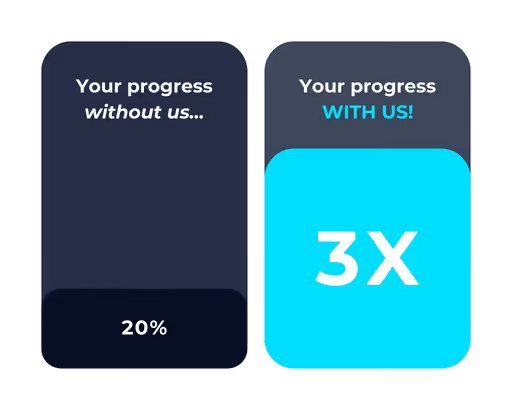
Join Thousands of GetFIT App Users Worldwide
Thousands of people around the world have already joined GetFIT App to track their nutrition, follow workout programs, and work toward their fitness goals. Join our growing global community and get the tools you need to manage your fitness journey in one place.
.webp)
Try GetFIT App for 5 days free!
Discover the premium features of the GetFIT App during a free trial: personalized calorie calculation and tracking, meal plans, recipes, workout programs, e-books, and much more. Start your transformation today!
.webp)
Dear User! Unlock your Dream Body Today!
Start your free trial today! With your premium membership, you’ll get immediate access to all the tools and content that help you lose weight, build muscle, and develop a healthy lifestyle.














































.png)