Tap here


Fitness culture is gradually moving away from purely aesthetic goals like looking lean or muscular toward performance, strength, and health-based outcomes. This shift is driven by burnout from appearance-focused training, better access to evidence-based coaching, and changing ideas about what “fit” actually means. Research in exercise science supports that strength and metabolic health often improve independently of visual changes. Many people now track progress through performance markers rather than appearance alone. The result is a broader definition of fitness that is less dependent on body image.

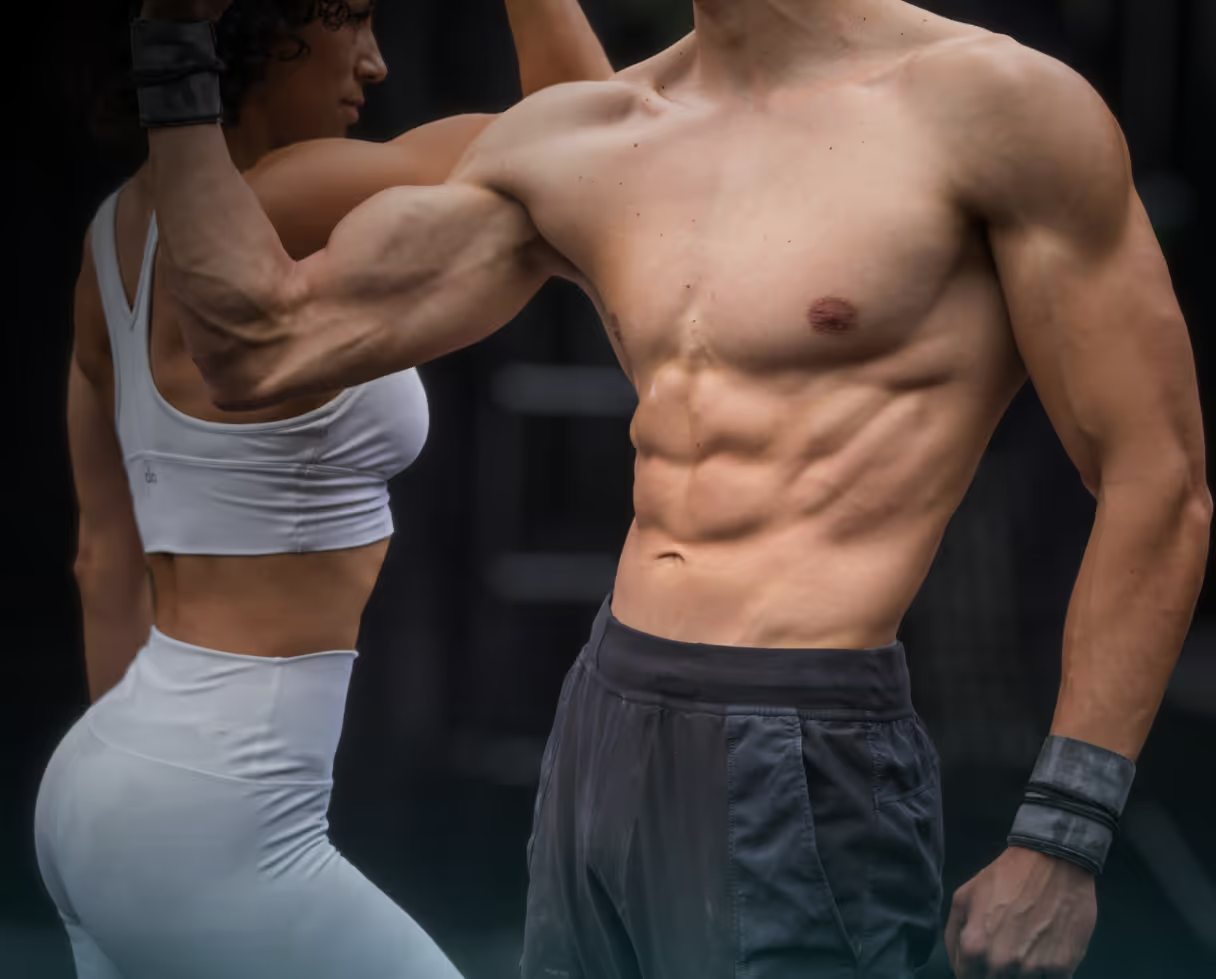
For a long time, fitness culture was heavily defined by aesthetics.
Lean abs.
Visible muscle definition.
Low body fat as the primary marker of success.
That framework still exists, but it is no longer the only reference point for progress.
Across gyms, coaching platforms, and online communities, a noticeable shift is happening: people are starting to separate how they look from how they perform and feel.
This is not a rejection of aesthetics. It is a reordering of priorities.
Aesthetic goals rely heavily on visual feedback.
That creates a simple but unstable system:
This often leads to:
The issue is not aesthetics themselves. The issue is using them as the sole performance metric.
A growing number of lifters are shifting toward measurable performance markers:
These metrics change more predictably than visual appearance.
They also reflect physiological adaptation more directly.
Aesthetic changes often lag behind internal changes in strength and fitness, which can make performance a more stable indicator of progress.
Exercise science consistently shows that:
Importantly, many of these adaptations occur even when visual changes are minimal.
This creates a mismatch between how progress feels and how it actually occurs inside the body.
Someone may become significantly healthier and stronger without dramatic aesthetic transformation.
Aesthetic-focused training often involves frequent self-assessment:
While tracking can be useful, excessive focus on appearance creates psychological fatigue.
Over time, this can reduce adherence to training programs and lead to inconsistent behavior.
Performance-based goals reduce this feedback loop because they rely on structured metrics rather than subjective visual judgment.
Early fitness social media was heavily dominated by transformation content.
Before-and-after photos defined success.
More recently, content has expanded to include:
This has subtly changed what audiences perceive as “fit.”
The result is a broader acceptance that fitness does not always need to look a certain way to be valid.
It is important not to oversimplify the shift.
Lower body fat and higher muscle mass are still associated with:
Aesthetic improvements are often a byproduct of health improvements, even if they are not the primary goal.
The problem arises only when appearance becomes disconnected from performance and health behaviors.
Strength is increasingly used as a core metric because it is:
Unlike aesthetics, strength does not depend on lighting, water balance, or subjective perception.
It provides a more stable feedback loop for long-term training.
Modern evidence-based coaching is increasingly structured around:
This reflects a broader understanding that adherence drives results more than short-term intensity.
In this context, aesthetics become a secondary outcome rather than the primary driver.
Despite the shift, aesthetics remain important for many people.
They influence:
The key difference is that they are increasingly treated as one layer of feedback rather than the entire system.
Focusing on strength and performance often leads to more consistent hypertrophy outcomes because training is easier to track and progress.
Weight loss still depends on energy balance, but performance-focused training can improve adherence and reduce burnout. Tools like a calorie calculator can help anchor progress in objective data rather than visual fluctuation.
Health outcomes align more closely with fitness markers like strength, mobility, and cardiovascular capacity than with appearance alone.
The biggest change in modern fitness culture is not technical.
It is psychological.
More people are moving from:
“Do I look fit?”
to
“Am I getting stronger, fitter, and more capable?”
This does not eliminate aesthetics. It changes their role.
They become a side effect, not the definition of success.
Aesthetic goals are still valid, but they are no longer the only or most reliable way to measure fitness progress. Strength, performance, and consistency provide more stable indicators of improvement and often lead to better long-term adherence.
When training is judged only by appearance, progress can feel inconsistent and frustrating. When it is anchored in performance, progress becomes more measurable and sustainable. The shift in modern fitness is not away from looking good, but toward understanding that looking good is only one outcome of getting stronger and healthier.
Sources


Set calorie and macro goals, track your meals and activity, follow structured workout and meal plans, and monitor your progress over time. GetFIT App brings nutrition tracking, fitness planning, and everyday tools together in one simple membership.
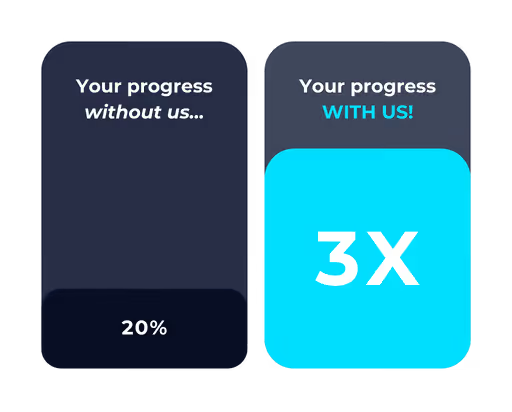
Thousands of people around the world have already joined GetFIT App to track their nutrition, follow workout programs, and work toward their fitness goals. Join our growing global community and get the tools you need to manage your fitness journey in one place.
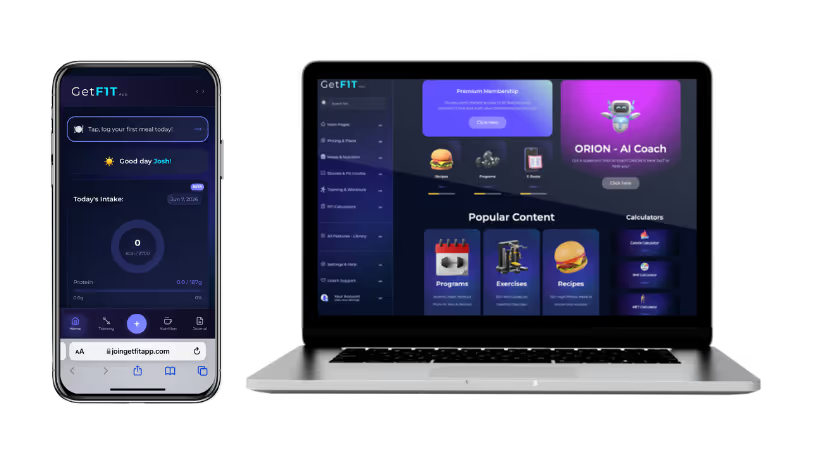
Track your daily calories and macros, log your workouts, monitor your weight and measurements, and see your progress over time. GetFIT App puts everything you need to stay on track in one place.

.webp)
Discover the premium features of the GetFIT App during a free trial: personalized calorie calculation and tracking, meal plans, recipes, workout programs, e-books, and much more. Start your transformation today!
.webp)
Start your free trial today! With your premium membership, you’ll get immediate access to all the tools and content that help you lose weight, build muscle, and develop a healthy lifestyle.











.avif)


.avif)


.avif)

.avif)















































.png)