Tap here


Dumbbells and kettlebells both build muscle, but they do it under different mechanical constraints. Dumbbells are easier for progressive overload, which matters most for hypertrophy. Kettlebells add more instability and ballistic movement, which shifts emphasis toward coordination and conditioning. The disagreement in the fitness world comes from mixing these outcomes into one question. Muscle growth depends less on the tool and more on how consistently load and volume can be increased.

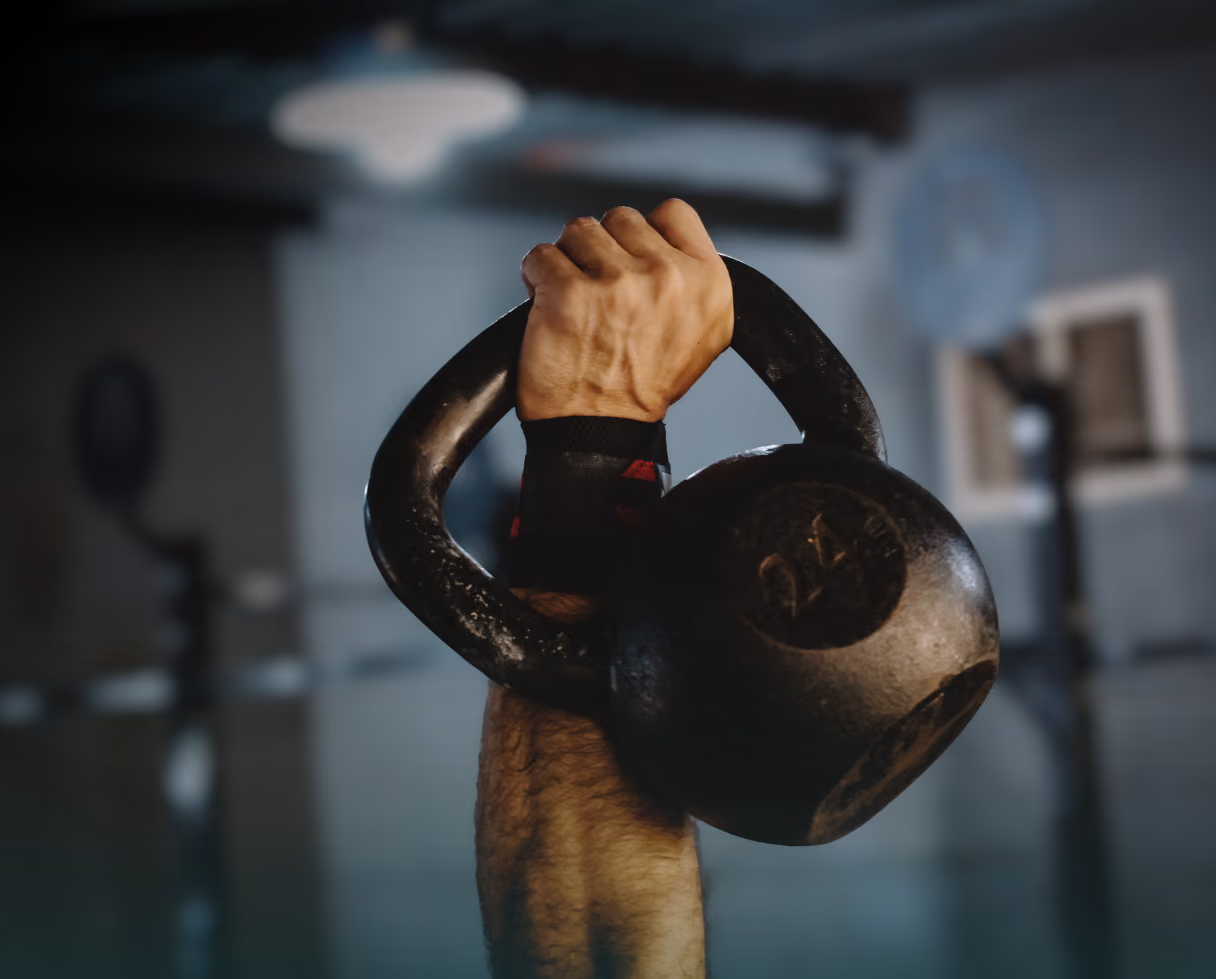
The question of kettlebells versus dumbbells usually assumes a single goal: muscle growth. That is where the disagreement starts.
In practice, coaches are often talking about different outcomes:
Once these are separated, the gap between the two tools becomes less dramatic. The tension is not about whether one works. It is about what each tool biases the body toward.
Dumbbells remain the most common free weight in hypertrophy-focused training for one reason: they scale cleanly.
Progressive overload is straightforward:
This matters because most hypertrophy research supports progressive tension as the main driver of muscle growth.
Muscle protein synthesis responds strongly to mechanical tension applied consistently over time. Dumbbells make that progression measurable and repeatable.
They also allow:
This is why most bodybuilding-style programs default to dumbbells for accessory lifts.
Kettlebells behave differently because of their offset center of mass. The weight sits below the handle, changing how force is distributed during movement.
This creates two key differences:
Muscles must resist rotation and control momentum more actively. This increases total muscular involvement, but not always in a hypertrophy-specific way.
Swings, cleans, and snatches introduce acceleration and deceleration phases. These are powerful for power output and conditioning, but they do not always maintain constant tension across a muscle in the same way slow, controlled lifts do.
The main limitation is not the kettlebell itself, but progressive loading precision.
In many gyms:
Hypertrophy research does not require barbells or dumbbells specifically, but it does require consistent overload. That is harder to structure with kettlebells alone unless programming is very deliberate.
The comparison changes when the goal shifts.
Kettlebells tend to be more effective for:
These adaptations can indirectly support muscle growth by improving work capacity and training density.
There is also emerging coaching interest in using kettlebells for “hybrid sets,” where strength and conditioning overlap in the same session. This reflects a broader shift in training design rather than a tool-specific advantage.
Research on hypertrophy consistently points to a key trade-off:
Dumbbells tend to maximize stimulus specificity.
Kettlebells tend to increase systemic fatigue earlier.
Neither is superior in isolation. The question is how much fatigue is acceptable for the stimulus received.
Direct head-to-head studies comparing kettlebells and dumbbells for hypertrophy are limited.
Most available evidence focuses on:
What is consistent across broader resistance training literature:
Limitations:
So any strong claim that one is universally “better” is not supported by current evidence.
A noticeable trend in strength coaching is the decline of “either-or” programming.
Instead of choosing kettlebells or dumbbells, many programs now split roles:
This reflects a broader understanding that adaptation is multi-factorial. Muscle size, strength, and endurance are no longer treated as separate silos.
Dumbbells generally provide a more efficient path due to load precision and exercise variety. Kettlebells can contribute, but usually as a secondary tool.
Kettlebells can increase calorie expenditure through dynamic movements and shorter rest periods. However, fat loss still depends more on energy balance than tool selection. A structured approach using a calorie calculator matters more than equipment choice.
Both tools improve strength and functional capacity. The difference lies in emphasis: dumbbells favor localized hypertrophy, kettlebells favor integrated movement and conditioning.
The real issue is not equipment. It is programming control.
Two lifters can use the same kettlebell or dumbbell and get completely different results depending on:
The tool only defines constraints. The training design determines the outcome.
If the goal is maximum muscle growth, dumbbells are usually easier to program because progression is more precise and controllable. Kettlebells are not inferior, but they shift the training stress toward movement quality, conditioning, and stability. The real deciding factor is not which tool is better, but whether the training plan allows consistent overload without excessive fatigue. Most effective programs end up using both, but assigning them different roles rather than treating them as substitutes.



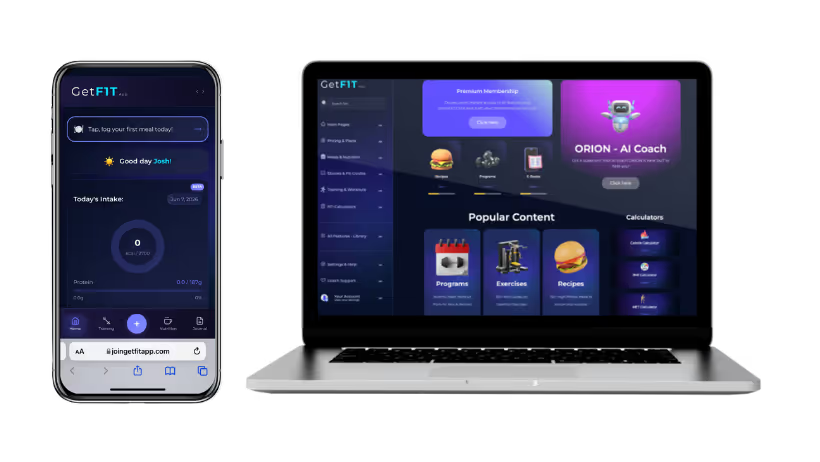
Set calorie and macro goals, track your meals and activity, follow structured workout and meal plans, and monitor your progress over time. GetFIT App brings nutrition tracking, fitness planning, and everyday tools together in one simple membership.
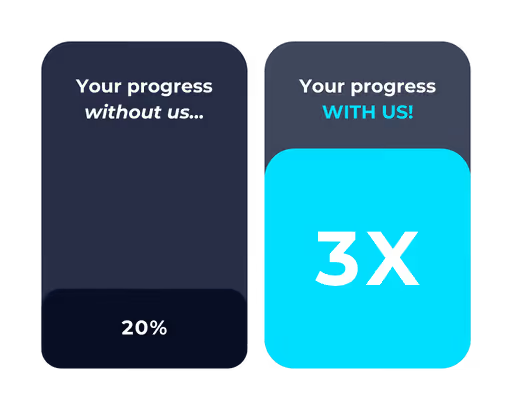
Thousands of people around the world have already joined GetFIT App to track their nutrition, follow workout programs, and work toward their fitness goals. Join our growing global community and get the tools you need to manage your fitness journey in one place.
Track your daily calories and macros, log your workouts, monitor your weight and measurements, and see your progress over time. GetFIT App puts everything you need to stay on track in one place.

.webp)
Discover the premium features of the GetFIT App during a free trial: personalized calorie calculation and tracking, meal plans, recipes, workout programs, e-books, and much more. Start your transformation today!
.webp)
Start your free trial today! With your premium membership, you’ll get immediate access to all the tools and content that help you lose weight, build muscle, and develop a healthy lifestyle.









.avif)


.avif)


.avif)

.avif)















































.png)