Calories & Macros of Popuplar Foods & Drinks - Track with GetFIT App!
Discover the calorie and nutritional content of the most popular foods with GetFIT App. Whether your goal is effective weight loss or building muscle, GetFIT App helps you stay on track with a personalized calorie target, easy to use tracking and more!

The macros below are / 100g (or ml) repectively. Click on a food item to get a detailed breakdown!
Calorie and Macronutrient Needs During Fat Loss
When your goal is fat loss, the most important factor is maintaining a calorie deficit over time. This means consuming fewer calories than your body uses, encouraging your body to use stored energy to meet the difference. However, calories are only one part of the picture. The quality and composition of your diet can make a major difference in hunger, energy levels, training performance, and how easy your diet is to maintain.
Protein is particularly important during a calorie deficit because it helps support muscle maintenance while you are losing body fat. Good protein-rich food choices include chicken breast, turkey, lean beef, fish, eggs, Greek yogurt, cottage cheese, and other high-protein foods. Combining these with vegetables, fruit, whole grains, and other nutrient-dense foods can help you create filling meals without using too many calories.
Carbohydrates do not need to be eliminated during fat loss. Rice, potatoes, oats, whole-grain products, fruit, and legumes can all fit into a calorie-controlled diet. The key is managing portions and choosing foods that help you stay satisfied while providing the energy you need for daily activity and exercise.
Fat is also an essential part of a balanced diet, but it is particularly calorie-dense. Foods such as nuts, seeds, avocado, olive oil, and nut butters can be nutritious choices, but portions matter when you are trying to maintain a calorie deficit. A small amount can contain considerably more calories than you might expect.
Calories and Macros for Building Muscle
Muscle building generally requires a different nutritional approach from fat loss. While adequate protein and resistance training are essential, gaining muscle is often easier when you consume enough calories to support training, recovery, and new tissue growth. Depending on your individual needs and goals, this may mean eating around maintenance calories or maintaining a moderate calorie surplus.
Protein should remain a priority when building muscle. High-protein foods such as lean meats, fish, eggs, dairy products, legumes, and other protein-rich foods make it easier to reach your daily protein target. Spreading protein intake across several meals can also make it easier to build balanced meals throughout the day.
Carbohydrates can be especially useful when training for muscle growth because they provide readily available energy for exercise. Foods such as rice, oats, potatoes, pasta, whole grains, bananas, and other fruits can provide carbohydrates while also contributing important nutrients.
Dietary fat should not be neglected either. Healthy fat sources can help increase the calorie content of meals without requiring extremely large portions. However, more calories are not automatically better. A very large calorie surplus can lead to unnecessary fat gain alongside muscle growth, so a controlled approach is generally more practical.
Good Foods to Prioritize and Foods to Limit
There is no single list of foods that automatically makes a diet good or bad. Your overall calorie intake, macronutrient intake, food quality, portion sizes, and consistency all matter. A food can be included in a healthy diet even if it is relatively high in calories, while a food marketed as "healthy" can still make it difficult to reach your goals if portions are excessive.
For fat loss, foods with a high volume relative to their calorie content can be particularly useful. Vegetables, fruits, lean protein sources, potatoes, lower-fat dairy products, soups, and other filling foods can help you eat satisfying portions while keeping calories under control.
For muscle building, higher-calorie foods can sometimes be useful because they make it easier to consume enough energy. Rice, oats, pasta, whole-grain foods, dairy products, nuts, nut butters, olive oil, avocado, and other calorie-dense foods can all have a place in a muscle-building diet.
Foods worth limiting are generally those that provide a lot of calories without making you particularly full or contributing many useful nutrients. This can include large amounts of sugary drinks, sweets, highly processed snacks, fried foods, and calorie-dense sauces or spreads. You do not necessarily need to completely eliminate these foods. Keeping portions reasonable and fitting them into your overall calorie and macro targets is usually a more sustainable approach.
How to Choose the Right Foods for Your Goal
The best food choices depend on what you are trying to accomplish, how many calories you need, how active you are, and what you actually enjoy eating. Two people can eat completely different foods and still successfully reach the same body composition goal if their overall calorie and nutrient intake is appropriate.
If you are trying to lose weight, prioritize foods that provide plenty of protein, fiber, vitamins, and minerals without making your calorie target difficult to maintain. If you are trying to build muscle, focus on sufficient protein and total energy while choosing enough carbohydrates and fats to support your training and recovery.
It is also important to understand that calorie and macro values can vary between brands, preparation methods, recipes, and serving sizes. For example, 100 grams of cooked rice does not have the same nutritional values as 100 grams of dry rice, and adding oil, sauces, cheese, or other ingredients can significantly change the calories in a meal.
This is why checking the nutritional information of the actual food you are eating is useful. Understanding calories, protein, carbohydrates, and fats gives you much more control over your diet and makes it easier to adjust your food choices as your goals change.
Track Your Calories and Macros More Easily with GetFIT App
The information above can help you understand how different foods and macronutrients can fit into a fat-loss or muscle-building diet. These articles are designed to give you useful nutritional information, but knowing the numbers is only the first step. The real challenge is consistently putting that knowledge into practice every day.
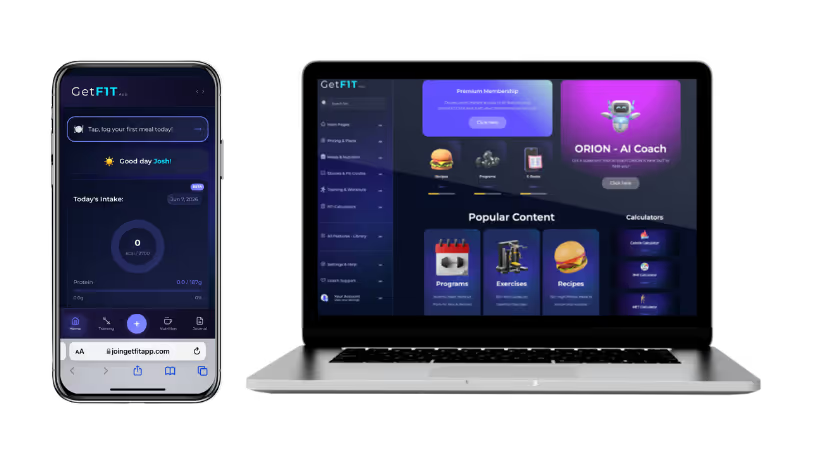
With GetFIT App, you can make this process much easier. Instead of manually calculating everything you eat, you can use the calorie and food tracker to keep track of your daily intake and see how your calories and macros fit into your target. You can also explore recipes and other nutrition-focused tools designed to make following your diet more practical.
Whether your goal is losing body fat, building muscle, or simply eating more consistently, tracking your food gives you a clearer picture of what you are actually consuming. Combined with practical recipes, nutrition resources, and the other tools available through our online membership, GetFIT App, sticking to your calorie and macro goals can become much simpler and more manageable.

Join Thousands of GetFIT App Users Worldwide
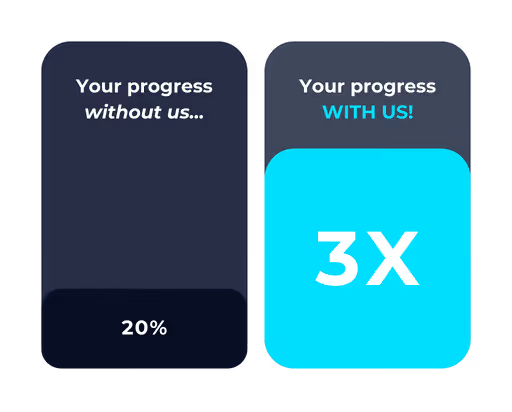
Thousands of people around the world have already joined GetFIT App to track their nutrition, follow workout programs, and work toward their fitness goals. Join our growing global community and get the tools you need to manage your fitness journey in one place.


Everything You Need for a Fitter Body is here in GetFIT App!
Set calorie and macro goals, track your meals and activity, follow structured workout and meal plans, and monitor your progress over time. GetFIT App brings nutrition tracking, fitness planning, and everyday tools together in one simple membership.
High-Protein Recipes & Meal Plans
Discover hundreds of high-protein recipes, ready-made 4 week meal plans, and healthy meal ideas for weight loss and muscle building. Every recipe includes clear calorie and macro information, so eating for your goals is simple.


Track Your Calories, Macros, Weight, Workout & Progress with GetFIT App!
Track your daily calories and macros, log your workouts, monitor your weight and measurements, and see your progress over time. GetFIT App puts everything you need to stay on track in one place.
.webp)
Try GetFIT App for 5 days free!
Discover the premium features of the GetFIT App during a free trial: personalized calorie calculation and tracking, meal plans, recipes, workout programs, e-books, and much more. Start your transformation today!
.webp)
Dear User! Unlock your Dream Body Today!
Start your free trial today! With your premium membership, you’ll get immediate access to all the tools and content that help you lose weight, build muscle, and develop a healthy lifestyle.













































.png)