Concentration curl isolates the biceps, helping improve peak development, where slow and controlled execution is most effective.

Train & diet effectively with the help of the GetFIT App. Our app tracks your calorie intake and workouts, and offers effective plans, recipes, and programs.

(Free trial for new users - cancel anytime)
Our Meal Plans


Blog Articles







Blog Articles

Back and Biceps Hypertrophy Workout With Concentration Curls
- Lat Pulldown: 3 sets x 8-12 reps | Rest 2 minutes.
- Chest-Supported Row: 3 sets x 8-12 reps | Rest 2 minutes.
- Incline Dumbbell Curl: 3 sets x 8-12 reps | Rest 90 seconds.
- Concentration Curl: 3 sets x 10-15 reps per arm | Rest 60-90 seconds.
- Rope Hammer Curl: 2 sets x 10-15 reps | Rest 60-90 seconds.
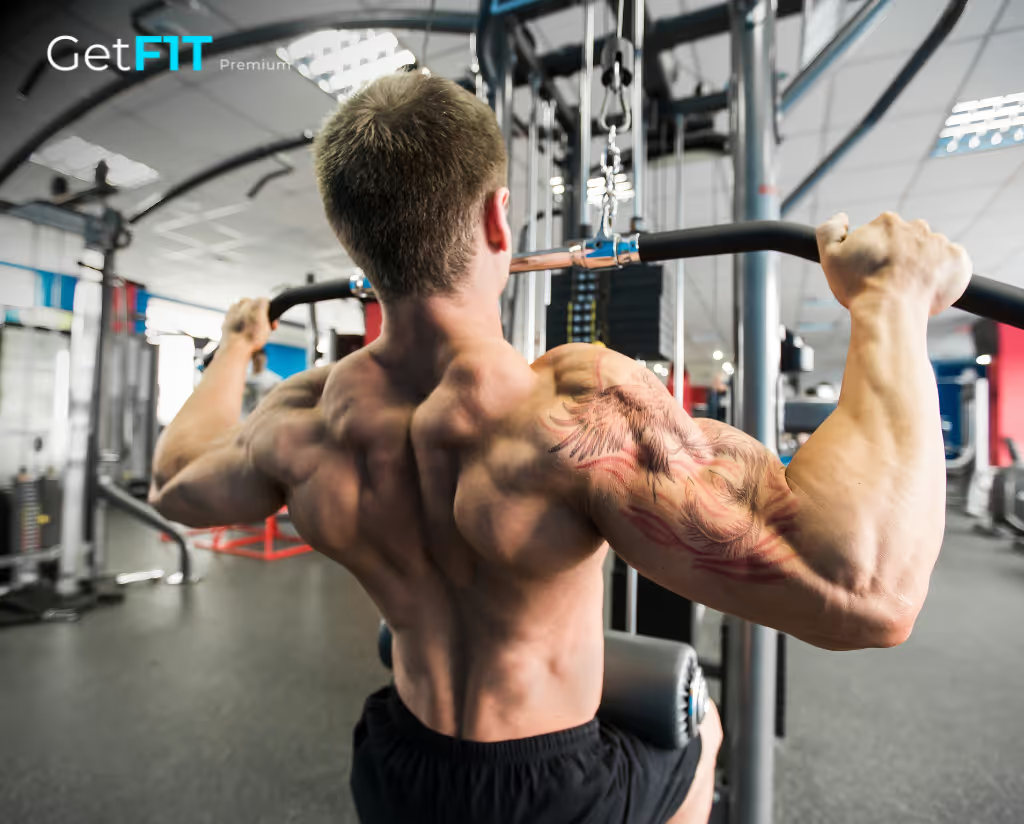
1. Lat Pulldown
Working sets: 3
Repetitions: 8-12
Rest: 2 minutes
Primary muscles: Latissimus dorsi, teres major, and elbow flexors, with assistance from the upper-back muscles.
The lat pulldown begins the session because it is a demanding compound pulling exercise.
Adjust the thigh pad so your lower body remains securely positioned.
Choose a comfortable overhand or neutral grip.
Begin with your arms extended overhead.
Pull the attachment toward your upper chest while moving your elbows downward.
Maintain a relatively stable torso and allow natural shoulder blade movement.
Return gradually to a comfortable overhead position.
Select resistance that allows 8-12 repetitions with approximately 1-2 repetitions in reserve.
Avoid swinging backward or turning the movement into a torso-driven pull.
Because the biceps also contribute to pulldowns, they receive indirect training before the direct curl exercises.
Use a consistent grip and range when tracking progression.
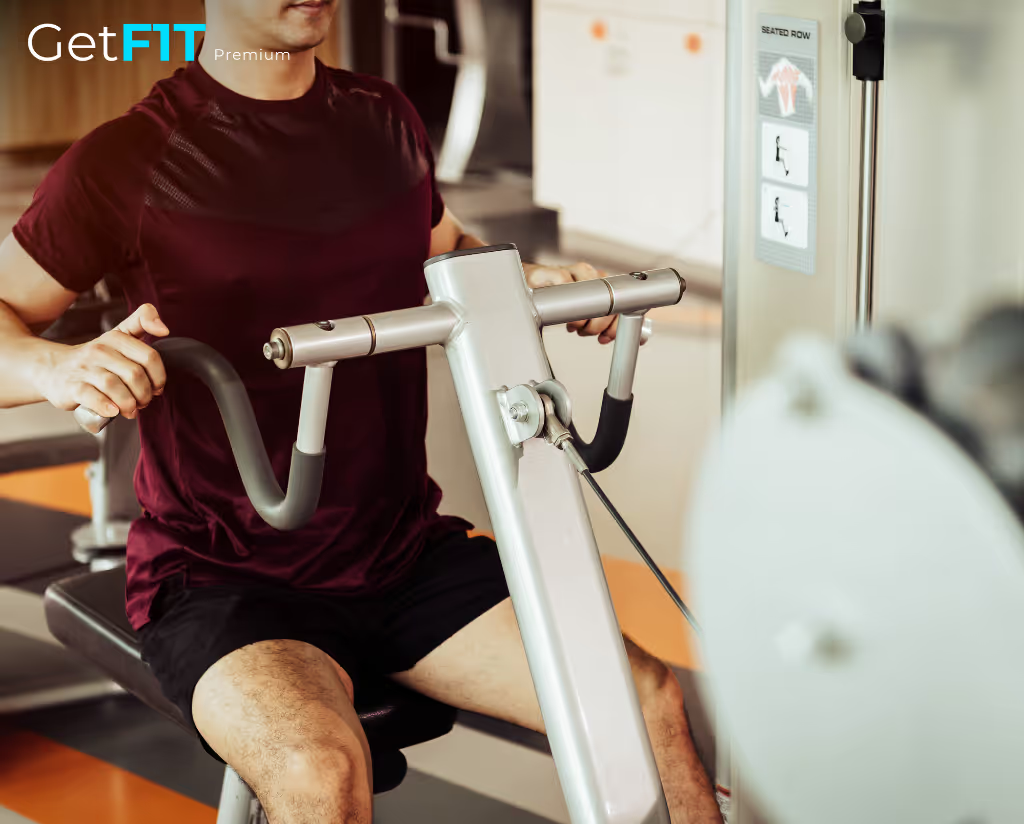
2. Chest-Supported Row
Working sets: 3
Repetitions: 8-12
Rest: 2 minutes
Primary muscles: Latissimus dorsi, trapezius, rhomboids, posterior deltoids, and elbow flexors.
The chest-supported row provides horizontal pulling while reducing some unsupported torso stabilization demands.
Adjust the machine or incline bench so your chest remains securely supported.
Begin with your arms extended toward the resistance.
Pull the handles toward your torso by moving your elbows backward.
Allow your shoulder blades to retract naturally.
Pause briefly near the top if useful.
Lower gradually without lifting your torso from the support.
Choose resistance that allows approximately 1-2 repetitions in reserve.
Avoid using excessive momentum or shortening the range.
This exercise provides additional back training before direct biceps isolation.
Because the biceps are already involved in both compound exercises, select appropriate resistance for the subsequent curls rather than expecting fully fresh elbow-flexor performance.
3. Incline Dumbbell Curl
Working sets: 3
Repetitions: 8-12
Rest: 90 seconds
Primary muscles: Biceps brachii, with assistance from the brachialis and brachioradialis.
The incline dumbbell curl provides direct biceps training with the upper arms positioned behind the torso.
Set an adjustable bench to approximately 45-60 degrees.
Sit with your back supported and allow the dumbbells to hang comfortably beside your body.
Maintain a natural shoulder position.
Begin with your elbows extended through a comfortable range.
Curl the dumbbells upward by bending your elbows.
Keep your upper arms relatively stable.
Lower gradually without swinging your shoulders forward.
Choose resistance that allows 8-12 controlled repetitions with approximately 1-2 repetitions in reserve.
Avoid lifting the upper arms to complete difficult repetitions.
The incline position places the biarticular biceps at a relatively lengthened shoulder position.
This provides a different loading condition from the concentration curl that follows.
Record bench angle, dumbbell weight, and repetitions for consistent progression.
4. Concentration Curl
Working sets: 3 per arm
Repetitions: 10-15
Rest: 60-90 seconds
Primary muscles: Biceps brachii, with assistance from the brachialis and brachioradialis.
The Concentration Curl provides supported single-arm elbow-flexion training after the heavier biceps curl variation.
Sit on a stable bench with your feet planted and knees comfortably separated.
Hold one dumbbell and place the back of your working upper arm against the inside of your thigh.
Maintain a comfortable forward torso inclination.
Begin with your elbow extended through a comfortable range.
Curl the dumbbell toward your shoulder while keeping the upper arm relatively stationary.
Allow natural forearm supination if using a rotating grip.
Pause briefly near the top if useful.
Lower gradually until your elbow approaches comfortable extension.
Choose resistance that allows 10-15 controlled repetitions with approximately 1-2 repetitions in reserve.
Avoid lifting your shoulder, rocking your torso, or curling the wrist.
Train the weaker arm first when a meaningful strength difference exists.
Use a comparable repetition target for the stronger arm.
Record the dumbbell weight and repetitions separately for each side.
Because the biceps are already fatigued, select a weight that preserves strict technique rather than trying to match the load used during standing curls.
5. Rope Hammer Curl
Working sets: 2
Repetitions: 10-15
Rest: 60-90 seconds
Primary muscles: Brachialis, brachioradialis, and biceps brachii.
The rope hammer curl finishes the session with additional elbow-flexor training using a neutral grip.
Attach a rope handle to a low cable pulley.
Stand upright with your feet comfortably positioned.
Grip the rope ends with your palms facing inward.
Keep your upper arms near your torso.
Bend your elbows to raise the attachment.
Maintain relatively stable shoulders and wrists.
Lower gradually without allowing the weight stack to pull your arms downward abruptly.
Choose resistance that allows 10-15 repetitions with approximately 1-2 repetitions in reserve.
Avoid leaning backward or swinging the rope.
The neutral grip changes the elbow-flexor demands compared with the supinated incline and concentration curls.
Because this is the final biceps-related exercise, two controlled sets provide additional training without requiring excessive accessory volume.
How to Warm Up Before This Concentration Curl Workout
Begin with approximately 5-10 minutes of general and movement-specific preparation.
Start with 3-5 minutes of light walking, cycling, or another comfortable activity.
Then perform controlled upper-body movements such as:
- Gentle shoulder circles.
- Light shoulder blade movements.
- Comfortable elbow flexion and extension.
- Light cable or resistance-band rows.
- Several easy dumbbell curls.
Before lat pulldowns, gradually increase resistance.
For example, if your planned working resistance is 50 kg:
- 20 kg x 10 repetitions.
- 30 kg x 6 repetitions.
- 40 kg x 3 repetitions.
- Begin working sets at 50 kg.
These are example preparation loads rather than mandatory percentages.
Before incline dumbbell curls, perform a lighter set to confirm shoulder and elbow positioning.
Before concentration curls, perform approximately 6-8 easy repetitions per arm if needed to establish the supported upper-arm position.
Avoid accumulating substantial biceps fatigue during preparation.
The warm-up should help you establish comfortable movement patterns without reducing your working-set performance.
How Hard Should You Train During This Back and Biceps Workout?
Most working sets should finish relatively close to muscular failure while maintaining controlled technique.
Repetitions in reserve (RIR) describes how many additional technically sound repetitions you estimate you could complete before muscular failure.
Use these practical effort targets:
- Lat Pulldown: Approximately 1-2 RIR without excessive torso swinging.
- Chest-Supported Row: Approximately 1-2 RIR while maintaining chest contact.
- Incline Dumbbell Curl: Approximately 1-2 RIR without moving the upper arms excessively.
- Concentration Curl: Approximately 1-2 RIR with stable upper-arm support.
- Rope Hammer Curl: Approximately 1-2 RIR without using torso momentum.
The first two exercises are compound pulls involving several major muscle groups.
They require sufficient coordination and force production from the back and elbow flexors.
The three curl exercises are isolation movements.
These can generally be performed relatively close to muscular failure because stabilization requirements are lower.
However, performing every set to absolute failure is unnecessary.
For concentration curls, technical failure occurs when additional repetitions require substantial shoulder movement, torso swinging, or a shortened range.
That is a practical point to end the set.
For rope hammer curls, stop when the upper arms begin swinging to move resistance.
The objective is challenging muscular effort with consistent movement quality.
How to Progress This Concentration Curl Workout Over Several Weeks
Use double progression across the prescribed repetition ranges.
Weeks 1-2: Establish your baseline.
Choose weights that allow controlled repetitions near the lower end of each exercise's range.
For concentration curls, begin with a dumbbell that allows approximately three sets of 10-12 repetitions per arm.
Record resistance, repetitions, range, and estimated RIR.
Use the same bench position and arm support across sessions.
Weeks 3-4: Increase repetitions.
Maintain the same dumbbell resistance while increasing controlled repetitions.
For example:
- Week 1: 12, 11, and 10 repetitions.
- Week 2: 13, 12, and 11 repetitions.
- Week 3: 14, 13, and 12 repetitions.
- Week 4: 15, 15, and 15 repetitions.
Only count repetitions performed without substantial shoulder or torso movement.
For lat pulldowns, chest-supported rows, and incline curls, progress toward the upper end of their respective repetition ranges.
Weeks 5-6: Increase resistance when ready.
Once both arms complete three sets of fifteen concentration curls with your intended RIR, increase dumbbell resistance by the smallest practical increment.
Your repetitions may return closer to ten.
Continue progressing gradually.
For incline curls, increase the weight once all three sets reach twelve controlled repetitions.
For rope hammer curls, increase resistance after reaching fifteen repetitions across both sets without swinging.
If a heavier dumbbell causes shorter repetitions or excessive movement, return to the previous load.
If performance declines over several sessions, review total pulling and biceps volume.
Temporarily reducing accessory sets or training farther from failure may help restore consistent performance.
Progress should reflect improved elbow-flexion performance rather than simply lifting heavier weights through momentum.
How to Fit This Concentration Curl Workout Into a Four-to-Six-Day Training Split
This workout can serve as a back-and-biceps session within a four-to-six-day resistance training routine.
For a four-day upper/lower split, use it as one upper-body session while distributing additional chest, shoulder, and triceps training across the second upper-body day.
For a five- or six-day push-pull-legs routine, it can serve as a dedicated pull session.
A practical weekly structure could include:
- Pull session: Lat pulldowns, chest-supported rows, incline dumbbell curls, concentration curls, and rope hammer curls.
- Push session: Chest presses, shoulder exercises, and triceps training.
- Lower-body session: Quadriceps, hamstrings, glutes, and calves.
- Additional upper-body or pull session: Complementary back and arm exercises according to recovery.
This workout includes three vertical pulling sets and three horizontal rowing sets.
Both compound movements train the back while also challenging the elbow flexors.
Incline dumbbell curls provide three direct biceps sets.
Concentration curls add three supported unilateral biceps sets.
Rope hammer curls contribute two additional elbow-flexor sets using a neutral grip.
Together, the workout includes eight direct curl sets, in addition to the biceps work performed during rows and pulldowns.
This represents a meaningful amount of elbow-flexor training in one session.
For beginners or lifters already performing substantial pulling volume, reducing concentration curls to two sets or omitting the final hammer curl may be appropriate.
If performing two pull sessions weekly, the second session does not need to repeat the same eight direct curl sets.
It may include fewer isolation sets or different curl variations.
When practical, allow approximately 48-72 hours between demanding sessions involving the same elbow-flexor muscles, adjusting according to overall training volume and recovery.
Monitor elbow comfort, grip fatigue, and biceps performance.
If concentration curl repetitions and resistance improve while recovery remains manageable, maintain the current workload.
If progress declines or elbow discomfort accumulates, reduce overlapping pulling or curl sets before adding more exercises.
The priority is consistent biceps development through controlled elbow flexion, complementary arm positions, gradual resistance progression, and recoverable weekly training volume.
What Is the Concentration Curl and Is It Effective for Building Biceps?
The Concentration Curl is a unilateral biceps isolation exercise performed while seated, with the working upper arm supported against the inside of the thigh. It involves curling a dumbbell toward the shoulder by bending the elbow while keeping the upper arm relatively stationary.
The exercise primarily trains the biceps brachii, with assistance from the brachialis and brachioradialis.
Unlike standing dumbbell curls, concentration curls use the thigh to support the upper arm and limit unnecessary shoulder movement.
This makes it easier to concentrate on controlled elbow flexion rather than lifting heavier resistance through body momentum.
Concentration curls can be effective for building biceps muscle when performed with challenging resistance, a comfortable range of motion, and progressive overload.
They are particularly useful as an accessory exercise after compound pulling movements or heavier biceps curls.
The exercise offers several practical advantages:
- Direct biceps training with relatively little equipment.
- Independent training of the left and right arms.
- A supported upper-arm position that reduces unnecessary swinging.
- Adjustable resistance using dumbbells.
- Consistent repetition technique.
- An opportunity to identify side-to-side differences in strength or control.
However, concentration curls are not inherently superior to standing dumbbell curls, preacher curls, or cable curls for muscle growth.
The upper-arm position and resistance profile differ between these movements.
Concentration curls generally place the shoulder in a flexed position, which affects the length of the biceps long head.
Because of this, they do not challenge the biceps through exactly the same muscle-length conditions as incline dumbbell curls.
For comprehensive biceps training, combining concentration curls with another curl variation can be useful.
The main objective is to challenge elbow flexion through controlled repetitions rather than trying to lift the heaviest available dumbbell.
What Are the Main Benefits of Concentration Curls?
Concentration curls provide direct biceps training with a stable arm position and minimal equipment requirements.
Their main benefits include:
- Biceps hypertrophy: The biceps brachii produces force during elbow flexion and forearm supination.
- Reduced momentum: Supporting the upper arm against the thigh limits shoulder swinging.
- Unilateral training: Each arm works independently, making differences in performance easier to identify.
- Movement control: A stable upper arm helps maintain a repeatable elbow-flexion pattern.
- Equipment simplicity: One dumbbell and a stable bench are sufficient.
- Progressive resistance: Weight and repetitions can increase gradually.
- Accessory flexibility: Concentration curls fit naturally after rows, pulldowns, and other biceps exercises.
A particularly useful benefit is the ability to train one arm without assistance from the opposite arm.
For example, if your right arm consistently completes twelve controlled repetitions while your left arm reaches only ten, you can identify the difference without a stronger arm compensating.
However, unilateral training does not guarantee equal development between both sides.
Progress still depends on appropriate loading, movement consistency, and sufficient recovery.
Another advantage is the low stabilization demand.
Because the arm is supported, you can devote more attention to elbow movement without needing to stabilize a heavy barbell or maintain a standing position.
The main limitation is that concentration curls take longer than bilateral curls because each arm must be trained separately.
They also generally use lighter resistance than compound pulling movements or some standing curl variations.
This does not make them ineffective.
Hypertrophy depends on the muscular challenge, not simply the absolute weight lifted.
What Muscles Do Concentration Curls Work?
Concentration curls primarily train the biceps brachii, with assistance from the brachialis and brachioradialis.
The forearm muscles also contribute to grip and wrist stabilization.
The exercise involves dynamic elbow flexion rather than substantial shoulder movement.
Biceps Brachii: Long Head and Short Head
The biceps brachii is a two-headed muscle located along the front of the upper arm.
Its two heads are:
- Long head: Originates from the supraglenoid tubercle of the scapula.
- Short head: Originates from the coracoid process of the scapula.
Both heads join into a common distal tendon and contribute to elbow flexion and forearm supination.
Supination means rotating the forearm so the palm faces upward.
During concentration curls, both biceps heads help bend the elbow and control the dumbbell.
The seated position generally places the working shoulder in flexion.
Because the long head crosses the shoulder joint, this changes its length compared with exercises performed with the arm behind the torso.
For example, incline dumbbell curls place the shoulder in a more extended position.
This can create different loading conditions for the long head.
However, concentration curls do not completely isolate the short head or long head.
Both contribute to the movement.
The exercise should be treated as a biceps isolation exercise rather than a method of selectively training only one head.
Brachialis
The brachialis lies underneath the biceps brachii along the front of the upper arm.
Its primary function is elbow flexion.
Unlike the biceps brachii, its contribution to elbow flexion is not dependent on forearm supination in the same way.
During concentration curls, the brachialis helps raise the dumbbell as the elbow bends.
It also contributes to controlling the lowering phase.
Although concentration curls are primarily selected for biceps training, they provide meaningful brachialis work.
For additional elbow-flexor training, neutral-grip hammer curls can complement conventional supinated curls.
Brachioradialis
The brachioradialis is a forearm muscle that contributes to elbow flexion.
It is particularly effective when the forearm is positioned closer to neutral.
During a concentration curl performed with a supinated grip, the brachioradialis assists the biceps and brachialis.
Its contribution changes with forearm position and elbow angle.
However, concentration curls are not primarily a brachioradialis isolation exercise.
Hammer curls and reverse curls provide different forearm positions and may be useful when forearm development is an additional priority.
Forearm and Shoulder Stabilizers
The wrist flexors and extensors help maintain a stable hand position while gripping the dumbbell.
The deltoids and other shoulder muscles help hold the upper arm against the thigh.
The abdominal and back muscles assist with maintaining a stable seated position.
These muscles mainly provide support.
The intended dynamic movement should occur at the elbow.
If the shoulder repeatedly moves forward or the torso swings to lift the dumbbell, the exercise becomes less consistent as an elbow-flexion isolation movement.
How to Set Up the Concentration Curl Correctly
A proper concentration curl setup requires a stable bench, an appropriate dumbbell, and enough space to move the working arm freely.
- Choose a dumbbell. Select a weight that allows approximately 10-15 controlled repetitions.
- Sit on a stable bench. Position your feet securely on the floor.
- Separate your knees. Create enough space for the working arm to move between your legs.
- Lean forward slightly. Hinge at the hips while maintaining a comfortable torso position.
- Hold the dumbbell in one hand. Begin with your arm hanging toward the floor.
- Support your upper arm. Place the back of your working upper arm against the inside of the same-side thigh.
- Position your elbow comfortably. Avoid pressing the elbow directly against the knee joint.
- Stabilize your opposite arm. Place your free hand on the opposite thigh or another suitable support.
- Set your wrist position. Maintain a firm grip with your wrist relatively neutral.
- Prepare the movement. Allow the working elbow to extend comfortably before curling.
The supporting thigh should provide stability without forcing the shoulder or elbow into an uncomfortable position.
Avoid placing the elbow against the kneecap.
The upper arm generally rests against the inner thigh slightly above the knee.
If your dumbbell cannot move freely because of your leg position, adjust your seated stance.
The correct setup allows controlled elbow flexion without needing to move the torso.
How to Perform the Concentration Curl Step by Step
The Concentration Curl is performed by bending one elbow to raise a dumbbell while maintaining upper-arm support against the thigh.
- Sit with your feet planted and your knees comfortably separated.
- Lean forward slightly from your hips.
- Hold the dumbbell with your working hand.
- Place the back of your upper arm against your inner thigh.
- Begin with your elbow comfortably extended and your palm facing forward or slightly inward.
- Bend your elbow to raise the dumbbell toward your shoulder.
- Allow your forearm to rotate naturally toward a palm-up position if you began with a more neutral grip.
- Keep your upper arm relatively stationary throughout the movement.
- Stop near the highest comfortable position without moving your shoulder forward to lift the weight farther.
- Lower the dumbbell gradually until your elbow approaches comfortable extension.
Complete the prescribed repetitions before switching arms.
A useful cue is to move the dumbbell by bending the elbow rather than by lifting the entire upper arm.
The supported upper arm should remain stable.
A small amount of natural movement is acceptable, but excessive shoulder swinging defeats the purpose of the supported position.
Avoid bouncing at the bottom or allowing the dumbbell to fall quickly.
For muscle growth, maintain a substantial controlled range and finish sets with an appropriate level of muscular effort.
Where Should Your Elbow Be During Concentration Curls?
Your working upper arm should rest against the inside of your thigh, with the elbow positioned comfortably below the supported area.
The elbow does not need to press directly against your knee.
Placing it on a hard joint surface may create unnecessary discomfort.
Instead, use the inner thigh to stabilize the upper arm.
The exact position depends on your limb proportions and bench height.
Your elbow should be able to bend and straighten naturally.
If the dumbbell strikes the floor before you reach comfortable extension, adjust the bench height or body position.
If your upper arm repeatedly slides across the thigh, reposition the contact point and reduce the weight if necessary.
The goal is stable support without restricting the elbow joint's natural movement.
Should You Supinate Your Wrist During Concentration Curls?
Supinating the forearm can be useful during concentration curls because the biceps brachii contributes to both elbow flexion and forearm supination.
Supination means rotating the forearm until the palm faces upward.
There are two practical ways to perform the exercise.
Fully supinated concentration curl:
Begin with your palm already facing upward.
Maintain that orientation while bending and extending the elbow.
This provides a simple and consistent movement.
Rotating concentration curl:
Begin with a more neutral forearm position.
Gradually rotate toward a palm-up position while raising the dumbbell.
Return the forearm naturally during the lowering phase.
Both variations train the biceps.
Neither requires exaggerated wrist twisting.
Remember that forearm supination occurs through rotation of the radius relative to the ulna, not through bending the wrist.
Keep the wrist relatively straight rather than curling it toward your forearm.
If rotation creates discomfort, use a comfortable fixed grip.
How High Should You Curl the Dumbbell?
Curl the dumbbell toward your shoulder until you reach the highest comfortable position without substantially moving the upper arm.
For many lifters, the forearm approaches the upper arm near the top.
However, the exact endpoint depends on body proportions and how the dumbbell moves relative to the thigh.
The goal is not to force the weight to touch your shoulder.
Attempting to raise it excessively high may cause the elbow to move forward or the shoulder to lift.
This introduces additional movement that is unnecessary for the intended exercise.
A brief pause near the top can help reinforce control.
However, because dumbbell resistance depends on gravity, the external elbow-flexion demand changes throughout the repetition.
The most difficult point is not necessarily the highest position.
Maintain consistent movement rather than trying to exaggerate the peak contraction.
Should You Fully Straighten Your Arm During Concentration Curls?
Allow your elbow to approach full comfortable extension at the bottom of each repetition.
This provides a substantial range of motion and allows the elbow flexors to work through a larger movement.
However, you do not need to force the elbow into hyperextension.
If your arm naturally extends farther than average, stop at a comfortable position rather than aggressively pushing the joint backward.
At the bottom, the dumbbell should remain under muscular control.
Avoid relaxing completely and allowing the weight to pull your arm downward abruptly.
A larger controlled range can provide productive training, but the exact endpoint should match your joint comfort.
Do not intentionally shorten repetitions simply to lift heavier dumbbells.
If the weight prevents comfortable extension, reduce resistance.
What Tempo and Breathing Technique Should You Use for Concentration Curls?
Concentration curls work well with a deliberate lifting phase and controlled lowering phase.
A practical tempo is:
- Lifting phase: Approximately 1-2 seconds.
- Top position: Optional brief pause.
- Lowering phase: Approximately 2-3 seconds.
- Bottom position: Smooth transition without bouncing.
Exhale as you curl the dumbbell upward.
Inhale during the lowering phase.
Maintain comfortable breathing rather than holding your breath throughout the set.
Because concentration curls use relatively modest resistance and a supported position, aggressive whole-body bracing is generally unnecessary.
However, maintain enough torso tension to avoid rocking forward and backward.
The exact tempo is less important than maintaining consistent control.
If the dumbbell moves quickly because you are swinging your torso, reduce resistance.
If the lowering phase becomes uncontrolled near the end of the set, stop before technique deteriorates substantially.
What Are the Most Common Concentration Curl Mistakes?
The most common concentration curl mistakes involve excessive resistance, poor upper-arm support, and unnecessary shoulder movement.
Using too much weight: Heavy dumbbells may cause torso swinging and shortened repetitions. Reduce resistance until the movement comes primarily from elbow flexion.
Placing the elbow directly against the kneecap: This may create uncomfortable pressure. Support the upper arm against the inner thigh instead.
Moving the shoulder forward: Raising the upper arm to lift the dumbbell farther changes the movement. Keep the supported upper arm relatively stable.
Rounding the torso excessively: An uncomfortable seated position can reduce stability. Hinge forward only as much as needed for the working arm to move freely.
Curling the wrist: Bending the wrist toward the forearm introduces unnecessary movement. Maintain a relatively neutral wrist position.
Dropping the dumbbell: Allowing the weight to fall rapidly reduces control. Lower gradually toward comfortable elbow extension.
Using an incomplete range: Stopping well short of extension may reduce the movement available to the elbow flexors. Use a substantial comfortable range.
Rotating the forearm excessively: Forcing wrist or forearm rotation can create discomfort. Use natural supination rather than exaggerated twisting.
Lifting the torso during repetitions: Rocking upward can help move the dumbbell with momentum. Maintain a consistent seated position.
Training both sides differently: Using different ranges or amounts of momentum makes progress harder to compare. Aim for similar technique on both arms.
A useful quality check is whether your final repetitions resemble your first repetitions.
If your shoulder and torso begin moving substantially more as fatigue increases, the set is approaching technical failure.
Concentration Curl Variations for Beginners and Advanced Lifters
Concentration curls can be modified through grip position, equipment selection, repetition tempo, and unilateral loading.
Beginner: Light Dumbbell Concentration Curl
Use a manageable dumbbell and perform 2-3 sets of 12-15 controlled repetitions per arm.
Focus on keeping the upper arm supported while moving through comfortable elbow flexion.
Beginner: Fixed Supinated Concentration Curl
Maintain a palm-up grip throughout the repetition.
This removes the additional coordination involved in rotating the forearm.
Intermediate: Rotating Dumbbell Concentration Curl
Begin with a slightly neutral grip and rotate toward supination during the upward phase.
Maintain the same upper-arm support and controlled range.
Intermediate: Paused Concentration Curl
Pause briefly near the upper portion of the movement.
This can help reinforce consistent technique and discourage momentum.
Intermediate: Cable Concentration Curl
Use a low cable pulley and single handle while maintaining a supported upper-arm position.
The cable changes the direction of resistance compared with a dumbbell.
Advanced: Slow-Eccentric Concentration Curl
Use a three- or four-second lowering phase.
This increases control requirements and may reduce the amount of weight you can lift.
Advanced: Concentration Curl Drop Set
Complete a challenging set, reduce the dumbbell weight by approximately 20-30%, and perform additional controlled repetitions.
This increases local fatigue but is optional rather than necessary for hypertrophy.
Advanced: Rest-Pause Concentration Curl
Complete a challenging set, rest approximately 20 seconds, then perform several additional strict repetitions.
Because this technique can increase fatigue quickly, use it selectively rather than during every workout.
Straight sets with progressive resistance remain effective for most lifters.
What Are the Best Alternatives to Concentration Curls?
Several exercises train the biceps and other elbow flexors through different arm positions and resistance profiles.
Standing Dumbbell Curl: A unilateral or bilateral isolation exercise performed without upper-arm support. It allows natural arm positioning but requires greater control against torso swinging.
Incline Dumbbell Curl: A biceps isolation exercise performed with the arms positioned behind the torso. It places the biarticular biceps at a relatively longer shoulder position.
Preacher Curl: A supported elbow-flexion exercise performed on a preacher bench. It limits upper-arm movement and provides a different loading profile from concentration curls.
Cable Biceps Curl: Uses adjustable cable resistance to train elbow flexion. Cable angle and handle choice can change the resistance profile and grip position.
Bayesian Cable Curl: A single-arm cable curl performed with the working shoulder positioned behind the torso. It provides a different biceps muscle-length condition.
Barbell Curl: A bilateral isolation exercise using a straight or EZ bar. It allows both arms to work simultaneously and offers straightforward resistance progression.
Hammer Curl: Uses a neutral grip to train the brachialis, brachioradialis, and biceps brachii through elbow flexion.
Machine Preacher Curl: A guided isolation exercise that supports the upper arms and provides consistent equipment positioning.
Chin-Up: A compound pulling exercise that trains the lats and elbow flexors. It provides meaningful biceps work but does not isolate elbow flexion like a concentration curl.
These alternatives are not mechanically identical.
For example, concentration curls and incline curls both train the biceps, but they position the upper arm differently.
Choose alternatives according to available equipment, joint comfort, and how they complement the rest of your arm training.
Concentration Curl vs. Preacher Curl: Which Is Better for Biceps Growth?
Both concentration curls and preacher curls are effective biceps isolation exercises that use external support to limit unnecessary upper-arm movement.
The main difference is the supported arm position and resistance mechanics.
During concentration curls, the upper arm rests against the inner thigh.
During preacher curls, the upper arm rests against an angled pad.
The preacher bench usually positions the shoulder in flexion and allows the elbow to move through a repeatable range.
The dumbbell concentration curl also involves shoulder flexion, but the precise angle depends on your seated position.
Both exercises can develop the biceps.
However, their resistance profiles differ.
A preacher curl may offer a more convenient setup for consistent bilateral or machine-based progression.
A concentration curl may be preferable when you want a simple single-arm exercise with minimal equipment.
Neither guarantees greater hypertrophy.
Choose the variation that allows comfortable elbow movement, sufficient resistance, and measurable progression.
Concentration Curl vs. Incline Dumbbell Curl: What Is the Difference?
The main difference is the position of the upper arm relative to the torso.
During concentration curls, the shoulder is generally flexed, placing the upper arm in front of the torso.
During incline dumbbell curls, the upper arm hangs behind the torso because of the reclined bench position.
The biceps long head crosses the shoulder joint.
Therefore, shoulder position influences its muscle length.
Incline curls generally train the biarticular biceps from a more lengthened shoulder position.
Concentration curls provide a supported upper-arm position that reduces momentum.
Both train elbow flexion effectively.
For comprehensive biceps hypertrophy, using exercises with different shoulder positions can be practical.
For example, an arm session may include incline dumbbell curls followed by concentration curls.
However, multiple variations are not mandatory if total training volume and progression are already sufficient.
Concentration Curl vs. Hammer Curl: Which Muscles Do They Target?
Concentration curls and hammer curls both involve elbow flexion, but their forearm positions differ.
Concentration curls usually use a supinated or supinating grip.
This allows the biceps brachii to contribute strongly to elbow flexion and forearm supination.
Hammer curls use a neutral grip with the palms facing inward.
This changes the relative contributions of the elbow flexors.
The brachialis and brachioradialis remain important during hammer curls.
However, hammer curls do not exclude the biceps brachii.
Both exercises train overlapping muscles.
For arm development, combining supinated curls with neutral-grip curls can provide useful variation.
The choice depends on whether you want additional direct biceps work or a different elbow-flexor emphasis.
Do Concentration Curls Build the Biceps Peak?
Concentration curls can contribute to biceps hypertrophy, but they do not selectively create a particular biceps peak.
The appearance of the biceps depends on several factors, including muscle size, tendon attachment characteristics, genetics, and overall body composition.
Both heads of the biceps contribute to upper-arm size.
Concentration curls train both heads through elbow flexion.
Increasing biceps muscle mass may make the upper arm appear larger, but no exercise can guarantee a specific peak shape.
For comprehensive arm development, use progressively challenging curls through comfortable ranges.
Combining different upper-arm positions can provide varied loading conditions.
Avoid choosing exercises based solely on claims that they isolate a particular visible section of the biceps.
Are Concentration Curls Better With Dumbbells or Cables?
Dumbbell and cable concentration curls both train the elbow flexors, but the direction of resistance differs.
During dumbbell curls, gravity pulls vertically downward.
The external demand at the elbow changes as the forearm rotates through the movement.
During cable curls, resistance follows the cable's direction.
Changing pulley position and body orientation can alter where the movement feels most demanding.
Dumbbells provide a simple setup and require minimal equipment.
Cables allow smaller resistance increments on some machines and offer adjustable pulling angles.
Neither guarantees superior biceps hypertrophy.
For convenience and straightforward unilateral training, dumbbells are practical.
For experimenting with resistance direction or adding controlled isolation work, cables can be useful.
How Many Sets and Reps of Concentration Curls Should You Do?
Concentration curls are generally well suited to moderate and higher repetition ranges because they are a supported elbow-flexion isolation exercise.
For muscle growth:
- 2-4 working sets per arm.
- 8-15 repetitions.
- 60-120 seconds of rest.
- Approximately 1-3 repetitions in reserve.
For strength-oriented accessory training:
- 3-4 working sets per arm.
- 6-10 controlled repetitions.
- 90-150 seconds of rest.
- Approximately 1-2 repetitions in reserve.
Concentration curls are not typically used for maximal single-repetition strength testing.
For muscular endurance:
- 2-3 working sets per arm.
- 15-25 repetitions.
- 45-90 seconds of rest.
- Approximately 1-3 repetitions in reserve.
Repetitions in reserve, or RIR, describes how many additional technically sound repetitions you estimate you could complete before muscular failure.
For most hypertrophy sessions, three sets of 10-15 repetitions per arm is a practical starting point.
Choose a weight that challenges the biceps without forcing shoulder or torso movement.
When alternating arms, you can complete both sides before taking the prescribed rest interval.
Because one arm rests while the other works, account for this when evaluating recovery between sets.
Should You Do Concentration Curls Before or After Back Exercises?
Concentration curls generally work best after demanding compound pulling exercises when included in a pull workout.
Rows and pulldowns train the back while also involving the biceps and other elbow flexors.
Fatiguing the biceps beforehand may reduce performance during those compound movements.
A practical pull workout might use:
- Lat pulldown.
- Chest-supported row.
- Incline dumbbell curl.
- Concentration curl.
- Hammer curl.
However, this does not mean every pull workout needs three direct biceps exercises.
Two complementary curl variations may be sufficient when the biceps already receive substantial compound pulling volume.
If biceps hypertrophy is your main priority, concentration curls can be performed earlier.
For example, an arm-focused session may begin with a heavier curl variation before moving to concentration curls.
Choose exercise order according to which movement you most want to improve.
If grip or elbow-flexor fatigue becomes excessive, reduce accessory volume rather than adding more curl variations.
How to Progress Concentration Curls Over Time
Double progression is a practical method for increasing concentration curl performance while maintaining consistent technique.
Example: 3 sets of 10-15 repetitions per arm
Week 1:
- Set 1: 13 repetitions.
- Set 2: 12 repetitions.
- Set 3: 10 repetitions.
Week 2:
- Set 1: 14 repetitions.
- Set 2: 13 repetitions.
- Set 3: 11 repetitions.
Week 3:
- Set 1: 15 repetitions.
- Set 2: 14 repetitions.
- Set 3: 13 repetitions.
Week 4:
- Set 1: 15 repetitions.
- Set 2: 15 repetitions.
- Set 3: 15 repetitions.
Once both arms complete all three sets at fifteen controlled repetitions with your intended RIR, increase resistance by the smallest practical dumbbell increment.
Your repetitions may return closer to ten or eleven.
Continue progressing gradually.
Keep the following factors consistent:
- Bench height.
- Upper-arm support position.
- Grip and forearm rotation.
- Comfortable elbow-extension range.
- Curling endpoint.
- Rest periods.
- Estimated effort.
If the next dumbbell increment is too large, remain at the current weight and improve repetition consistency.
Do not increase resistance by lifting your shoulder or shortening the lowering phase.
If one arm is weaker, begin with that side and use a comparable repetition target on the stronger side.
Additional working sets may be appropriate when weekly biceps volume and recovery support them.
However, increasing total volume is unnecessary when performance is already improving.
How Often Should You Train Concentration Curls?
Most lifters can include concentration curls once or twice per week, depending on total biceps and pulling volume.
For example:
- First pull session: 3 sets of 10-15 concentration curls.
- Second upper-body session: 2-3 sets of another biceps curl variation.
The biceps also receive training from chin-ups, pulldowns, and rows.
Count this overlapping work when planning direct arm training.
If your program already contains several challenging pulling exercises, begin with a modest amount of direct biceps isolation.
More curl volume is not automatically better.
If elbow discomfort develops or performance declines, reduce overlapping sets or increase recovery time.
A practical strategy is to distribute direct biceps work across two weekly sessions while maintaining consistent progression.
Practical Coaching Tips for Better Concentration Curl Performance
- Support the upper arm, not the elbow joint: Rest the upper arm against the inner thigh without pressing directly onto the kneecap.
- Use a stable seated stance: Keep both feet planted and your torso comfortably inclined.
- Choose manageable resistance: Avoid dumbbells that require swinging.
- Keep the shoulder relatively still: The elbow should perform the main dynamic movement.
- Maintain wrist alignment: Do not curl the wrist to lift the dumbbell higher.
- Supinate naturally: Rotate the forearm comfortably if using a rotating curl variation.
- Use a substantial range: Lower toward comfortable elbow extension.
- Avoid excessive top movement: Do not lift the upper arm to force the dumbbell toward your shoulder.
- Control the descent: A gradual lowering phase improves movement consistency.
- Train the weaker side first: This can help establish a realistic repetition target.
- Record your technique: Track resistance, repetitions, and arm position.
- Combine complementary curls: Incline curls or hammer curls can provide different loading conditions.
- Manage total pulling volume: Rows and pulldowns already contribute to elbow-flexor fatigue.
Are Concentration Curls Safe for Your Elbows, Wrists, and Shoulders?
Concentration curls can be a comfortable biceps exercise when resistance, upper-arm support, and movement range match your abilities.
Potential sources of discomfort include:
- Excessive resistance.
- Pressing the elbow directly against the knee.
- Forcing full elbow extension beyond a comfortable range.
- Aggressive wrist flexion.
- Excessive forearm rotation.
- Unsupported shoulder movement.
- Rapid or uncontrolled lowering.
- Accumulated elbow-flexor fatigue from excessive training volume.
Normal muscular effort may involve biceps tension, forearm fatigue, and a strong contraction during the upward phase.
Sharp elbow pain, sudden upper-arm pain, numbness, or persistent joint discomfort should not be treated as normal training effort.
If discomfort develops, reduce the weight and adjust your upper-arm position.
If forearm rotation causes pain, use a comfortable fixed grip.
If the supported position remains uncomfortable, a standing cable curl or another variation may be preferable.
Persistent or significant pain warrants assessment by a qualified healthcare professional.
The objective is controlled elbow-flexion training that challenges the biceps without unnecessary joint compensation.

More Exercises
All Exercises










Everything You Need for a Fitter Body is here in GetFIT App!
Set calorie and macro goals, track your meals and activity, follow structured workout and meal plans, and monitor your progress over time. GetFIT App brings nutrition tracking, fitness planning, and everyday tools together in one simple membership.
High-Protein Recipes & Meal Plans
Discover hundreds of high-protein recipes, ready-made 4 week meal plans, and healthy meal ideas for weight loss and muscle building. Every recipe includes clear calorie and macro information, so eating for your goals is simple.



Join Thousands of GetFIT App Users Worldwide
Thousands of people around the world have already joined GetFIT App to track their nutrition, follow workout programs, and work toward their fitness goals. Join our growing global community and get the tools you need to manage your fitness journey in one place.

Try GetFIT App for 5 days free!
Discover the premium features of the GetFIT App during a free trial: personalized calorie calculation and tracking, meal plans, recipes, workout programs, e-books, and much more. Start your transformation today!

Dear User! Unlock your Dream Body Today!
Start your free trial today! With your premium membership, you’ll get immediate access to all the tools and content that help you lose weight, build muscle, and develop a healthy lifestyle.