Snatch is an Olympic lift that develops full-body explosiveness and coordination. Precise technique is essential to avoid injury.

Train & diet effectively with the help of the GetFIT App. Our app tracks your calorie intake and workouts, and offers effective plans, recipes, and programs.

(Free trial for new users - cancel anytime)
Our Meal Plans


Blog Articles









Blog Articles

Full-Body Power and Lower-Body Hypertrophy Workout With Snatches
- Barbell Snatch: 4 sets x 2-3 reps | Rest 2-3 minutes.
- Front Squat: 3 sets x 6-10 reps | Rest 2-3 minutes.
- Romanian Deadlift: 3 sets x 8-12 reps | Rest 2 minutes.
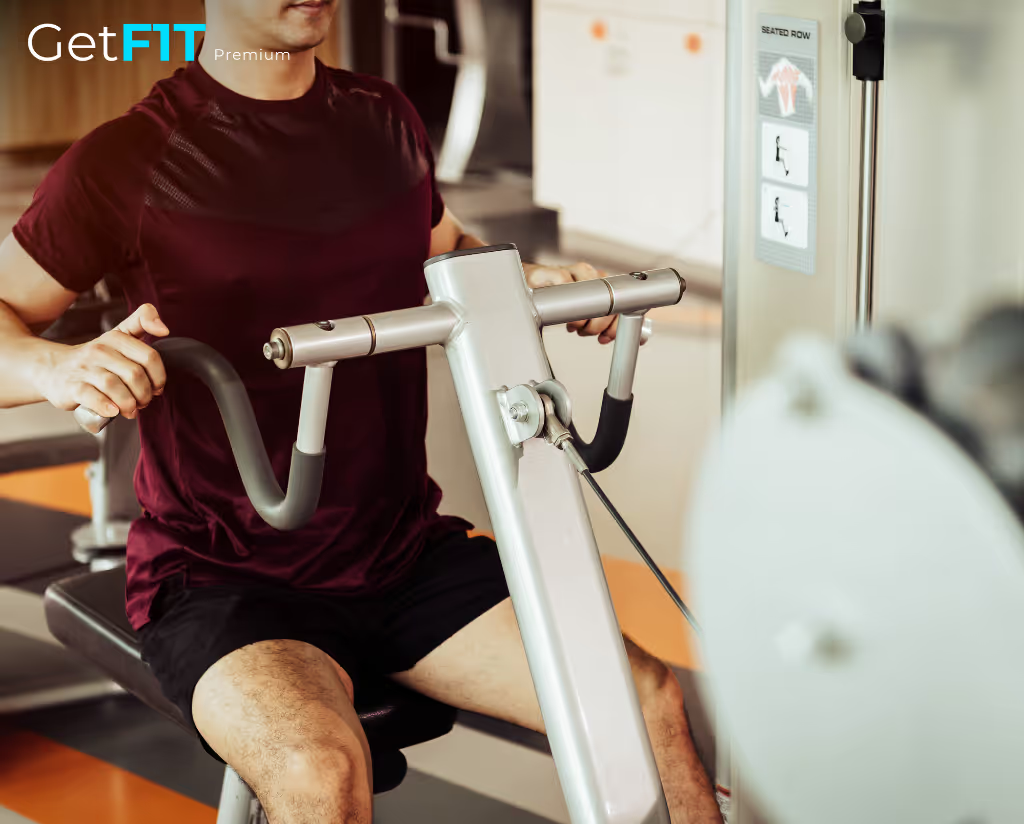
- Chest-Supported Row: 3 sets x 8-12 reps | Rest 2 minutes.
- Seated Leg Curl: 3 sets x 10-15 reps | Rest 90 seconds.
- Cable Lateral Raise: 3 sets x 12-20 reps | Rest 60-90 seconds.
1. Barbell Snatch
Working sets: 4
Repetitions: 2-3
Rest: 2-3 minutes
Primary muscles: Quadriceps, gluteus maximus, hamstrings, trapezius, and shoulder stabilizers.
The Barbell Snatch begins the workout because it requires the highest level of speed, coordination, and technical precision.
Position an Olympic barbell on a suitable weightlifting platform.
Stand with the bar over the midfoot.
Use a comfortable wide Snatch grip and establish a stable starting position.
Brace the trunk before initiating the first pull.
Extend the knees while maintaining controlled hip and shoulder positioning.
Keep the bar close as it moves toward the upper thighs.
Accelerate through powerful hip, knee, and ankle extension.
Move underneath the bar and establish a stable overhead receiving position.
Stand upright after securing the catch.
Choose resistance that permits two or three technically consistent repetitions without substantial loss of bar speed.
Avoid pulling with the arms too early, allowing the bar to swing forward, or forcing an unstable overhead catch.
Because the Snatch is the primary technical movement, stop sets before fatigue causes significant deterioration.
The four working sets provide explosive training rather than the main hypertrophy stimulus.
Record barbell load, successful repetitions, and technical observations.
If you cannot perform a full Snatch consistently, substitute a Hang Power Snatch or another appropriate technical progression.
2. Front Squat
Working sets: 3
Repetitions: 6-10
Rest: 2-3 minutes
Primary muscles: Quadriceps and gluteus maximus, with assistance from the adductor magnus and trunk stabilizers.
The front squat provides the primary lower-body hypertrophy stimulus after the Snatch.
Position the barbell across the front of your shoulders using a comfortable front-rack grip.
Maintain high enough elbows to keep the bar supported.
Stand with your feet approximately shoulder-width apart.
Brace your trunk and bend your hips and knees to descend.
Keep the bar balanced over your base of support.
Lower through a substantial comfortable range.
Extend your knees and hips to stand upright.
Choose resistance that allows 6-10 repetitions with approximately 1-2 repetitions in reserve.
Avoid allowing the elbows to collapse excessively or the torso to fold forward.
Because the Snatch already challenges the legs and trunk, choose a realistic front squat load.
The front squat provides greater direct quadriceps loading through repeated knee flexion and extension than the low-repetition Snatch sets.
Track the same stance, depth, resistance, and repetition range across sessions.
3. Romanian Deadlift
Working sets: 3
Repetitions: 8-12
Rest: 2 minutes
Primary muscles: Hamstrings and gluteus maximus, with assistance from the adductor magnus and spinal erectors.
The Romanian deadlift adds targeted posterior-chain hypertrophy work.
Stand holding a barbell in front of your thighs.
Position your feet approximately hip-width apart.
Maintain a slight knee bend.
Brace your abdominal muscles and push your hips backward.
Allow your torso to incline forward while keeping the bar close to your legs.
Lower until you reach a comfortable hamstring stretch without losing trunk control.
Extend your hips to return to standing.
Avoid turning the movement into a deep squat or leaning backward excessively at the top.
Choose resistance that allows 8-12 repetitions with approximately 1-2 repetitions in reserve.
Because Snatches and front squats have already challenged the lower body, use manageable resistance.
The Romanian deadlift provides controlled hip-extension loading through a substantial range.
This complements the explosive hip-extension demands of the Snatch.
Record resistance, repetitions, and movement depth to track progression.
4. Chest-Supported Row
Working sets: 3
Repetitions: 8-12
Rest: 2 minutes
Primary muscles: Latissimus dorsi, trapezius, rhomboids, posterior deltoids, and elbow flexors.
The chest-supported row provides direct upper-back hypertrophy work without requiring another unsupported hip hinge.
Adjust the machine or incline bench so your chest remains firmly supported.
Begin with your arms extended toward the resistance.
Pull the handles toward your torso while moving your elbows backward.
Allow natural shoulder blade movement.
Pause briefly near the top if useful.
Lower gradually without lifting your chest from the support.
Choose resistance that allows 8-12 repetitions with approximately 1-2 repetitions in reserve.
Avoid using body momentum or excessively shortening the pulling range.
The upper back has already participated in the Snatch, but the row provides a more controlled resistance stimulus.
Chest support is particularly useful because the spinal erectors have already worked during the Snatch, front squat, and Romanian deadlift.
Maintain consistent machine settings when tracking progression.
5. Seated Leg Curl
Working sets: 3
Repetitions: 10-15
Rest: 90 seconds
Primary muscles: Biceps femoris, semitendinosus, and semimembranosus.
The seated leg curl provides direct hamstring training through knee flexion.
Adjust the machine so your knees align approximately with its pivot.
Secure the thigh restraint.
Position the lower-leg pad comfortably above your heels.
Begin with your knees extended through a comfortable range.
Bend your knees to move the resistance downward and backward.
Maintain stable hip contact with the seat.
Pause briefly near the contracted position if useful.
Return gradually.
Choose resistance that allows 10-15 repetitions with approximately 1-2 repetitions in reserve.
Avoid lifting your hips or allowing the weight stack to pull your legs back abruptly.
The seated leg curl complements Romanian deadlifts because it trains the hamstrings through knee flexion rather than primarily hip extension.
Three controlled sets provide additional hamstring hypertrophy work without requiring another technically demanding compound movement.
6. Cable Lateral Raise
Working sets: 3
Repetitions: 12-20
Rest: 60-90 seconds
Primary muscles: Lateral deltoids, with assistance from the supraspinatus and shoulder blade stabilizers.
The cable lateral raise provides direct shoulder hypertrophy training after the compound movements.
Set a cable pulley near the bottom of the machine.
Stand sideways to the pulley.
Hold the handle with your working arm while maintaining a small elbow bend.
Raise the upper arm outward through a comfortable arc.
Continue toward approximately shoulder height.
Lower gradually without swinging.
Choose resistance that allows 12-20 repetitions with approximately 1-2 repetitions in reserve.
Avoid excessive shoulder shrugging or using torso momentum.
Perform the prescribed sets for both shoulders.
The shoulders have already contributed to stabilizing the Snatch overhead.
However, lateral raises provide more direct resistance through shoulder abduction.
This makes them useful for lateral deltoid hypertrophy without requiring another heavy overhead movement.
Increase resistance only when the movement remains controlled.
How to Warm Up Before This Snatch Workout
A Snatch workout requires a more thorough technical warm-up than a conventional isolation-focused session.
Begin with approximately 5-10 minutes of light general movement.
Walking, cycling, or easy rowing can increase readiness without substantial fatigue.
Then prepare the ankles, hips, thoracic spine, shoulders, and wrists using controlled movements.
Useful preparation exercises include:
- Bodyweight squats.
- Controlled hip hinges.
- Ankle mobility movements.
- Light thoracic extension movements.
- Shoulder circles.
- PVC overhead squats.
- Snatch-grip presses with a technique bar.
- Light muscle Snatches.
- Hang Power Snatches.
Before working sets, gradually increase barbell resistance.
For example, if your planned Snatch working weight is 50 kg:
- Technique bar or empty barbell: several muscle Snatches and overhead squats.
- Approximately 20 kg: 3 controlled Hang Power Snatches.
- Approximately 30 kg: 2-3 Snatches.
- Approximately 40 kg: 1-2 Snatches.
- Approximately 45 kg: 1 controlled Snatch.
- Begin working sets at 50 kg.
These are example loads rather than mandatory percentages.
Use additional preparation sets when required to establish consistent technique.
The warm-up should gradually prepare the receiving position and pulling mechanics without creating substantial fatigue.
Before front squats, perform additional progressively heavier sets as needed.
The Snatch warm-up does not automatically prepare you for every subsequent working load.
Because this workout includes technically demanding lifting, maintain sufficient rest between warm-up attempts when resistance increases.
How Hard Should You Train During This Snatch and Hypertrophy Workout?
The Snatch should be performed with technical precision and explosive intent, while the remaining exercises should provide challenging muscular effort.
Repetitions in reserve (RIR) means the estimated number of additional technically sound repetitions you could complete before muscular failure.
However, RIR is more applicable to conventional resistance exercises than to technically demanding Olympic lifts.
Use these effort targets:
- Barbell Snatch: Stop before bar speed or receiving technique deteriorates significantly.
- Front Squat: Approximately 1-2 RIR with a stable front-rack position.
- Romanian Deadlift: Approximately 1-3 RIR while maintaining a controlled hip hinge.
- Chest-Supported Row: Approximately 1-2 RIR without lifting the torso from the support.
- Seated Leg Curl: Approximately 1-2 RIR with controlled knee flexion.
- Cable Lateral Raise: Approximately 1-2 RIR without excessive body momentum.
The Snatch is a power and skill exercise.
It should not be performed to muscular failure.
The front squat and Romanian deadlift are compound hypertrophy movements.
They require sufficient technical control under challenging resistance.
The leg curl and lateral raise are isolation exercises.
These can generally be performed relatively close to muscular failure.
However, absolute failure is unnecessary on every set.
If Snatch technique begins deteriorating, reduce resistance or end the technical portion.
If front squat or Romanian deadlift technique deteriorates, finish the set before compensation becomes substantial.
The objective is high-quality explosive training followed by recoverable hypertrophy work.
How to Progress This Snatch Workout Over Several Weeks
Progress the Snatch according to technical quality and bar speed, while using double progression for the hypertrophy exercises.
Weeks 1-2: Establish technical and strength baselines.
Choose a Snatch resistance that allows four sets of two technically consistent repetitions.
Avoid heavy attempts that require repeated missed lifts.
For front squats, select resistance that allows three sets of approximately six to eight repetitions.
For Romanian deadlifts and rows, begin near the lower end of the prescribed repetition ranges.
Record technique, resistance, repetitions, and estimated RIR.
Weeks 3-4: Improve Snatch consistency and increase accessory repetitions.
Maintain the same Snatch resistance while improving bar path, receiving stability, and repetition consistency.
You may progress from doubles toward triples when technique remains reliable.
For hypertrophy exercises, increase repetitions gradually.
For example, front squats might progress from 8, 7, and 6 repetitions toward 10, 10, and 10.
Maintain the same depth and torso control.
Weeks 5-6: Increase resistance when ready.
For the Snatch, increase resistance only after consistent successful repetitions with adequate bar speed and overhead stability.
A small loading increase may be appropriate.
Return to doubles if necessary.
For front squats, increase resistance after all three sets reach ten controlled repetitions with the intended RIR.
For Romanian deadlifts and rows, increase resistance once all sets reach twelve controlled repetitions.
For leg curls, increase resistance after reaching fifteen repetitions across all working sets.
For lateral raises, increase resistance after reaching twenty strict repetitions.
If Snatch technique deteriorates after increasing resistance, return to the previous load and improve consistency.
If accessory strength declines across several sessions, review overall leg, back, and shoulder fatigue.
Temporarily reducing accessory sets or lowering training intensity may help restore performance.
Progress should reflect genuine improvements in technical skill and muscular performance rather than heavier weights moved through deteriorating technique.
How to Fit Snatches Into a Four-to-Six-Day Training Split
This workout can serve as a lower-body and power-focused session within a four-to-six-day resistance training routine.
For a four-day upper/lower split, use it as one lower-body session with additional upper-back work.
The second lower-body session can emphasize different squat or single-leg movements according to recovery.
For a five- or six-day routine, it can serve as a dedicated power-and-legs session.
The workout includes:
- Four low-repetition Snatch sets.
- Three front squat sets.
- Three Romanian deadlift sets.
- Three chest-supported row sets.
- Three seated leg curl sets.
- Three cable lateral raise sets.
The Snatch develops explosive lifting skill and coordinated full-body strength.
The front squat provides direct quadriceps and glute loading.
The Romanian deadlift and seated leg curl provide complementary hamstring training.
The chest-supported row adds upper-back hypertrophy work.
The cable lateral raise contributes direct shoulder training.
Because the Snatch already places demands on the legs, hips, shoulders, and trunk, account for this overlap when planning other sessions.
If training Snatches twice weekly, the second session may use lighter technical variations rather than repeating heavy full Snatches.
Similarly, do not automatically add substantial squat or deadlift volume without considering accumulated fatigue.
When practical, allow sufficient recovery between demanding lower-body sessions, often approximately 48-72 hours depending on total workload.
For lifters prioritizing Olympic weightlifting performance, Snatch practice frequency and intensity may be higher and should be managed through a structured technical program.
For lifters prioritizing hypertrophy, maintain sufficient conventional resistance-training volume while using Snatches as an optional explosive movement.
If Snatch technique improves and accessory strength continues progressing, maintain the current workload.
If bar speed declines, receiving positions become inconsistent, or lower-body fatigue accumulates, reduce technical loading or accessory volume before increasing training frequency.
The main objective is to combine technically sound explosive lifting with progressive, recoverable hypertrophy training.
What Is the Snatch and Is It Effective for Building Muscle and Strength?
The Snatch is a full-body Olympic weightlifting exercise in which a barbell is lifted from the floor to a locked-out overhead position in one continuous movement. It combines powerful hip and knee extension with rapid movement underneath the bar, requiring strength, speed, coordination, mobility, and overhead stability.
The Snatch is one of the two competitive lifts in Olympic weightlifting, alongside the Clean and Jerk.
In the conventional full Snatch, the lifter begins with a wide grip, pulls the barbell from the floor, accelerates it upward through powerful lower-body extension, and moves underneath it into an overhead squat.
The movement finishes when the lifter stands upright with the barbell stabilized overhead.
Unlike a conventional deadlift, the Snatch requires the barbell to travel overhead.
Unlike a shoulder press, the barbell is not slowly pressed upward using primarily the shoulders and triceps.
Instead, the legs and hips generate much of the upward acceleration while the arms guide the bar and support it during the receiving phase.
The Snatch is a compound exercise involving multiple joints and muscle groups.
Its primary muscular contributors include:
- Quadriceps.
- Gluteus maximus.
- Hamstrings.
- Trapezius.
- Deltoids.
- Triceps brachii.
- Spinal erectors.
- Abdominal and shoulder stabilizers.
The Snatch is particularly effective for developing explosive power, rate of force development, and skill in Olympic weightlifting.
It can also contribute to muscle development, especially in the legs, glutes, and upper back.
However, the Snatch is not usually the most efficient primary exercise for maximizing hypertrophy.
The movement requires high speed, technical precision, and relatively low repetition counts.
Sets are often stopped because bar speed or technique deteriorates rather than because an individual muscle has reached substantial fatigue.
For targeted hypertrophy, squats, Romanian deadlifts, rows, and shoulder exercises generally allow more straightforward loading.
The Snatch is best suited to lifters who want to develop Olympic lifting technique, explosive athletic performance, and coordinated full-body strength.
For a hypertrophy-focused program, it can be included early in a workout before more conventional resistance exercises.
Beginners should generally learn the movement through progressive technical drills and appropriate coaching rather than immediately attempting heavy full Snatches.
What Are the Main Benefits of the Barbell Snatch?
The Snatch develops explosive force production and coordinated full-body movement while challenging overhead stability.
Its main benefits include:
- Explosive power: Rapid hip, knee, and ankle extension accelerates the barbell upward.
- Lower-body strength: The quadriceps and glutes produce force during the pull, receiving position, and recovery.
- Overhead stability: The shoulders, triceps, trapezius, serratus anterior, and rotator cuff help support the bar overhead.
- Coordination: The exercise requires precise timing between the pull, turnover, receiving position, and recovery.
- Rate of force development: The lifter must produce force quickly rather than relying only on slow maximal strength.
- Movement control: Maintaining an efficient bar path requires consistent positioning and balance.
- Mobility demands: The full movement uses substantial ankle, hip, thoracic, and shoulder range of motion.
- Progressive loading: Barbell resistance can increase as technical proficiency and strength improve.
One distinguishing benefit is that the Snatch trains the ability to accelerate a loaded barbell while coordinating movement underneath it.
This differs from conventional strength exercises that primarily involve moving resistance through a slower controlled range.
For example, a heavy squat develops substantial lower-body force production but does not require the same rapid transition into an overhead receiving position.
Similarly, a jump trains explosive lower-body extension but does not require catching a barbell overhead.
The Snatch combines these demands into one technically complex exercise.
However, greater complexity does not automatically mean greater muscle growth.
The movement should be selected when its specific strength, power, and coordination benefits are relevant to the training goal.
What Muscles Does the Snatch Work?
The Snatch trains the quadriceps, gluteus maximus, hamstrings, trapezius, shoulders, and trunk stabilizers through several distinct phases.
Different muscles contribute during the initial pull, explosive extension, overhead catch, and standing recovery.
No single muscle performs the entire movement independently.
Quadriceps: Knee Extension During the Pull and Recovery
The quadriceps are major contributors to the Snatch.
The group includes:
- Rectus femoris.
- Vastus lateralis.
- Vastus medialis.
- Vastus intermedius.
During the initial pull from the floor, the quadriceps extend the knees as the barbell rises.
They also contribute to the explosive extension phase.
When the lifter receives the bar in a deep overhead squat, the quadriceps help control knee flexion.
During the recovery, they generate force to straighten the knees and stand upright.
The receiving and recovery phases are particularly relevant to lower-body strength.
However, the Snatch typically uses less resistance than a lifter could manage during a conventional back squat.
For maximum quadriceps hypertrophy, squats and leg presses are practical complementary exercises.
They allow the quadriceps to be trained through challenging repetitions without the same overhead technical requirements.
Gluteus Maximus: Powerful Hip Extension
The gluteus maximus contributes substantially to hip extension during the Snatch.
As the barbell passes the knees and the lifter moves into the explosive extension phase, the glutes help extend the hips.
This contributes to upward barbell acceleration.
The glutes also assist with standing from the receiving squat.
During the lowering and receiving phases, they help control hip positioning.
However, the Snatch is not a glute isolation exercise.
Its explosive hip extension occurs alongside substantial knee and ankle movement.
For more direct glute hypertrophy, hip thrusts, Romanian deadlifts, squats, and split squats provide useful complementary loading.
The Snatch develops the ability to produce hip-extension force quickly rather than exclusively maximizing glute muscle tension.
Hamstrings: Posterior-Chain Force and Hip Control
The hamstrings contribute to hip extension and help control lower-body positioning during the Snatch.
The hamstring group includes:
- Biceps femoris.
- Semitendinosus.
- Semimembranosus.
The long head of the biceps femoris, semitendinosus, and semimembranosus cross the hip and knee joints.
During the pulling phases, these muscles help produce and control hip-extension force.
They also contribute to maintaining appropriate hip and knee mechanics.
However, the Snatch does not challenge the hamstrings through the same movement pattern as a Romanian deadlift or leg curl.
For hamstring hypertrophy, dedicated hip-hinge and knee-flexion exercises remain valuable.
The Snatch is best understood as an explosive posterior-chain movement rather than a complete hamstring-building exercise.
Trapezius and Upper-Back Muscles
The trapezius contributes to shoulder blade movement and stabilization throughout the Snatch.
Its upper, middle, and lower regions have different functions.
During the explosive pull, the upper trapezius assists with scapular elevation and control.
During the overhead receiving position, the upper and lower trapezius contribute to the scapular upward rotation needed for overhead arm positioning.
The rhomboids and other upper-back muscles also contribute to shoulder girdle control.
The latissimus dorsi helps maintain the barbell close to the body during the pull.
However, the lats are not the main muscles accelerating the bar upward.
The Snatch requires substantial upper-back coordination, but conventional rows and pulldowns may be more appropriate for direct back hypertrophy.
These exercises allow a controlled pulling range without requiring a technically complex overhead catch.
Deltoids, Triceps, and Serratus Anterior
The shoulder muscles stabilize the barbell during the turnover and overhead receiving phases.
The anterior and lateral deltoids contribute to shoulder positioning and stability.
The triceps brachii maintain elbow extension when the bar is caught overhead.
The serratus anterior contributes to scapular upward rotation and stabilization.
The rotator cuff helps maintain control of the glenohumeral joint.
These muscles work together to create a stable overhead position.
However, the Snatch is not equivalent to a strict shoulder press.
The barbell is accelerated primarily through coordinated lower-body extension, and the lifter moves underneath it.
The arms guide the bar and establish a strong receiving position.
For direct deltoid hypertrophy, shoulder presses and lateral raises provide more targeted resistance.
For overhead stability, Snatch balances and overhead squats can complement technical practice.
Spinal Erectors and Abdominal Muscles
The spinal erectors help maintain controlled trunk positioning during the pull.
The abdominal muscles help create trunk stiffness and manage the forces acting on the spine.
Relevant muscles include:
- Rectus abdominis.
- Internal and external obliques.
- Transversus abdominis.
- Erector spinae.
During the first pull, the trunk must remain stable while the hips and knees extend.
During the overhead receiving position, the abdominal muscles and spinal erectors help maintain balance beneath the bar.
These muscles primarily provide stabilization.
The Snatch should not be treated as a replacement for direct abdominal training when core hypertrophy is the goal.
However, adequate trunk strength is important for maintaining consistent technical positions.
Calves and Other Lower-Body Stabilizers
The gastrocnemius and soleus contribute to ankle plantar flexion during the explosive extension phase.
The calves help transmit force through the feet as the lifter accelerates the barbell.
The gluteus medius and other hip stabilizers assist with maintaining lower-body alignment.
The foot and ankle muscles contribute to balance during the pull, catch, and standing recovery.
These contributions are relevant to coordinated movement, but the Snatch does not provide the same direct calf hypertrophy stimulus as standing or seated calf raises.
For complete lower-body development, dedicated resistance exercises are useful alongside Olympic lifting.
What Equipment Do You Need for the Snatch?
The conventional Snatch requires a suitable barbell, weight plates, and a safe lifting area.
Olympic weightlifting equipment is preferable because the barbell must rotate freely and withstand repeated dynamic loading.
Olympic barbell: A weightlifting bar with rotating sleeves allows the plates to rotate independently as the bar turns over.
Bumper plates: Suitable bumper plates are commonly used because unsuccessful attempts may require the bar to be dropped.
Weightlifting platform: A stable platform provides predictable footing and an appropriate surface for weightlifting.
Weightlifting shoes: Shoes with a stable sole and elevated heel may help some lifters maintain balance in the receiving squat.
Collars: Appropriate collars help secure plates, although equipment and competition requirements should be followed.
Open lifting area: There should be sufficient space around the platform for safe lifting and missed attempts.
A lifting belt and wrist wraps are optional.
They should not substitute for correct technique or appropriate loading.
Beginners can learn movement positions using a training bar, PVC pipe, or appropriately light technique bar.
Attempting the Snatch with an improvised bar or unsuitable plates is unnecessary.
The lifting environment must permit safe handling of failed overhead attempts.
How Wide Should Your Grip Be for the Snatch?
The Snatch uses a wide grip that allows the barbell to finish overhead with comfortably extended elbows and appropriate shoulder positioning.
The exact width depends on arm length, shoulder mobility, and individual anatomy.
A practical starting method is to hold the bar with a wide grip and check where it rests when standing upright.
For many lifters, the bar contacts the upper thigh or hip crease when held with straight arms.
However, this is a starting reference rather than an exact universal measurement.
A suitable grip should allow:
- Comfortable wrist positioning.
- Full elbow extension.
- A stable overhead receiving position.
- Appropriate bar contact near the upper thigh or hip.
- Controlled shoulder movement.
- A consistent pulling path.
An excessively narrow grip can make the overhead position more restrictive.
An excessively wide grip may create discomfort and reduce control.
Many Olympic weightlifters use a hook grip, where the fingers wrap over the thumb to help secure the bar during the pull.
This grip can feel unfamiliar initially.
Practice with light resistance before using it during demanding lifts.
During the overhead catch, the grip may adjust naturally according to technique and individual preferences.
How to Set Up the Snatch Starting Position
A consistent Snatch setup places the barbell over the midfoot with the shoulders, hips, and knees positioned to produce an effective first pull.
- Approach the barbell. Stand with the bar approximately over the middle of your feet.
- Choose your stance. Begin around hip-width apart, allowing individual adjustment.
- Select your Snatch grip. Use a comfortable wide grip appropriate to your anatomy.
- Bend at the hips and knees. Lower into the starting position while maintaining balance over the feet.
- Position your shoulders. The shoulders are generally slightly in front of the bar.
- Set your back. Maintain a controlled spinal position with the chest comfortably oriented forward.
- Engage your upper back. Keep the bar close without pulling it aggressively backward.
- Brace your trunk. Establish abdominal tension before lifting.
- Maintain full-foot pressure. Avoid starting entirely on the toes or heels.
- Prepare the first pull. Remove slack from the body and bar connection before accelerating.
The exact starting hip height depends on limb proportions and mobility.
Trying to copy another lifter's setup precisely may be inappropriate.
For example, someone with long femurs may require a different torso angle from someone with shorter legs.
The priority is a stable position that allows the bar to leave the floor without the hips shooting upward before the shoulders.
How to Perform the Barbell Snatch Step by Step
The Snatch is performed by moving a barbell from the floor to a stable overhead position through a coordinated pull, turnover, catch, and recovery.
- Establish the starting position with the bar over the midfoot and your hands in a wide Snatch grip.
- Brace your trunk and begin lifting by extending the knees while maintaining a controlled back position.
- Keep the barbell close as it rises from the floor toward the knees.
- Continue extending the hips and knees while bringing the bar into an effective power position near the upper thighs.
- Accelerate the bar upward through powerful hip, knee, and ankle extension.
- Allow the elbows to rise as the bar continues upward, maintaining a close bar path.
- Begin moving underneath the bar as the upward pull finishes.
- Rotate the arms into a stable overhead receiving position.
- Catch the bar with extended elbows and your feet securely positioned.
- Stand upright from the overhead squat while maintaining the bar over your base of support.
Finish with the bar stable overhead and the body balanced.
The exact movement is continuous, even though it can be explained through separate phases.
Avoid attempting to pull the bar overhead using only the arms.
The lower body generates the primary acceleration.
The arms guide the bar and help establish the receiving position.
For a full Snatch, the bar is received in a squat.
For a Power Snatch, the bar is received with the thighs above parallel.
Both are valid variations, but they use different receiving depths and technical demands.
After completing the lift, lower or release the bar according to the equipment, platform, and safe weightlifting procedures.
What Are the Different Phases of the Snatch?
The Snatch involves several connected phases that require different muscular actions and technical priorities.
First Pull: From the Floor to the Knees
The first pull moves the barbell from the floor toward the knees while maintaining an effective torso position.
The quadriceps contribute substantially to knee extension.
The hips and shoulders should rise in a coordinated manner.
Avoid allowing the hips to shoot upward while the bar remains near the floor.
This can change the torso angle and disrupt the later phases.
Keep the bar close to the body.
Maintain controlled pressure through the feet.
The objective is to establish an effective position for the next phase rather than accelerating the bar as aggressively as possible immediately from the floor.
Transition: Moving Into the Power Position
The transition phase moves the bar from around knee height toward the upper thighs.
The lifter repositions the knees and torso to prepare for explosive extension.
The bar should remain relatively close.
The exact knee and hip positions depend on the athlete's proportions and lifting technique.
Avoid deliberately swinging the bar forward to create contact.
A forward bar path can make the subsequent catch more difficult.
The transition should preserve balance and prepare the body to accelerate the bar vertically.
Second Pull: Explosive Hip, Knee, and Ankle Extension
The second pull is the explosive acceleration phase of the Snatch.
The hips and knees extend rapidly while the ankles contribute to force transmission.
The quadriceps and glutes produce substantial power.
The calves contribute during the final extension.
The barbell accelerates upward as the lifter completes the extension.
An effective second pull does not require deliberately leaning far backward.
Excessive backward torso extension can push the bar away from the body's balance line.
The objective is powerful upward acceleration with a close, controlled bar path.
The shoulders and arms then contribute to guiding the bar as the lifter begins moving underneath it.
Third Pull: Moving Under the Bar
The third pull involves the lifter actively moving underneath the rising barbell.
The arms help guide the bar while the body descends into the receiving position.
This is not a conventional biceps curl or shoulder press.
The movement must be coordinated so the bar reaches a stable overhead position while the feet establish a secure receiving stance.
The speed of moving underneath the bar is particularly important when lifting heavier resistance.
Beginners often attempt to pull the bar excessively high rather than learning to move underneath it.
Tall Snatches and Snatch High Pulls can help develop different components of this transition.
Catch and Recovery: Overhead Squat to Standing
The full Snatch is received with the barbell stabilized overhead in a squat.
The shoulders, scapular stabilizers, triceps, and trunk support the bar.
The hips, knees, and ankles provide the necessary receiving range.
Once balanced, the lifter stands by extending the hips and knees.
The bar should remain stable over the body's base of support.
Avoid beginning the recovery before the receiving position is controlled.
If the bar moves excessively forward or backward, do not attempt to save an unstable lift through extreme joint positioning.
Use appropriate missed-lift procedures and a clear lifting area.
Should the Snatch Bar Stay Close to Your Body?
Yes, the barbell should remain relatively close to the body throughout the pulling phases.
A close bar path helps maintain effective leverage and reduces unnecessary horizontal bar movement.
During the first pull, the lats and upper back contribute to controlling the bar's position.
As the bar moves above the knees, it should transition toward the upper thighs without swinging far forward.
During the explosive pull, the bar travels upward while the lifter prepares to move underneath it.
However, a close bar path does not mean scraping the bar aggressively against the shins or thighs.
The objective is efficient movement rather than forced physical contact.
If the bar repeatedly swings forward, review the starting position, transition, and timing of the explosive extension.
Using lighter resistance and recording the lift from the side can help identify changes in the bar path.
Should the Bar Hit Your Hips During the Snatch?
The barbell may make contact near the upper thighs or hip crease during the Snatch, but deliberately striking it forward with the hips is unnecessary.
Contact occurs as the lifter moves through the transition and explosive extension.
The exact location depends on grip width, anatomy, and technique.
A common mistake is exaggerating hip contact to create an audible impact.
This can push the bar forward instead of accelerating it primarily upward.
The objective is coordinated extension and a controlled bar path.
If the bar moves significantly away from the body after contact, reduce resistance and review the transition position.
A technically effective Snatch does not require the loudest possible bar contact.
How Deep Should You Squat When Catching a Snatch?
A full Snatch is normally received in a deep overhead squat, with the exact depth determined by mobility, strength, and the barbell's height.
Competitive weightlifting requires the athlete to receive and control the bar according to the sport's rules.
A Power Snatch is received above parallel.
A Muscle Snatch involves pulling the bar overhead without the same rapid descent into a squat.
For general training, the appropriate variation depends on technical proficiency and mobility.
If you cannot maintain stable overhead positioning in a deep squat, do not force the catch.
Instead, develop the overhead squat position separately and use a Power Snatch or another progression.
A deeper receiving position allows the lifter to catch a bar that has not been pulled as high.
However, it also requires greater mobility, timing, and stability.
The objective is a strong receiving position, not simply the deepest possible squat.
How Should You Position Your Arms and Shoulders Overhead?
The Snatch finishes with the elbows extended and the barbell stabilized over the body's base of support.
The wrists will typically be extended because of the wide grip and overhead bar position.
The shoulders and scapulae must allow a stable overhead position.
The upper and lower trapezius and serratus anterior contribute to scapular upward rotation.
The rotator cuff helps control the shoulder joint.
Useful cues include:
- Extend the elbows firmly without forcing uncomfortable hyperextension.
- Maintain a secure grip.
- Keep the bar balanced over the supporting feet.
- Allow natural scapular upward rotation.
- Maintain trunk tension.
- Avoid excessively arching the lower back to move the bar overhead.
Some lifters use a slightly different overhead shoulder position depending on anatomy and mobility.
There is no single visible shoulder angle that suits everyone.
The primary requirement is a stable, controlled overhead catch.
If the position feels consistently uncomfortable, use lighter resistance and address the underlying technical limitation before progressing.
What Is the Correct Breathing and Bracing Technique for the Snatch?
Take a controlled breath and establish trunk tension before initiating the pull, then manage breathing according to the demands of the lift.
A practical sequence is:
- Establish the starting position.
- Inhale and brace the abdominal muscles.
- Maintain trunk stiffness during the first and second pulls.
- Move underneath the bar while preserving control.
- Stabilize the bar overhead.
- Recover to standing and exhale when appropriate.
Experienced lifters may briefly hold their breath during demanding portions of the movement.
This can support trunk stiffness.
However, prolonged breath holding is unnecessary, and breathing strategies should match individual experience and medical considerations.
Avoid relaxing the trunk during the transition or overhead recovery.
The Snatch involves rapid force production, so bracing should be practiced with light resistance before progressing to heavy attempts.
What Tempo and Range of Motion Should You Use for the Snatch?
The Snatch should be performed explosively during the acceleration phase while maintaining controlled positions throughout the lift.
It is not usually programmed with the slow lifting tempos commonly used for hypertrophy exercises.
The main phases have different speed requirements.
First pull: Controlled acceleration from the floor while maintaining position.
Transition: Coordinated movement toward the power position.
Second pull: Rapid, powerful extension to accelerate the barbell.
Third pull: Fast movement underneath the bar.
Catch: Controlled stabilization in the receiving position.
Recovery: Strong, balanced standing movement.
Deliberately slowing the second pull can interfere with the intended power stimulus.
Likewise, rapidly jerking the bar from the floor without maintaining position can disrupt technique.
The full range of motion extends from the floor to overhead.
However, partial variations such as Hang Snatches and Power Snatches can be appropriate when learning technique or emphasizing particular phases.
Use the variation that allows safe, repeatable execution rather than forcing a full lift before the necessary positions are established.
What Are the Most Common Snatch Mistakes?
The most common Snatch mistakes involve incorrect starting positions, inefficient bar paths, poor extension timing, and unstable overhead receiving mechanics.
Hips rising too quickly: If the hips shoot upward before the shoulders, the torso angle changes and the first pull becomes less effective. Use lighter resistance and practice coordinated knee extension.
Bar drifting away from the body: Excessive forward movement increases the difficulty of the catch. Maintain upper-back engagement and a controlled transition.
Pulling with the arms too early: Premature elbow bending may interfere with force transfer from the legs and hips. Maintain long arms through the initial extension before transitioning underneath the bar.
Exaggerated hip contact: Striking the bar forward can create unnecessary horizontal movement. Focus on upward acceleration through coordinated extension.
Leaning backward excessively: Excessive torso extension may push the bar away from the body's balance line. Finish the pull powerfully without throwing the shoulders backward.
Failing to move underneath the bar: Attempting to pull every weight excessively high limits heavier lifting. Practice tall Snatches and receiving drills.
Catching with soft elbows: Inconsistent elbow extension can make the receiving position unstable. Practice controlled overhead stabilization with suitable resistance.
Using an excessively wide or narrow grip: Poor grip selection can affect bar contact and overhead positioning. Adjust grip width to match anatomy and mobility.
Receiving the bar too far forward: This may require compensatory stepping or leaning. Review the pull direction and catch timing.
Forcing an overhead squat without sufficient mobility: Limited ankle, hip, thoracic, or shoulder range can interfere with a stable catch. Use partial variations while developing the required positions.
Attempting heavy repetitions while fatigued: Technical deterioration reduces lifting consistency. Use low-repetition sets and adequate rest.
Because the Snatch is technically complex, video feedback and qualified coaching can be particularly valuable.
How to Learn the Snatch as a Beginner
Beginners generally benefit from learning the receiving position and individual pulling phases before attempting challenging full Snatches.
A practical learning sequence is:
- Overhead squat positioning: Practice holding a light bar overhead while squatting through a comfortable range.
- Snatch grip and hook grip: Establish appropriate hand placement and secure bar control.
- Snatch-grip deadlift: Learn the starting position and first pull.
- Snatch high pull: Practice coordinated extension and controlled upward bar movement.
- Muscle Snatch: Learn to guide the bar overhead without a deep catch.
- Tall Snatch: Practice moving underneath the bar into a receiving position.
- Hang Power Snatch: Combine explosive extension and overhead receiving from above the knees.
- Hang Snatch: Progress toward a deeper receiving position when appropriate.
- Full Snatch: Integrate the movement from the floor with the complete overhead squat.
The precise order may be adjusted according to an athlete's mobility and coordination.
There is no need to rush progression.
A lifter who cannot maintain a stable overhead squat should not immediately begin attempting heavy full Snatches.
Technical practice with light resistance can be productive even when it does not create substantial muscular fatigue.
The goal is to develop reliable movement patterns before increasing weight.
Snatch Variations for Beginners and Advanced Lifters
Snatch variations change the starting position, receiving depth, and portion of the movement being emphasized.
Beginner: Muscle Snatch
The bar is pulled overhead without a deep squat catch.
This helps develop the turnover and overhead receiving mechanics.
Beginner: Hang Power Snatch
The bar starts above the knees and is received with the thighs above parallel.
This reduces the complexity of pulling from the floor.
Beginner: Snatch High Pull
The bar is accelerated upward through explosive extension without an overhead catch.
It is useful for practicing the pull, although it does not replace receiving-position training.
Intermediate: Hang Snatch
The movement starts from a hang position and finishes in a full overhead squat.
It emphasizes the transition, extension, and receiving phases.
Intermediate: Power Snatch
The bar begins on the floor but is received above parallel.
It can be useful for emphasizing explosive pulling and a higher receiving position.
Intermediate: Full Squat Snatch
The complete Olympic lift begins on the floor and finishes in a deep overhead squat before standing.
Intermediate: Snatch From Blocks
The bar starts from elevated blocks.
This modifies the starting position and allows particular phases of the pull to be emphasized.
Advanced: Pause Snatch
The lifter pauses at a selected position during the pull before continuing.
This can develop positional control but requires appropriate technical proficiency.
Advanced: Deficit Snatch
The lifter stands on a small stable elevation, increasing the starting range.
This changes mobility and positional demands and should be used selectively.
Advanced: Heavy Snatch Singles
Experienced weightlifters may perform challenging single repetitions to develop competition-specific strength and technical proficiency.
These require appropriate supervision, equipment, and recovery.
Drop sets and rest-pause sets are generally unsuitable for heavy full Snatches.
The lift depends on speed and coordination, which deteriorate as fatigue accumulates.
For hypertrophy, use conventional accessory exercises rather than attempting to turn the Snatch into a high-fatigue isolation movement.
What Are the Best Alternatives to the Snatch?
The best Snatch alternatives depend on whether the goal is explosive power, Olympic lifting technique, overhead stability, or hypertrophy.
Power Snatch: A compound Olympic lifting variation received above parallel. It develops explosive extension and overhead receiving skill with a shallower catch.
Hang Snatch: A compound variation starting above the floor. It emphasizes selected pulling phases and receiving mechanics.
Dumbbell Snatch: A unilateral explosive lift involving a dumbbell moving from below the torso to overhead. It requires different coordination and usually involves less technical complexity than a full barbell Snatch.
Kettlebell Snatch: An explosive unilateral movement using a kettlebell. Its grip, turnover, and resistance path differ from the barbell lift.
Clean: An Olympic lifting movement in which the bar is received on the shoulders rather than directly overhead. It trains powerful extension and coordinated receiving mechanics.
Snatch High Pull: An explosive compound pull without an overhead catch. It can be useful when overhead mobility or receiving technique is a limitation.
Jump Squat: An explosive lower-body exercise emphasizing rapid force production. It does not involve the same overhead stabilization demands.
Overhead Squat: A compound squat performed while holding a barbell overhead. It trains quadriceps strength, mobility, and overhead stability but does not include the explosive pull.
Push Press: A compound overhead movement using leg drive to help accelerate the bar. It develops overhead power through different mechanics.
Barbell Back Squat: A compound lower-body strength exercise. It provides more direct progressive loading for quadriceps and glute hypertrophy.
Romanian Deadlift: A compound hip-hinge exercise targeting the hamstrings and glutes. It provides more direct posterior-chain hypertrophy loading than the Snatch.
Chest-Supported Row: A compound upper-back exercise offering controlled resistance without an explosive overhead receiving phase.
These exercises are not interchangeable.
For Olympic weightlifting performance, Snatch variations provide the greatest movement specificity.
For muscle hypertrophy, conventional resistance exercises may provide a more efficient stimulus.
Snatch vs. Clean and Jerk: What Is the Difference?
The Snatch moves the barbell from the floor directly to overhead in one continuous lift, while the Clean and Jerk uses two distinct movements.
During the Clean, the barbell travels from the floor to the front-rack position on the shoulders.
During the Jerk, the bar moves from the shoulders to overhead.
The Snatch uses a wider grip and typically requires greater overhead shoulder mobility during a deep receiving squat.
The Clean and Jerk generally allows heavier absolute weights because of the different receiving and overhead mechanics.
Both lifts train the legs, hips, trunk, and upper body.
However, they emphasize different technical skills.
For competitive Olympic weightlifting, both are required.
For general strength and power training, either may be included according to the athlete's goals and technical ability.
Snatch vs. Power Snatch: Which Should You Do?
The main difference is receiving depth.
A full Snatch is received in a deep overhead squat.
A Power Snatch is received with the thighs above parallel.
Both involve pulling the bar from the floor to overhead in one continuous movement.
The Power Snatch generally requires the bar to reach a higher receiving position.
The full Snatch allows the lifter to move deeper underneath the bar.
For beginners, the Power Snatch may be easier to learn when deep overhead squat mobility is limited.
However, it still requires substantial technical proficiency.
For competitive Olympic lifting, the full Snatch is more specific because receiving the bar deeply can be necessary with heavier weights.
For general explosive training, Power Snatches can be a practical option.
Choose according to movement proficiency and the intended training goal.
Snatch vs. Dumbbell Snatch: Which Is Better?
The barbell Snatch and dumbbell Snatch both involve explosive lifting from a lower position to overhead, but their mechanics and training demands differ.
The barbell Snatch is a bilateral Olympic lift involving a wide grip and coordinated overhead receiving position.
The dumbbell Snatch is usually performed with one arm at a time.
This creates additional unilateral stabilization demands.
The dumbbell variation may be more accessible when a weightlifting platform and Olympic barbell are unavailable.
However, the dumbbell Snatch does not reproduce the exact technical requirements of competitive barbell Snatching.
For Olympic weightlifting skill, the barbell variation is necessary.
For general athletic conditioning and unilateral explosive training, the dumbbell version can be useful.
Neither is universally better for hypertrophy.
Squats, rows, and other targeted exercises may provide more direct muscular loading.
Snatch vs. Deadlift: Which Builds More Muscle?
The deadlift generally allows heavier absolute loading and more straightforward progressive strength training, while the Snatch emphasizes explosive movement and technical coordination.
Both involve lifting a barbell from the floor.
However, the movements differ substantially.
During a conventional deadlift, the bar finishes around hip height.
During a Snatch, the bar must reach overhead.
The Snatch requires rapid acceleration, turnover, and an overhead catch.
The deadlift can be performed using heavier loads and a slower movement.
For posterior-chain hypertrophy, deadlift variations and Romanian deadlifts often provide more practical loading.
For developing explosive Olympic lifting skill, the Snatch is more specific.
Neither exercise completely replaces the other.
They can be combined when training volume and recovery permit.
Can the Snatch Build Bigger Legs, Glutes, and Shoulders?
The Snatch can contribute to muscle development, but it is generally more specialized for explosive strength and technical performance than for maximizing hypertrophy.
The quadriceps and glutes contribute substantially during the pull and recovery.
The shoulders, trapezius, and triceps stabilize the bar overhead.
These muscles experience meaningful loading.
However, the Snatch is usually performed with relatively few repetitions per set.
Technical fatigue may limit training before an individual muscle approaches the effort typically used in hypertrophy-focused sets.
For example, three sets of two Snatches may provide a useful power stimulus but relatively little direct quadriceps volume compared with several challenging sets of squats.
A program targeting muscle growth should therefore include dedicated resistance exercises.
The Snatch can remain in the workout as a technical or explosive movement performed before the main hypertrophy work.
This arrangement allows the lifter to practice the Olympic lift while still accumulating sufficient muscular training volume.
How Many Sets and Reps of Snatches Should You Do?
The Snatch is generally best performed using low-repetition sets with adequate rest to preserve bar speed and technique.
For technique and power development:
- 3-6 working sets.
- 1-3 repetitions.
- 2-4 minutes of rest.
- Light to moderately challenging loads that allow consistent execution.
For strength-oriented Olympic lifting:
- 4-6 working sets.
- 1-2 repetitions.
- 3-5 minutes of rest.
- Resistance selected according to technical proficiency and planned intensity.
For hypertrophy-focused workouts:
- 3-4 sets of 2-3 technically sound repetitions before accessory training.
- Approximately 2-3 minutes of rest.
- Use the Snatch for explosive practice rather than as the primary hypertrophy stimulus.
For muscular endurance:
High-repetition full Snatches are generally not the preferred option.
As fatigue increases, timing and receiving mechanics may deteriorate.
For conditioning, simpler exercises such as sled pushes, cycling, or appropriately selected kettlebell movements may be more practical.
Repetitions in reserve, or RIR, refers to the estimated number of additional repetitions before muscular failure.
However, RIR is not the main method of regulating Snatch sets.
Technical quality, bar speed, and consistency are more important.
End the set when the next repetition is unlikely to maintain appropriate positioning.
Do not perform heavy Snatches to muscular failure.
Should You Do Snatches Before or After Squats?
Snatches should generally be performed before heavy squats when Olympic lifting technique and explosive power are priorities.
The Snatch requires fast force production, coordination, and stable receiving mechanics.
Heavy squats performed beforehand may fatigue the quadriceps, glutes, and trunk.
This can reduce bar speed and technical consistency.
A practical workout order is:
- Snatch.
- Front squat or back squat.
- Romanian deadlift.
- Leg curl.
- Upper-back or shoulder accessory exercise.
This places the technically demanding movement first.
However, if muscle hypertrophy is the only priority and Snatch proficiency is not important, the exercise may not be necessary.
Squats and other resistance movements can provide sufficient muscle-building training.
Do not attempt heavy technical lifts late in a workout when fatigue significantly affects coordination.
If training Snatches after another session, use appropriately light technique work rather than challenging attempts.
How to Progress Your Snatch Technique and Strength Over Time
Snatch progression should involve improvements in technical consistency and controlled increases in barbell resistance rather than simply adding weight every workout.
A practical method is to use a defined technical repetition range.
Example: 4 sets of 2-3 repetitions
Week 1:
- Set 1: 3 repetitions.
- Set 2: 2 repetitions.
- Set 3: 2 repetitions.
- Set 4: 2 repetitions.
Week 2:
- Set 1: 3 repetitions.
- Set 2: 3 repetitions.
- Set 3: 2 repetitions.
- Set 4: 2 repetitions.
Week 3:
- Set 1: 3 repetitions.
- Set 2: 3 repetitions.
- Set 3: 3 repetitions.
- Set 4: 2 repetitions.
Week 4:
- Set 1: 3 repetitions.
- Set 2: 3 repetitions.
- Set 3: 3 repetitions.
- Set 4: 3 repetitions.
Once all four sets reach three technically consistent repetitions with sufficient speed, a small resistance increase may be appropriate.
However, completing the repetition target alone is not enough to justify adding weight.
Confirm that:
- The first pull remains controlled.
- The bar stays close.
- The extension timing remains consistent.
- The receiving position is stable.
- The elbows remain secure overhead.
- The lift finishes without excessive stepping or compensation.
For example, increasing total resistance by 1-2 kg may be appropriate when small plates are available.
The next session may return to four sets of two repetitions.
However, technical practice does not need to follow a rigid weekly loading schedule.
Some workouts may focus on improving a specific phase with lighter resistance.
Others may use progressively heavier singles or doubles when appropriate.
Record load, successful repetitions, missed attempts, and technical observations.
If lifts become inconsistent, maintain or reduce resistance.
Do not add additional sets simply because the planned number of repetitions was completed.
Olympic lifting progression depends on balancing technical quality, workload, and recovery.
How Often Should You Train the Snatch?
The Snatch can be practiced approximately one to three times weekly depending on experience, technical goals, and total training volume.
A beginner may start with one or two supervised technical sessions per week.
Experienced Olympic weightlifters may practice Snatch variations more frequently as part of a structured program.
However, frequency alone does not determine progress.
Important considerations include:
- Technical proficiency.
- Barbell resistance.
- Number of working sets.
- Squat and pulling volume.
- Shoulder recovery.
- Total lower-body fatigue.
- Availability of appropriate coaching.
For someone primarily training for hypertrophy, one weekly Snatch session may be sufficient to maintain technical practice alongside conventional strength training.
For someone prioritizing Olympic lifting, more frequent technical exposure may be appropriate.
However, additional Snatch practice should not automatically replace the resistance-training volume needed for muscle growth.
The training schedule should match the primary goal.
Practical Coaching Tips for Better Snatch Performance
- Learn the receiving position first: A stable overhead squat makes full Snatch practice more productive.
- Use an appropriate grip width: The hands should allow comfortable overhead positioning.
- Practice the hook grip: It can improve bar security during the pull.
- Start over the midfoot: Maintain balanced pressure through the feet.
- Control the first pull: Avoid immediately jerking the bar upward.
- Keep the bar close: Excessive forward movement makes receiving the bar more difficult.
- Use the legs and hips: Do not attempt to curl the bar overhead.
- Finish extending before moving underneath: Coordinate the upward acceleration and receiving phases.
- Move actively under the bar: Do not rely exclusively on pulling the bar excessively high.
- Stabilize the overhead catch: Stand only after establishing control.
- Use low repetitions: Technical quality generally deteriorates during prolonged heavy sets.
- Increase resistance gradually: Loading should follow consistent successful technique.
- Record lifts when useful: Side and diagonal video angles can help identify bar-path and receiving-position issues.
- Use appropriate equipment: A stable platform and suitable bumper plates are important.
- Seek qualified coaching: The Snatch benefits substantially from individualized technical feedback.
Is the Snatch Safe for Your Shoulders, Back, and Knees?
The Snatch can be performed effectively when mobility, strength, technical proficiency, equipment, and loading match the lifter's abilities.
However, the exercise is technically demanding and involves rapid movement under external resistance.
Potential sources of discomfort include:
- Excessively heavy loading.
- Poor overhead shoulder mobility.
- Unstable receiving positions.
- Inefficient bar paths.
- Inadequate trunk control.
- Forced squat depth.
- Wrist discomfort from the wide grip.
- Accumulated fatigue.
- Attempting to save unsuccessful lifts through extreme joint positions.
- Inappropriate equipment or insufficient lifting space.
Normal training effort may include muscular fatigue in the legs, glutes, upper back, shoulders, and trunk.
However, sharp joint pain, sudden back pain, numbness, radiating symptoms, or persistent discomfort should not be treated as normal muscular effort.
If the full Snatch causes discomfort, reduce resistance and evaluate which phase is problematic.
A Power Snatch, Hang Snatch, or technical drill may be appropriate when the full receiving position is not yet available.
If overhead positioning remains uncomfortable despite reasonable adjustments, another exercise may be preferable.
Do not attempt to catch a clearly unsuccessful overhead lift through uncontrolled movement.
Learn appropriate missed-lift procedures in a suitable training environment.
Persistent or significant symptoms warrant assessment by a qualified healthcare professional.
For beginners, qualified Olympic weightlifting instruction is particularly valuable because technique errors can be difficult to identify without feedback.

More Exercises
All Exercises










Everything You Need for a Fitter Body is here in GetFIT App!
Set calorie and macro goals, track your meals and activity, follow structured workout and meal plans, and monitor your progress over time. GetFIT App brings nutrition tracking, fitness planning, and everyday tools together in one simple membership.
High-Protein Recipes & Meal Plans
Discover hundreds of high-protein recipes, ready-made 4 week meal plans, and healthy meal ideas for weight loss and muscle building. Every recipe includes clear calorie and macro information, so eating for your goals is simple.



Join Thousands of GetFIT App Users Worldwide
Thousands of people around the world have already joined GetFIT App to track their nutrition, follow workout programs, and work toward their fitness goals. Join our growing global community and get the tools you need to manage your fitness journey in one place.

Try GetFIT App for 5 days free!
Discover the premium features of the GetFIT App during a free trial: personalized calorie calculation and tracking, meal plans, recipes, workout programs, e-books, and much more. Start your transformation today!

Dear User! Unlock your Dream Body Today!
Start your free trial today! With your premium membership, you’ll get immediate access to all the tools and content that help you lose weight, build muscle, and develop a healthy lifestyle.