Swiss ball sit-up is an effective ab exercise that allows greater range of motion than traditional sit-ups. Perform it with control and avoid momentum for maximum muscle activation.

Train & diet effectively with the help of the GetFIT App. Our app tracks your calorie intake and workouts, and offers effective plans, recipes, and programs.

(Free trial for new users - cancel anytime)
Our Meal Plans


Blog Articles










Blog Articles

Upper-Body and Abdominal Hypertrophy Workout With Swiss Ball Sit-Ups
- Incline Dumbbell Bench Press: 3 sets x 8-12 reps | Rest 2 minutes.
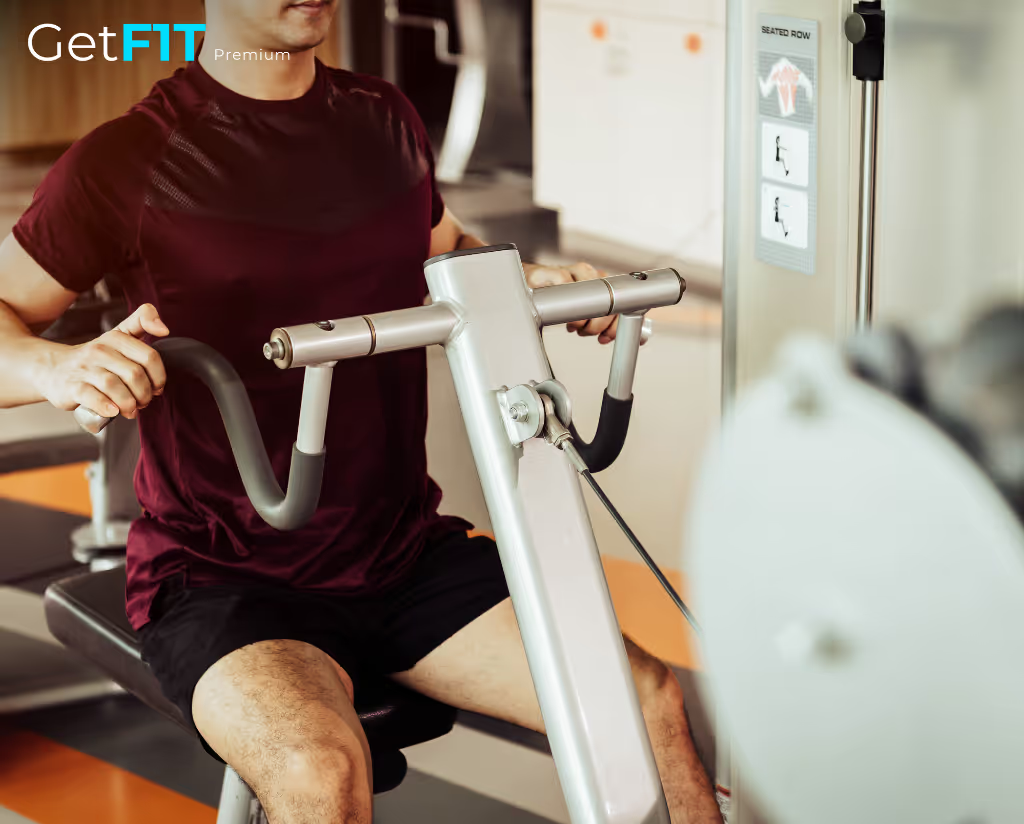
- Chest-Supported Row: 3 sets x 8-12 reps | Rest 2 minutes.
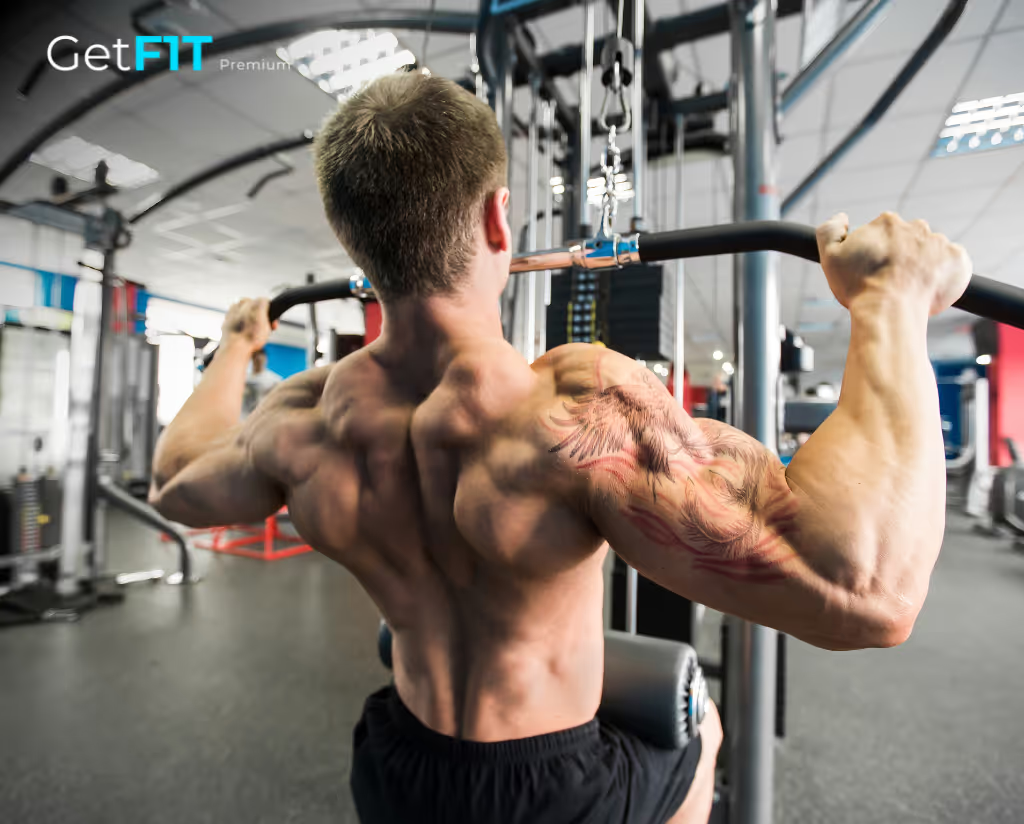
- Lat Pulldown: 3 sets x 10-12 reps | Rest 90-120 seconds.
- Swiss Ball Sit-Up: 3 sets x 12-20 reps | Rest 60-90 seconds.
- Cable Crunch: 2 sets x 10-15 reps | Rest 60-90 seconds.
- Cable Lateral Raise: 3 sets x 12-20 reps | Rest 60-90 seconds.
1. Incline Dumbbell Bench Press
Working sets: 3
Repetitions: 8-12
Rest: 2 minutes
Primary muscles: Pectoralis major, especially the clavicular region, with assistance from the anterior deltoids and triceps.
The incline dumbbell bench press provides the first compound upper-body movement.
Set the bench to approximately 15-30 degrees.
Sit with the dumbbells supported near your thighs before positioning them beside your upper chest.
Maintain stable feet, comfortable wrist alignment, and a natural elbow path.
Press the dumbbells upward through a controlled arc.
Lower gradually toward a comfortable chest stretch.
Choose resistance that allows 8-12 repetitions with approximately 1-2 repetitions in reserve.
Avoid excessive elbow flare, bouncing, or lifting your hips from the bench.
Perform this exercise before the abdominal work so trunk fatigue does not compromise pressing stability.
Keep the bench angle consistent when tracking progress.
2. Chest-Supported Row
Working sets: 3
Repetitions: 8-12
Rest: 2 minutes
Primary muscles: Latissimus dorsi, trapezius, rhomboids, posterior deltoids, and elbow flexors.
The chest-supported row provides horizontal pulling with relatively little unsupported spinal stabilization.
Adjust the machine or incline bench so the chest remains supported.
Begin with your arms extended toward the resistance.
Pull the handles toward your torso by moving your upper arms backward.
Allow the shoulder blades to move naturally.
Pause briefly near the top if useful.
Return gradually without lifting your torso from the support.
Choose resistance that allows approximately 1-2 repetitions in reserve.
Avoid jerking the resistance upward or shortening the range excessively.
The supported position helps preserve trunk control before the direct abdominal exercises.
Record the resistance, grip, and repetitions for consistent progression.
3. Lat Pulldown
Working sets: 3
Repetitions: 10-12
Rest: 90-120 seconds
Primary muscles: Latissimus dorsi, teres major, and elbow flexors, with assistance from other upper-back muscles.
The lat pulldown adds vertical pulling to complement the horizontal row.
Adjust the thigh pad so your legs remain securely positioned.
Choose a comfortable overhand or neutral grip.
Begin with your arms extended overhead.
Pull the attachment toward your upper chest while moving your elbows downward.
Maintain a relatively stable torso.
Return gradually to a comfortable overhead position.
Choose resistance that allows 10-12 controlled repetitions with approximately 1-2 repetitions in reserve.
Avoid excessive backward swinging or pulling the attachment behind the neck.
Because the back and elbow flexors have already completed rowing sets, select resistance according to your remaining strength.
The pulldown completes the main compound upper-body work before abdominal training.
4. Swiss Ball Sit-Up
Working sets: 3
Repetitions: 12-20
Rest: 60-90 seconds
Primary muscles: Rectus abdominis, with assistance from the obliques and hip flexors.
The Swiss Ball Sit-Up is the main abdominal exercise in this workout.
Choose a properly inflated exercise ball that allows both feet to remain securely planted.
Sit on the ball and gradually walk your feet forward until the lower back receives support.
Cross your arms over your chest.
Begin with your torso leaning backward through a comfortable range.
Exhale as you curl the rib cage toward the pelvis.
Continue toward a controlled upright position if performing the full sit-up variation.
Avoid throwing the shoulders forward or pushing excessively through the feet.
Lower gradually over approximately two or three seconds.
Allow the ball to support your lower back without bouncing.
Choose a difficulty that allows 12-20 controlled repetitions with approximately 1-2 repetitions in reserve.
If you cannot maintain stable ball positioning, shorten the range or perform a Swiss Ball Crunch.
If twenty strict repetitions become comfortable, add a small amount of resistance or increase the lever gradually.
Record the ball size, arm position, repetitions, and range.
The objective is consistent abdominal loading rather than completing repetitions through momentum.
5. Cable Crunch
Working sets: 2
Repetitions: 10-15
Rest: 60-90 seconds
Primary muscles: Rectus abdominis, with assistance from the obliques.
The cable crunch provides direct abdominal resistance using a weight stack.
Attach a rope to a high cable pulley.
Kneel at a comfortable distance from the machine.
Hold the rope near the sides of your head.
Begin with your torso reasonably extended and your pelvis relatively stable.
Curl your rib cage toward your pelvis through controlled spinal flexion.
Avoid pulling the rope downward primarily with your arms.
Return gradually into a comfortable starting range.
Choose resistance that allows 10-15 repetitions with approximately 1-2 repetitions in reserve.
Because the abdominal muscles have already completed three Swiss Ball Sit-Up sets, use manageable resistance.
The cable crunch provides a more easily measurable external loading method for abdominal hypertrophy.
If the combined five abdominal sets create excessive fatigue, reduce the Swiss Ball Sit-Ups to two sets or omit one cable crunch set.
6. Cable Lateral Raise
Working sets: 3
Repetitions: 12-20
Rest: 60-90 seconds
Primary muscles: Lateral deltoids, with assistance from the supraspinatus and shoulder blade stabilizers.
The cable lateral raise finishes the session with direct shoulder-abduction training.
Position a cable pulley near the bottom of the machine.
Stand sideways to the pulley and hold the handle with one hand.
Maintain stable feet and a small elbow bend.
Raise your upper arm outward through a comfortable arc.
Continue toward approximately shoulder height.
Lower gradually without swinging the torso.
Choose resistance that allows 12-20 repetitions with approximately 1-2 repetitions in reserve.
Avoid using an excessively heavy weight that requires shoulder shrugging or body momentum.
Perform the prescribed sets for both arms.
Because this is an isolation movement, controlled technique matters more than the absolute cable resistance.
If the abdominal work has created noticeable trunk fatigue, use a stable hand support while performing the raise.
How to Warm Up Before This Swiss Ball Sit-Up Workout
Begin with approximately 5-10 minutes of general preparation followed by warm-up sets for the first compound exercise.
Start with 3-5 minutes of light walking or cycling.
Then perform controlled movements such as:
- Gentle shoulder circles.
- Light shoulder blade movements.
- Easy incline push-ups.
- Comfortable trunk flexion and extension.
- Several unloaded abdominal curls.
Before incline dumbbell bench presses, gradually increase resistance.
For example, if your planned working dumbbells are 20 kg each:
- 8 kg dumbbells x 10 repetitions.
- 12 kg dumbbells x 6 repetitions.
- 16 kg dumbbells x 3 repetitions.
- Begin working sets with 20 kg dumbbells.
These are example loads rather than mandatory percentages.
Before Swiss Ball Sit-Ups, perform approximately 5-8 easy repetitions with a short movement range.
Use these to confirm foot placement, ball support, and comfortable spinal movement.
Do not exhaust the abdominal muscles during preparation.
Before cable crunches, perform a light set if necessary to establish the rope position and movement path.
How Hard Should You Train During This Upper-Body and Core Workout?
Most working sets should finish relatively close to muscular failure while maintaining consistent technique.
Repetitions in reserve (RIR) means the estimated number of additional technically sound repetitions you could complete before muscular failure.
Use these effort targets:
- Incline Dumbbell Bench Press: Approximately 1-2 RIR with controlled pressing.
- Chest-Supported Row: Approximately 1-2 RIR without lifting the torso from the support.
- Lat Pulldown: Approximately 1-2 RIR without excessive swinging.
- Swiss Ball Sit-Up: Approximately 1-2 RIR before movement range or ball stability deteriorates.
- Cable Crunch: Approximately 1-2 RIR with controlled spinal flexion.
- Cable Lateral Raise: Approximately 1-2 RIR without torso momentum.
The first three exercises are compound upper-body movements.
Maintain enough technical control to perform consistent repetitions across working sets.
Swiss Ball Sit-Ups require a slightly different approach.
The set should end when additional repetitions would require bouncing, excessive neck movement, or significant changes in ball position.
Cable crunches allow more direct resistance loading.
However, pulling with the arms or hinging excessively at the hips can change the movement.
Lateral raises generally work well with higher repetitions and strict control.
Training every set to absolute failure is unnecessary.
The priority is sufficient muscular effort with repeatable technique.
How to Progress This Swiss Ball Sit-Up Workout Over Several Weeks
Use double progression for the resistance exercises and systematic difficulty progression for Swiss Ball Sit-Ups.
Weeks 1-2: Establish your baseline.
Choose resistance for the compound exercises that allows controlled repetitions near the lower end of their ranges.
For Swiss Ball Sit-Ups, begin with three sets of approximately 12-15 controlled repetitions.
Record the ball size, arm position, range, repetitions, and estimated RIR.
Use the same setup each session.
Weeks 3-4: Increase repetitions.
Maintain the same Swiss Ball Sit-Up variation while gradually increasing repetitions.
For example:
- Week 1: 15, 14, and 12 repetitions.
- Week 2: 17, 15, and 13 repetitions.
- Week 3: 19, 17, and 15 repetitions.
- Week 4: 20, 20, and 20 repetitions.
Only count repetitions completed with a consistent movement range and without bouncing.
Progress the compound and isolation exercises toward the upper end of their respective repetition ranges.
Weeks 5-6: Increase difficulty when appropriate.
Once all three Swiss Ball Sit-Up sets reach twenty controlled repetitions with the intended RIR, increase difficulty.
Hold a small weight against the chest or use a slightly longer arm lever.
Your repetitions may return closer to twelve.
Continue progressing gradually.
For cable crunches, increase resistance once both sets reach fifteen strict repetitions.
For incline presses and rows, increase weight after reaching twelve repetitions across all working sets with appropriate technique.
For cable lateral raises, increase resistance after reaching twenty controlled repetitions.
If performance declines over several sessions, review total upper-body and abdominal workload.
Temporarily reducing accessory sets or training farther from failure may help restore consistent performance.
Progress should reflect improved strength under comparable conditions, not simply heavier weights with shorter ranges.
How to Fit Swiss Ball Sit-Ups Into a Four-to-Six-Day Training Split
This upper-body and abdominal workout can serve as one session within a four-to-six-day weekly resistance training routine.
For a four-day upper/lower split, use it as one upper-body session while distributing additional chest, back, and arm training across the second upper-body day.
For a five- or six-day routine, it can serve as an upper-body session with dedicated abdominal work.
The workout includes three incline pressing sets, three horizontal rowing sets, and three vertical pulling sets.
These provide balanced compound upper-body training.
Swiss Ball Sit-Ups contribute three direct abdominal sets.
Cable crunches add two more abdominal sets through adjustable external resistance.
Cable lateral raises provide three direct lateral deltoid sets.
Because both Swiss Ball Sit-Ups and cable crunches train spinal flexion, they create overlapping rectus abdominis demands.
Five direct abdominal sets in one session may be appropriate for some trained lifters, but beginners may need less.
If performing a second abdominal session during the week, use a smaller amount of direct work or a complementary movement such as reverse crunches.
The abdominal muscles also contribute to trunk stabilization during squats, Romanian deadlifts, and overhead presses.
Account for this workload when scheduling additional core training.
When practical, allow sufficient recovery between challenging abdominal sessions, often approximately 48 hours depending on total workload.
If abdominal repetitions and resistance improve while recovery remains manageable, maintain the current volume.
If hip-flexor fatigue, persistent soreness, or declining performance develops, reduce overlapping abdominal sets or adjust exercise selection.
The objective is progressive abdominal muscle training through controlled spinal flexion, sufficient resistance, and a recoverable weekly workload.
What Is the Swiss Ball Sit-Up and Is It Effective for Building Abs?
The Swiss Ball Sit-Up is an abdominal exercise performed while sitting and leaning backward over a stability ball, then raising the torso toward an upright position. It trains the rectus abdominis through spinal flexion and the hip flexors when the movement continues into a full sit-up.
Also called an exercise ball sit-up or stability ball sit-up, this movement uses a large inflatable ball to support the lower back and allow the torso to extend backward before the upward phase.
Unlike a floor sit-up, the curved ball can provide a larger comfortable starting range for trunk flexion.
Unlike a Swiss Ball Crunch, which primarily involves curling the rib cage toward the pelvis, a full Swiss Ball Sit-Up may involve greater movement at the hips.
This distinction is important for understanding which muscles perform the exercise.
The rectus abdominis produces spinal flexion, while the hip flexors contribute when the torso moves upward relative to the thighs through hip flexion.
The obliques assist with trunk control, and the lower-body muscles help maintain stable foot placement.
Swiss Ball Sit-Ups can build abdominal muscle when performed with challenging resistance, controlled spinal movement, and progressive overload.
However, performing many easy repetitions is not automatically sufficient for hypertrophy.
As abdominal strength improves, the exercise may need to become more demanding through added resistance, improved range, or another progression.
The ball also introduces a balance requirement.
For some people, maintaining position becomes the limiting factor before the abdominal muscles receive enough challenging work.
In that situation, a cable crunch or supported abdominal machine may provide a more straightforward hypertrophy stimulus.
Swiss Ball Sit-Ups are particularly useful for people who want an adjustable abdominal exercise with minimal equipment and a greater available trunk-extension range than a conventional floor crunch.
They are not mandatory for developing visible abs, and they do not specifically burn abdominal fat.
Muscle development depends on training, while abdominal visibility is also influenced by overall body fat levels.
What Are the Main Benefits of Swiss Ball Sit-Ups?
Swiss Ball Sit-Ups provide abdominal training through a controlled movement on a curved support surface.
Their practical benefits include:
- Abdominal hypertrophy: The rectus abdominis produces force during spinal flexion.
- Adjustable range of motion: The ball can allow the torso to extend farther backward than during a conventional floor crunch.
- Progressive difficulty: Resistance can increase through added weight, arm position, and movement range.
- Trunk control: The abdominal muscles and obliques help maintain alignment throughout the movement.
- Minimal equipment: A properly sized stability ball and suitable floor surface are sufficient.
- Movement variety: The exercise provides a different resistance and support arrangement from cable crunches or hanging leg raises.
- Accessible modifications: A short-range ball crunch is usually easier to learn than a full sit-up.
- Workout flexibility: Swiss Ball Sit-Ups can be performed after upper-body, lower-body, or dedicated abdominal training.
One distinguishing feature is the ability to begin with the torso supported over the ball's curved surface.
This can place the abdominal muscles in a relatively lengthened position before the upward movement.
However, moving through a larger range does not automatically produce greater hypertrophy.
The resistance must still be challenging enough, and the movement must remain controlled.
Another advantage is that the difficulty can be adjusted without immediately adding external weight.
For example, keeping your arms across your chest generally creates a shorter resistance lever than extending them overhead.
Ball position and foot placement also influence stability and movement mechanics.
These modifications should be standardized when tracking progression.
If the ball moves substantially between repetitions, the exercise becomes difficult to measure consistently.
What Muscles Does the Swiss Ball Sit-Up Work?
The Swiss Ball Sit-Up primarily trains the rectus abdominis and, during the full sit-up portion, the hip flexors.
The internal and external obliques assist with trunk movement and stability.
The lower-body muscles help maintain position on the ball.
Rectus Abdominis
The rectus abdominis runs vertically along the front of the abdomen.
Its main functions include spinal flexion and posterior pelvic tilt.
During the upward phase of a Swiss Ball Sit-Up, it helps bring the rib cage toward the pelvis.
During the return phase, it controls spinal extension as the torso moves backward over the ball.
The rectus abdominis is the main intended muscle when the exercise emphasizes controlled curling of the spine.
A useful cue is to imagine shortening the distance between the lower ribs and the front of the pelvis.
However, a full sit-up also includes hip movement.
Once the torso moves beyond the spinal-curling portion, the hip flexors may contribute substantially.
The rectus abdominis is one continuous paired muscle.
Although different movement patterns may create different regional loading, Swiss Ball Sit-Ups do not completely isolate separate upper or lower abdominal muscles.
For direct abdominal hypertrophy, use a range that includes meaningful trunk flexion instead of simply moving from lying back to sitting upright.
Internal and External Obliques
The internal and external obliques are located along the sides of the abdominal wall.
They contribute to trunk flexion, rotation, lateral flexion, and stabilization.
During standard Swiss Ball Sit-Ups, both sides help control torso alignment and assist the abdominal curling movement.
They also resist unwanted twisting as you move over the rounded ball.
If the ball shifts sideways, the obliques may need to work harder to stabilize the torso.
However, deliberately allowing uncontrolled rotation does not improve abdominal training.
A twisting Swiss Ball Sit-Up can introduce greater rotational demands, but it is a separate variation.
For direct oblique hypertrophy, progressively loaded cable rotations, side bends, and selected trunk-flexion exercises may provide more convenient loading.
Iliopsoas and Other Hip Flexors
The iliopsoas consists of the psoas major and iliacus.
These muscles contribute strongly to hip flexion.
During a full sit-up, hip flexion helps bring the torso toward the thighs.
Other contributing muscles include the rectus femoris, sartorius, and tensor fasciae latae.
Their relative contribution depends on movement range, foot placement, and how much hip flexion occurs.
If the exercise becomes primarily a movement of the torso toward the thighs without substantial spinal curling, the hip flexors may perform a greater share of the dynamic work.
This is not inherently incorrect.
It means the exercise is functioning more as a full sit-up than an abdominal crunch.
For someone whose main goal is rectus abdominis hypertrophy, limiting the movement to controlled spinal flexion may provide a more focused stimulus.
For someone who also wants to train hip-flexion strength, a full sit-up can be appropriate.
Spinal Erectors and Lower-Body Stabilizers
The spinal erectors help control trunk position, particularly during the backward movement.
They are not the main intended muscles during the upward abdominal curling phase.
The gluteal muscles help stabilize the pelvis on the ball.
The quadriceps, hamstrings, and calf muscles contribute to keeping the feet securely positioned.
These stabilizing demands depend on ball size, inflation, foot placement, and the selected movement range.
The ball should provide a stable enough platform for the intended abdominal exercise.
The objective is not to make the movement as unstable as possible.
If maintaining balance consistently limits your repetitions, adjust the setup or choose a more supported variation.
How to Choose the Correct Swiss Ball Size
A Swiss ball should be large enough to support the lower back while allowing both feet to remain planted comfortably.
Exercise balls are commonly available in several diameters, including 55 cm, 65 cm, and 75 cm.
A practical starting reference is:
- 55 cm: Often suitable for shorter adults.
- 65 cm: Commonly suitable for adults of average height.
- 75 cm: Often more appropriate for taller adults.
These are approximate guidelines rather than strict height requirements.
Ball inflation and individual leg proportions also affect the setup.
When seated on the ball, your feet should rest securely on the floor.
Your knees should be comfortably bent, usually near a right angle or slightly more open.
The ball should support your lower back when you lean backward into the exercise.
If the ball is too small, your hips may sit excessively low.
If it is too large, maintaining secure foot contact can become difficult.
Choose a ball designed for exercise use and follow its manufacturer's inflation and loading guidance.
Avoid using a damaged or excessively soft ball that shifts unpredictably.
How to Set Up the Swiss Ball Sit-Up Correctly
Proper setup requires a stable exercise ball, secure foot placement, and appropriate positioning of the lower back and pelvis.
- Place the ball on suitable flooring. Choose a flat, nonslip surface with enough clearance behind and around you.
- Sit near the front half of the ball. Keep both feet firmly planted.
- Position your feet approximately hip-width apart. A slightly wider stance can make balance easier.
- Walk your feet forward gradually. Allow the ball to roll toward your lower back.
- Position the ball beneath the lumbar region. Your lower back should receive support while your torso can extend comfortably backward.
- Maintain a stable pelvis. Avoid sliding excessively toward either end of the ball.
- Choose your arm position. Begin with your arms crossed over your chest.
- Establish your starting range. Lean backward only as far as you can comfortably control.
- Keep your chin naturally positioned. Avoid pulling your head forward.
- Perform several easy repetitions. Confirm that the ball stays relatively stable.
Your shoulders may extend behind the ball's highest point when you lean backward.
However, you should not feel as though your body is falling off the ball.
If the ball rolls excessively, reposition your feet and reduce the movement range.
For beginners, a smaller backward lean is appropriate.
As abdominal strength and control improve, the range can increase gradually.
How to Perform the Swiss Ball Sit-Up Step by Step
The Swiss Ball Sit-Up involves curling the torso upward from a supported backward position, followed by controlled lowering over the ball.
- Sit on a properly inflated Swiss ball with both feet securely planted.
- Walk your feet forward until the ball supports your lower back.
- Cross your arms over your chest and maintain a comfortable head position.
- Lean backward into a controlled starting range.
- Take a breath and lightly engage your abdominal muscles.
- Begin curling your rib cage toward your pelvis.
- Continue raising your torso, allowing appropriate hip flexion if performing the full sit-up variation.
- Stop when you reach the intended upright position without jerking forward.
- Briefly control the top position.
- Lower gradually, allowing the torso to extend backward over the ball within your comfortable range.
The first movement should come from abdominal trunk flexion rather than forcefully throwing the head and shoulders forward.
If you are performing a full sit-up, some hip-flexor involvement is expected.
For a more abdominal-focused variation, stop after completing the controlled spinal curl rather than continuing into a large hip-flexion movement.
The ball should remain relatively stable throughout the set.
Avoid pushing forcefully through your feet to propel the torso upward.
Select a range and resistance that allow the same movement quality across repetitions.
How Far Back Should You Lean on the Swiss Ball?
Lean backward until the abdominal muscles reach a substantial comfortable lengthened position without losing balance or forcing uncomfortable spinal extension.
The ball's curvature can support a greater backward torso range than a conventional floor crunch.
However, the most appropriate depth depends on spinal mobility, ball positioning, and individual comfort.
For some lifters, the upper back may extend considerably over the ball.
Others may prefer a smaller range.
Neither position is automatically incorrect.
A useful endpoint is one where you can:
- Maintain secure foot contact.
- Keep the pelvis supported.
- Control your head and neck.
- Feel the abdominal muscles lengthening.
- Reverse the movement without using momentum.
- Avoid sharp spinal or hip discomfort.
Do not deliberately force the lower back into its maximum extension.
If returning from the bottom requires jerking the torso or pushing excessively through the feet, shorten the range.
Gradually increase depth only when movement control improves.
Should You Perform a Full Sit-Up or a Shorter Swiss Ball Crunch?
A shorter Swiss Ball Crunch generally emphasizes spinal flexion more directly, while a full Swiss Ball Sit-Up adds greater hip-flexion demands.
Both variations train the abdominal muscles.
However, the hip flexors contribute more when the torso continues moving toward the thighs beyond the abdominal curling phase.
For a Swiss Ball Crunch:
- Begin with your lower back supported over the ball.
- Curl your rib cage toward your pelvis.
- Raise your upper torso through controlled spinal flexion.
- Stop before the movement becomes primarily a hip hinge.
- Lower gradually.
For a full Swiss Ball Sit-Up, continue toward a more upright position while maintaining control.
Neither variation guarantees greater abdominal hypertrophy.
If your goal is direct rectus abdominis development, a controlled crunch may be easier to standardize.
If your goal includes full sit-up performance and hip-flexion strength, the longer movement can be appropriate.
Choose the version that matches your training objective and track it consistently.
Where Should Your Feet Be During Swiss Ball Sit-Ups?
Your feet should remain securely planted at a distance that allows comfortable torso movement and ball stability.
A stance approximately hip-width apart is a practical starting point.
A wider stance increases the base of support and may make balance easier.
A narrower stance can increase stabilization demands.
However, greater instability does not automatically improve abdominal hypertrophy.
Your knees should be comfortably bent.
The exact angle depends on the ball diameter and how far your feet are positioned from it.
If your feet are excessively close, the ball may shift and your torso movement may feel restricted.
If they are too far away, you may have difficulty maintaining pelvic support.
Adjust the position before adding resistance.
For conventional sit-ups, secure foot contact is more important than deliberately creating an unstable stance.
Avoid anchoring the feet under heavy equipment unless the setup is designed and suitable for that purpose.
Should You Put Your Hands Behind Your Head?
Placing your hands behind your head is optional, but you should avoid pulling your neck forward.
For beginners, crossing the arms over the chest is usually a simpler starting position.
It reduces the resistance lever and makes it easier to focus on the abdominal movement.
Other positions include:
- Hands across chest: A practical starting position.
- Hands near temples: Increases the lever slightly without requiring the neck to be pulled.
- Arms extended overhead: Creates a longer lever and increases difficulty.
- Weight held at chest: Adds external resistance with a relatively compact load position.
If your hands support your head, use light contact.
Do not interlock the fingers and pull forcefully on the back of the neck.
The torso should rise through abdominal and hip muscle action rather than neck flexion.
Choose an arm position that allows controlled repetitions without changing the movement into a head-pulling action.
How Should You Breathe During Swiss Ball Sit-Ups?
Exhale during the upward abdominal curl and inhale as you lower the torso over the ball.
A practical breathing sequence is:
- Inhale before beginning the upward movement.
- Exhale as the rib cage moves toward the pelvis.
- Maintain enough abdominal tension to control the top position.
- Inhale gradually during the backward return.
- Reset before the next repetition.
Exhaling during trunk flexion can make it easier to coordinate abdominal contraction.
However, breathing should remain natural.
You do not need to hold your breath for the entire repetition.
Light trunk bracing helps maintain control over the ball, particularly when using additional resistance.
If breathing becomes difficult because you are holding excessive tension, reduce the exercise difficulty.
The objective is a controlled abdominal movement rather than maximal whole-body bracing.
What Tempo and Range of Motion Are Best for Swiss Ball Sit-Ups?
A controlled upward movement, brief transition, and gradual return are practical for Swiss Ball Sit-Ups.
A useful repetition tempo is:
- Upward phase: Approximately 1-2 seconds.
- Top position: Optional brief pause.
- Lowering phase: Approximately 2-3 seconds.
- Bottom position: Smooth transition without bouncing.
The exact speed is less important than maintaining the intended range and muscular control.
Avoid rapidly throwing your torso forward.
Similarly, do not drop backward onto the ball.
The lowering phase should remain controlled by the abdominal muscles and supporting musculature.
A substantial comfortable range is useful, but extreme spinal extension is unnecessary.
When using additional resistance, maintain the same movement depth.
If the range becomes shorter as the weight increases, progression may not reflect a comparable muscular challenge.
Use a repeatable starting and finishing position when tracking performance.
What Are the Most Common Swiss Ball Sit-Up Mistakes?
The most common mistakes involve poor ball positioning, excessive momentum, and performing the movement primarily through hip flexion when abdominal isolation is the goal.
Using the wrong ball size: An unsuitable ball can make foot contact and lumbar support difficult. Choose a diameter that permits comfortable positioning.
Positioning the ball too high: If the ball supports the upper back instead of the lower back, the intended movement range may change. Adjust the ball beneath the lumbar region.
Positioning the ball too low: Poor pelvic support may increase instability. Walk your feet forward or backward until the ball supports the intended region.
Throwing the torso upward: Excessive momentum reduces movement control. Begin by curling the rib cage toward the pelvis.
Using the hip flexors for the entire movement: Raising the torso mainly through hip flexion may reduce dynamic abdominal emphasis. Use a shorter crunch variation when direct abdominal training is the goal.
Pulling the head forward: Excessive neck flexion creates unnecessary discomfort. Keep the head naturally aligned and use light hand contact.
Bouncing off the ball: Rebounding from the bottom can make repetitions less consistent. Reverse direction under muscular control.
Moving the ball between repetitions: Excessive rolling changes the starting position. Adjust foot placement and use a manageable range.
Extending the spine excessively: Forcing extreme backward depth is unnecessary. Stop at a comfortable controlled position.
Using too much external weight: Heavy loading may create momentum or restrict the range. Reduce resistance until technique remains consistent.
Pushing forcefully through the feet: Strong leg assistance can change the exercise's demands. Use the feet for stability rather than launching the torso upward.
A useful quality check is whether the final repetitions maintain the same pelvic support, range, and torso control as the first repetitions.
Swiss Ball Sit-Up Variations for Beginners and Advanced Lifters
Swiss Ball Sit-Ups can be modified through movement range, arm position, external resistance, and ball support.
Beginner: Short-Range Swiss Ball Crunch
Begin with the lower back supported and perform a modest abdominal curl.
Stop before the torso moves into substantial hip flexion.
This reduces coordination and resistance demands.
Beginner: Arms-Crossed Swiss Ball Sit-Up
Keep the arms across the chest while performing a controlled sit-up.
This provides a manageable lever and simple setup.
Beginner: Partial Swiss Ball Sit-Up
Use a smaller backward range while learning balance and spinal movement.
Increase depth as control improves.
Intermediate: Full Swiss Ball Sit-Up
Perform the complete movement from a comfortable backward position into a more upright torso position.
Maintain consistent pelvic support.
Intermediate: Hands-at-Temples Sit-Up
Move the hands toward the sides of the head without pulling the neck.
This slightly changes the upper-body lever.
Intermediate: Weighted Swiss Ball Sit-Up
Hold a light plate or dumbbell securely against the chest.
Maintain the same range as during unweighted repetitions.
Advanced: Arms-Overhead Swiss Ball Sit-Up
Extend the arms overhead while maintaining controlled torso movement.
This increases the resistance lever without adding external weight.
Advanced: Slow-Eccentric Swiss Ball Sit-Up
Lower the torso over three or four seconds.
This increases control demands and may require fewer repetitions.
Advanced: Paused Swiss Ball Sit-Up
Pause briefly in a lengthened but controlled position.
Avoid bouncing or relaxing completely onto the ball.
Advanced: Weighted Swiss Ball Crunch
Use manageable external resistance while emphasizing spinal flexion.
This can be more directly focused on abdominal hypertrophy than performing increasingly difficult full sit-ups through hip flexion.
Drop sets and rest-pause methods are possible but not necessary.
For example, a weighted set can be followed by lighter bodyweight repetitions after the resistance is safely removed.
However, simple progressive straight sets remain a practical default.
What Are the Best Alternatives to Swiss Ball Sit-Ups?
Several exercises train the abdominal muscles through spinal flexion, pelvic movement, or trunk stabilization.
Swiss Ball Crunch: Uses the same ball but emphasizes a shorter spinal-flexion movement. It is useful when the rectus abdominis is the primary target.
Floor Crunch: A bodyweight spinal-flexion exercise performed on the floor. It requires no equipment but provides a different starting range.
Cable Crunch: A loaded abdominal exercise involving trunk flexion against adjustable cable resistance. It is particularly convenient for progressive hypertrophy training.
Machine Abdominal Crunch: A guided spinal-flexion exercise with adjustable resistance. It reduces balance demands compared with a stability ball.
Decline Sit-Up: A sit-up performed on a decline bench. It challenges the abdominals and hip flexors through a different body position.
Reverse Crunch: A floor-based exercise emphasizing posterior pelvic tilt. It is useful for training the rectus abdominis through pelvic movement.
Hanging Knee Raise: A suspended exercise combining hip flexion and pelvic control. It also requires grip and shoulder stability.
Dead Bug: A trunk-stabilization exercise involving controlled limb movement. It is generally less suited to heavy abdominal loading but useful for practicing pelvic control.
Ab Wheel Rollout: A challenging anti-extension exercise that trains the abdominal muscles while the arms move away from the body. Its movement pattern differs from a sit-up.
Weighted Floor Sit-Up: A sit-up performed with external resistance and stable floor support. It may be preferable when a stability ball introduces excessive balance limitations.
For direct abdominal hypertrophy, cable crunches and abdominal machines often make resistance progression easier to measure.
Swiss Ball Sit-Ups remain useful when you prefer bodyweight training with an adjustable curved support surface.
Swiss Ball Sit-Up vs. Swiss Ball Crunch: What Is the Difference?
The main difference is that Swiss Ball Crunches emphasize spinal flexion, while full Swiss Ball Sit-Ups generally involve greater hip flexion.
During a crunch, the rib cage curls toward the pelvis.
The movement can stop once the abdominal muscles have produced a substantial controlled spinal curl.
During a full sit-up, the torso continues moving toward an upright position.
The hip flexors contribute increasingly as the movement includes hip flexion.
Both exercises can train the rectus abdominis.
However, the crunch may provide a more focused abdominal stimulus with fewer hip-flexor demands.
The full sit-up may be appropriate for people who specifically want to train the complete sit-up pattern.
For abdominal hypertrophy, neither is automatically superior.
Choose the variation that allows the intended abdominal movement, sufficient resistance, and consistent progression.
Swiss Ball Sit-Up vs. Floor Sit-Up: Which Is Better?
Swiss Ball Sit-Ups and floor sit-ups train overlapping muscles but differ in support and available movement range.
A Swiss ball provides a curved surface that can allow greater backward torso extension.
A floor provides a stable, flat support surface.
Swiss Ball Sit-Up:
- Uses a curved and somewhat unstable support.
- Allows an adjustable backward starting range.
- Requires maintaining position on the ball.
- Can be progressed through arm position and added resistance.
Floor Sit-Up:
- Uses stable floor support.
- Generally offers a more limited backward spinal-extension starting position.
- Requires no equipment.
- May be easier to standardize without balance demands.
The Swiss ball is not automatically more effective because it creates instability.
For hypertrophy, the abdominal muscles must receive sufficient challenging resistance.
If balance becomes limiting, floor or machine exercises may be more practical.
If the curved support permits comfortable movement and consistent loading, the Swiss Ball Sit-Up can be useful.
Swiss Ball Sit-Up vs. Cable Crunch: Which Builds Better Abs?
Both exercises can develop the rectus abdominis, but cable crunches generally make external resistance easier to adjust.
Swiss Ball Sit-Ups use bodyweight resistance and can incorporate external loading.
Cable crunches use a weight stack and pulley system.
The cable exercise allows resistance to increase in measured increments without changing the stability of the support surface.
This can make it easier to maintain consistent progression.
Swiss Ball Sit-Ups provide a different trunk movement and can be performed with minimal equipment.
Neither guarantees greater hypertrophy.
For someone whose main goal is measurable abdominal muscle growth, cable crunches may be more convenient.
For someone who prefers home training or wants to practice controlled movement on an exercise ball, Swiss Ball Sit-Ups are a practical option.
Both can be used in a program, although excessive overlapping abdominal volume is unnecessary.
Do Swiss Ball Sit-Ups Work the Lower Abs?
Swiss Ball Sit-Ups train the rectus abdominis, including the portion below the navel, but they do not completely isolate a separate lower abdominal muscle.
The rectus abdominis is a continuous paired muscle running from the pubic region toward the lower rib cage and sternum.
Its primary actions include spinal flexion and posterior pelvic tilt.
During the sit-up, the rectus abdominis contributes to curling the torso.
The hip flexors also contribute when the movement includes substantial hip flexion.
For exercises emphasizing pelvic movement, reverse crunches and controlled hanging knee raises provide different abdominal loading conditions.
However, none of these exercises selectively removes fat from the lower stomach.
Visible abdominal definition depends partly on total abdominal muscle development and overall body fat levels.
Select exercises based on how effectively they challenge the muscles rather than claims about isolating specific sections of abdominal fat.
Can Swiss Ball Sit-Ups Cause Hip Flexor Fatigue?
Yes, full Swiss Ball Sit-Ups can create hip-flexor fatigue because the iliopsoas and other hip flexors contribute when the torso rises toward the thighs.
This is a normal part of the full sit-up movement.
However, if hip-flexor fatigue consistently limits the set before the abdominal muscles receive challenging work, modify the exercise.
A shorter Swiss Ball Crunch can reduce the amount of dynamic hip flexion.
You can also use cable crunches or machine abdominal crunches for a more directly loaded spinal-flexion pattern.
Avoid assuming that hip-flexor involvement makes the exercise ineffective.
The issue is whether the movement matches your main training goal.
For full sit-up performance, hip-flexor contribution is expected.
For direct abdominal hypertrophy, a more focused trunk-flexion variation may be preferable.
How Many Sets and Reps of Swiss Ball Sit-Ups Should You Do?
Swiss Ball Sit-Ups can be programmed for abdominal hypertrophy, trunk-flexion strength, or muscular endurance.
For abdominal muscle growth:
- 2-4 working sets.
- 10-20 controlled repetitions.
- 60-120 seconds of rest.
- Approximately 1-3 repetitions in reserve.
For strength-oriented abdominal training:
- 3-4 working sets.
- 6-12 challenging repetitions.
- 90-150 seconds of rest.
- Approximately 1-3 repetitions in reserve.
Use a manageable weighted or longer-lever variation rather than attempting maximal resistance with poor balance.
For muscular endurance:
- 2-3 working sets.
- 20-30 controlled repetitions.
- 45-90 seconds of rest.
- Stop when technique deteriorates substantially.
Repetitions in reserve, or RIR, means how many additional technically sound repetitions you estimate you could complete before muscular failure.
For hypertrophy, three sets of 12-15 repetitions is a practical starting point.
If the exercise becomes easy for twenty or more repetitions, increase difficulty rather than endlessly adding repetitions.
If balance or hip-flexor fatigue ends the set before meaningful abdominal effort, choose a more suitable variation.
Stop when additional repetitions would require bouncing off the ball or forcefully pulling the head forward.
Should You Do Swiss Ball Sit-Ups Before or After Weight Training?
Swiss Ball Sit-Ups generally work well after the main compound exercises when strength and hypertrophy are the priority.
The abdominal muscles help stabilize the torso during squats, Romanian deadlifts, overhead presses, and other compound movements.
Fatiguing them beforehand may reduce performance during those exercises.
A practical lower-body session might include:
- Squat or leg press.
- Romanian deadlift.
- Leg curl.
- Calf raise.
- Swiss Ball Sit-Up.
For an upper-body session, the exercise can be included after presses and rows.
However, if direct abdominal training is the main priority, Swiss Ball Sit-Ups can be performed earlier.
For example, a dedicated core session might begin with a weighted Swiss Ball Crunch before moving to hanging knee raises.
The best placement depends on training priorities and accumulated fatigue.
You do not need to perform Swiss Ball Sit-Ups before every workout as a warm-up.
How to Progress Swiss Ball Sit-Ups Over Time
Double progression can be used to improve Swiss Ball Sit-Up performance while maintaining a consistent range and movement pattern.
Example: 3 sets of 12-20 repetitions
Week 1:
- Set 1: 16 repetitions.
- Set 2: 14 repetitions.
- Set 3: 12 repetitions.
Week 2:
- Set 1: 17 repetitions.
- Set 2: 15 repetitions.
- Set 3: 13 repetitions.
Week 3:
- Set 1: 19 repetitions.
- Set 2: 17 repetitions.
- Set 3: 15 repetitions.
Week 4:
- Set 1: 20 repetitions.
- Set 2: 20 repetitions.
- Set 3: 20 repetitions.
Once all three sets reach twenty controlled repetitions with the intended RIR, increase difficulty.
Possible progressions include:
- Moving the arms from across the chest to a longer-lever position.
- Holding a small weight against the chest.
- Increasing external resistance gradually.
- Using a slightly greater comfortable backward range.
- Adding a controlled pause.
Change one variable at a time.
For example, after adding a small plate, your repetitions may return closer to twelve.
Continue progressing from there.
Maintain consistent ball size, ball position, foot placement, arm position, and movement range.
If the harder version causes bouncing, neck pulling, or substantial balance loss, return to the previous variation.
Additional sets may be appropriate when weekly abdominal volume and recovery support them.
However, do not add volume automatically when performance is already improving.
How Often Should You Train Swiss Ball Sit-Ups?
Most lifters can include Swiss Ball Sit-Ups approximately two or three times per week, depending on the rest of their abdominal training.
For example:
- First upper-body session: 3 sets of 12-20 Swiss Ball Sit-Ups.
- Second lower-body session: 2-3 sets of cable crunches or reverse crunches.
The abdominal muscles also provide stabilization during compound exercises.
However, this indirect work may not fully replace direct abdominal training when hypertrophy is a priority.
If you already perform several challenging cable crunch, hanging raise, or abdominal machine sets, additional Swiss Ball Sit-Ups may be unnecessary.
Adjust frequency according to progression, soreness, and recovery.
Performing sit-ups every day is not required for abdominal muscle growth.
Consistent challenging training with sufficient recovery is generally more useful than maximizing frequency.
Practical Coaching Tips for Better Swiss Ball Sit-Ups
- Use the correct ball size: Your feet should remain secure while your lower back receives support.
- Position the ball consistently: Small changes in ball placement can alter the movement.
- Begin with arms across the chest: This provides a manageable starting resistance lever.
- Curl the rib cage toward the pelvis: Use spinal flexion rather than immediately throwing the torso upright.
- Control the backward phase: Avoid bouncing off the ball.
- Maintain natural neck alignment: Do not pull the head forward.
- Keep the feet planted: Use them for stability rather than excessive propulsion.
- Choose your movement goal: A crunch emphasizes abdominal flexion; a full sit-up includes more hip-flexor contribution.
- Use a comfortable range: Extreme spinal extension is unnecessary.
- Add resistance gradually: A small weight increase can make the exercise substantially harder.
- Track the exact variation: Compare repetitions only when ball, foot, and arm positions remain similar.
- Change exercises when balance dominates: Cable crunches or abdominal machines may provide more direct hypertrophy loading.
Are Swiss Ball Sit-Ups Safe for Your Lower Back, Neck, and Hips?
Swiss Ball Sit-Ups can be comfortable and effective when ball size, movement range, and resistance suit your abilities.
Potential sources of discomfort include:
- Using an unsuitable or damaged exercise ball.
- Poor ball positioning beneath the lower back.
- Excessive backward spinal extension.
- Bouncing rapidly off the ball.
- Pulling the head forward.
- Excessively heavy external resistance.
- Unstable foot positioning.
- Significant hip-flexor fatigue.
- Repeatedly training through substantial lower-back discomfort.
Normal training effort may involve abdominal fatigue and hip-flexor work.
However, sharp back pain, radiating symptoms, numbness, dizziness, or persistent neck discomfort should not be treated as normal muscular effort.
If the exercise causes discomfort, reduce the range or switch to a shorter Swiss Ball Crunch.
If the ball shifts unpredictably, adjust foot placement and equipment setup.
If spinal flexion or extension remains uncomfortable, another abdominal exercise may be preferable.
People with medical conditions affecting spinal movement or balance may need individualized guidance before using an unstable support surface.
Persistent or significant symptoms warrant assessment by a qualified healthcare professional.
The objective is controlled abdominal training with appropriate support and progressive difficulty, not maximum spinal movement or instability.

More Exercises
All Exercises















Everything You Need for a Fitter Body is here in GetFIT App!
Set calorie and macro goals, track your meals and activity, follow structured workout and meal plans, and monitor your progress over time. GetFIT App brings nutrition tracking, fitness planning, and everyday tools together in one simple membership.
High-Protein Recipes & Meal Plans
Discover hundreds of high-protein recipes, ready-made 4 week meal plans, and healthy meal ideas for weight loss and muscle building. Every recipe includes clear calorie and macro information, so eating for your goals is simple.


Join Thousands of GetFIT App Users Worldwide
Thousands of people around the world have already joined GetFIT App to track their nutrition, follow workout programs, and work toward their fitness goals. Join our growing global community and get the tools you need to manage your fitness journey in one place.

Try GetFIT App for 5 days free!
Discover the premium features of the GetFIT App during a free trial: personalized calorie calculation and tracking, meal plans, recipes, workout programs, e-books, and much more. Start your transformation today!

Dear User! Unlock your Dream Body Today!
Start your free trial today! With your premium membership, you’ll get immediate access to all the tools and content that help you lose weight, build muscle, and develop a healthy lifestyle.